
Concerts & Cultural Shows Coming to Pimpri-Chinchwad
TL;DR
- Pimpri-Chinchwad's cultural calendar for late July through mid-August follows the deep Warkari and Ganesh-worship traditions of the Pune metro belt
- Guru Purnima 2026, Nag Panchami 2026, and Sankashti Chaturthi carry special weight in this Marathi-heartland city
- Amavasya and Ekadashi draw multigenerational households together in a practice that is simultaneously religious and social
- Pradosh Vrat on July 27 opens the season with quiet Shiva devotion
- Purnima's full-moon aarti brings colonies and apartment complexes alive with impromptu community gatherings
The Festival Season in Maharashtra's Industrial Heartland
Pimpri-Chinchwad is not a city that announces itself. The twin municipalities that merged into one of Maharashtra's largest urban units grew up around factories and workshops — Tata Motors, Bajaj Auto, the sprawling industrial estates of the MIDC — but behind the scaffolding of manufacturing and IT parks, the Marathi cultural calendar runs as steadily here as it does in any traditional punyabhoomi. The months of Ashadha and Shravana belong to the land's oldest traditions, and from Chinchwad Gaon to Pimpri camp, households mark these weeks with fasts, prayers, and gatherings that owe nothing to ticketed events or promotional calendars.
Here is what the cultural and spiritual landscape of Pimpri-Chinchwad looks like for this stretch of the year.
Pradosh Vrat — Shiva Worship at Twilight
Pradosh Vrat on July 27 opens this season's observances. The 13th tithi fast for Shiva is maintained across Pimpri-Chinchwad's considerable Shaiva community, and the evening prayers — performed during the sandhyakaal, the twilight window specific to Pradosh — are observed both at neighborhood temples and in home shrines.
The city's relationship with Lord Shiva runs through several local temples that predate the modern industrial development by generations. The older sections of Chinchwad and the original Pimpri settlement each carry temple histories that give Pradosh evenings a grounded quality here — this is not a transplanted urban practice but something that has roots in the specific soil of this place.
The following Pradosh Vrat in the cycle falls on August 10, so those who could not observe July 27 have another window shortly ahead.
Guru Purnima 2026 — Warkari Devotion and the Guru Tradition
Few cities in Maharashtra feel Guru Purnima 2026 as viscerally as the Pune metro belt. Pimpri-Chinchwad sits in the orbit of a region where the Warkari sampraday has deep roots — the tradition of devotion to Vitthal of Pandharpur, carried forward by saints like Tukaram and Dnyaneshwar, places the guru relationship at the center of spiritual life in a way that is specific to this geography.
Guru Purnima 2026 on July 29 draws gatherings at the math institutions, kirtan halls, and temple premises scattered through the industrial city's older neighborhoods. In the housing colonies that have spread through Nigdi, Akurdi, and Bhosari over the last four decades — home to engineers, factory workers, and their families — the day is marked with morning prayers, visits to family gurus, and in some households a reading from Tukaram's abhangas or Dnyaneshwar's Dnyaneshwari.
Musicians and classical performers who teach in Pimpri-Chinchwad's growing network of sangeet schools observe the day with student-teacher ceremonies. The city's population, drawn from across Maharashtra and beyond, brings a variety of Guru Purnima 2026 traditions together into a kind of loose, neighborhood-by-neighborhood mosaic.
Purnima — Full Moon in the Colonies
Purnima on July 29, sharing its date with Guru Purnima 2026 this month, activates a different kind of community energy in Pimpri-Chinchwad's residential towers and housing societies. Satyanarayan puja, a staple Purnima observance across Maharashtra, brings neighbors together in building lobbies and terrace spaces.
In the large apartment complexes of Ravet, Wakad, and Thergaon — newer residential zones that house tens of thousands of families — Purnima often produces informal community gatherings where one family's puja becomes a shared event. Someone brings extra prasad downstairs; a neighbor offers to help with the arrangements; by evening, what began as a private household ritual has drawn a cross-section of floors and wings.
This is one of the quieter cultural strengths of Pimpri-Chinchwad: its density and the sociability of its housing societies mean that ritual observance becomes collective almost by default.
Insider Tip: The area around Chinchwad railway station and the older parts of Pimpri camp — where traditional wadas and temple complexes still stand amid the newer development — are particularly worth visiting on Purnima and Guru Purnima 2026 evenings. The contrast between the old temple architecture and the surrounding industrial cityscape gives the celebrations a striking visual quality.
Sankashti Chaturthi — Ganesh at the Center of Marathi Life
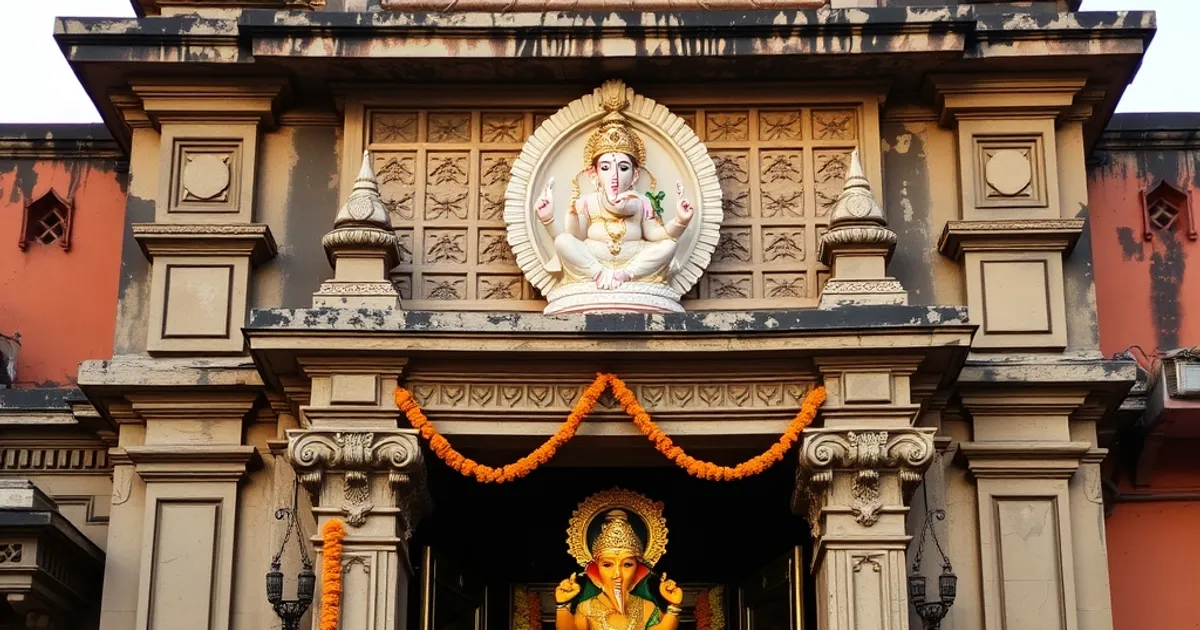
Sankashti Chaturthi on August 2 is not simply another observance in Maharashtra — it is one of the defining rhythms of Marathi culture. Lord Ganesh is this region's presiding deity in a way that goes beyond any other state's relationship with the deity, and the monthly Sankashti fast is maintained with a consistency and seriousness that marks it as genuinely central to daily life.
In Pimpri-Chinchwad, this devotion is evident in the density of Ganesh temples per square kilometer — far higher than most comparable industrial cities — and in the specific fervor that Sankashti evenings generate. Families fast through the day, gather at temples for the evening aarti, and wait for moonrise before breaking the fast. August 2 falling on a Sunday makes this Sankashti particularly accessible for working families who cannot always observe the fast on weekday cycles.
The month-by-month observation of Sankashti Chaturthi is also how many families in Pimpri-Chinchwad maintain a living connection to Ganesh bhakti throughout the year, not only during the ten-day Ganeshotsav in Bhadrapada.
Ekadashi — The Warkari Fast
Ekadashi in the Shravana month holds particular significance in the Warkari tradition, making it a culturally weighted observance in the Pune-Pimpri-Chinchwad belt. This cycle's Ekadashi falls in August, and for households connected to the Vitthal-Rukmini tradition of Pandharpur — which includes a substantial portion of Pimpri-Chinchwad's longer-established residents — the day is observed with full devotion: no grains, recitation of Vitthal's names, and an evening of kirtan or bhajan.
The Ekadashi of Ashadha (Aashadhi Ekadashi, the major annual pilgrimage Ekadashi) already passed earlier in the season, but the Shravana Ekadashi carries its own weight, and the community's collective observance gives the day a visible presence in the city's residential neighborhoods.
Amavasya — Quiet Ancestral Remembrance
Amavasya on August 12 brings the new-moon's particular quality to Pimpri-Chinchwad. The day is set aside for pitru paksha observances — water and sesame offerings to ancestors — and families across the city observe the ritual in ways that range from simple home prayers to visits to the banks of the Pavana River for formal tarpan.
In a city where migration from smaller Maharashtrian towns has been continuous for decades, the ancestral connection represented by Amavasya carries biographical weight. Many families in Pimpri-Chinchwad's newer neighborhoods came from villages in Satara, Solapur, Kolhapur, or Marathwada; Amavasya is a day to remember the people and places left behind in the process of urban migration, and to acknowledge that no move is made without the invisible company of those who came before.
Nag Panchami 2026 — The Shravana Festival of the Earth
Nag Panchami 2026 on August 17 is among the most culturally vibrant festivals of the Shravana month. In the Marathi tradition, the festival is associated with sisters praying for their brothers' wellbeing, with the preparation of specific sweets including chivda and puri, and with the drawing of snake images in the doorways of homes.
In Pimpri-Chinchwad, Nag Panchami 2026 produces one of the year's most domestic and neighborhood-level bursts of cultural activity. Women and girls visit snake shrines, which exist in the older quarters of the city at the bases of pipal trees and at established stone niches near temple compounds. The smell of fresh milk being offered at these shrines, the chalk drawings at doorsteps, the sound of singing from kitchen windows — these are the textures of Nag Panchami in the Pune metro, consistent from year to year and unmistakable.
FAQ
Q: Are there organized community events for these festivals in Pimpri-Chinchwad, or are they primarily household observances? Both. Sankashti Chaturthi, Nag Panchami 2026, and Guru Purnima 2026 all generate temple-organized events. Ekadashi and Amavasya are primarily household observances, though temples hold special services. Housing society common areas increasingly host communal Purnima pujas.
Q: What is the best area in Pimpri-Chinchwad to experience the festivals? The older neighborhoods of Chinchwad Gaon and central Pimpri camp have the most established temple infrastructure and a denser concentration of traditional observance. The Pavana riverside areas are particularly active on Amavasya.
Q: Is Nag Panchami 2026 a public holiday in Pimpri-Chinchwad? Nag Panchami is a local holiday in many parts of Maharashtra. State and municipal offices often observe it; private factories and IT offices vary.
Q: How does Sankashti Chaturthi observance here compare to other parts of Maharashtra? Pimpri-Chinchwad and the broader Pune metro maintain Sankashti Chaturthi with the same intensity as the rest of Maharashtra. Given the city's large Ganesh temple network and its Marathi-majority neighborhoods, the observance is consistent and widespread.
Q: What foods are traditionally prepared for Nag Panchami in this region? Chivda, puri, and doodh-bhaat (milk-rice) are common. The festival's traditional restriction on cutting and grinding means foods that can be prepared without grinding are preferred — a culinary rule that shapes the day's meal in many households.
Bottom Line
Pimpri-Chinchwad runs on two tracks simultaneously — the industrial hum of one of Maharashtra's largest manufacturing hubs, and the ancient cadence of the Hindu lunar calendar. From Pradosh Vrat through Guru Purnima 2026, Purnima, Sankashti Chaturthi, Ekadashi, Amavasya, and Nag Panchami 2026, the months of Ashadha and Shravana give this city's residents a sequence of cultural and spiritual touchstones that no exhibition or stadium event can replicate. These are the city's real shows — rooted, recurring, and free. 🙏