
Janmashtami 2026 in Pimpri-Chinchwad: Events, Puja & Where to Celebrate
TL;DR
- 🔔 Krishna Janmashtami 2026 falls on September 5 in Pimpri-Chinchwad — one of the most electric nights on the city's festival calendar
- 🏺 Dahi Handi celebrations across the twin cities draw massive crowds and professional Govinda squads forming towering human pyramids
- 🕛 Midnight puja marks the exact moment of Krishna's birth — temples stay open and packed through the night
- 🙏 Fasting, bhajans, kirtans, jhula decoration, and dramatic temple programming fill the full day
- 📅 The festive season runs hot: Raksha Bandhan 2026 is just eight days before on August 28, and Ganesh Chaturthi 2026 follows on September 15
The Significance of Janmashtami
Janmashtami marks the birth of Lord Krishna, the eighth avatar of Vishnu, born at midnight to Devaki and Vasudeva in a prison cell in Mathura. The circumstances of his birth — divine, clandestine, surrounded by injustice and danger — give the festival its dramatic weight. Devotees fast through the entire day, breaking the fast only after the midnight puja that marks the precise moment Krishna entered the world.
For Pimpri-Chinchwad, Janmashtami is not a quiet, domestic affair. The twin industrial city adjacent to Pune has a deep devotional culture, and the festival is observed with the full-throated enthusiasm of Maharashtra: temples overflowing with devotees, streets alive with bhajan troupes from morning onward, and Dahi Handi events that are as much sporting spectacle as religious ceremony.
In 2026, Krishna Janmashtami 2026 falls on September 5 in Pimpri-Chinchwad. The date follows the panchang timing as observed in Maharashtra, which can differ from other regions of India by a day.
The Festival Calendar Leading Up to Janmashtami 📅
The lead-up to Janmashtami is itself festival-rich in Pimpri-Chinchwad. The late summer calendar builds steadily:
Guru Purnima 2026 on July 29 opens the season. Teachers and spiritual guides are honored with visits, offerings, and gratitude rituals — a tradition that sits at the intersection of the devotional and the scholarly.
Nag Panchami 2026 on August 17 is observed earnestly across Maharashtra. Serpent deity worship is deeply embedded in the Shravan month culture — families visit Nag temples or offer milk and flowers near anthills. It is tied to agricultural prayers and the monsoon season, and in Pimpri-Chinchwad's neighborhoods it remains a widely observed home ritual.
Raksha Bandhan 2026 on August 28 brings the sibling celebration. Sisters tie rakhis, families gather for sweets, and the morning of this day gives mohallas across the city a particular warmth. The week that follows flows almost directly into Janmashtami preparations.
Then Krishna Janmashtami 2026 on September 5, and just ten days later, Ganesh Chaturthi 2026 on September 15. For a city in the shadow of Pune — where Ganesh Chaturthi has civic proportions — this compressed timeline means September is the most intense festival fortnight of the year. Mandals begin their Bappa preparations even before Janmashtami concludes.
Dahi Handi: Pimpri-Chinchwad's Signature Janmashtami Celebration
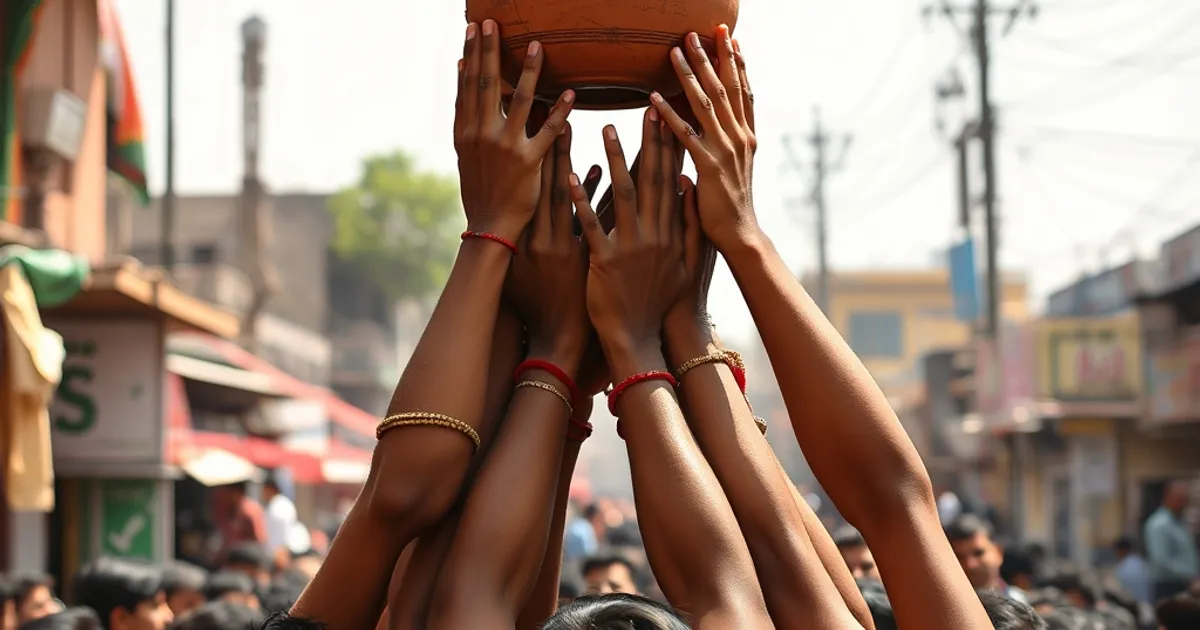
If one tradition defines Janmashtami in this region above all others, it is Dahi Handi. The event reenacts a famous episode from young Krishna's childhood: his habit of stealing dahi (curd) and butter from earthen pots stored by the milkmaids of Gokul. His mother Yashoda responded by tying the vessels higher and higher out of reach. Krishna's answer was to rally his friends — the Gopas — and form human pyramids tall enough to reach the pots.
Today, Dahi Handi involves teams of young men called Govindas who build multi-tiered human pyramids to break a clay pot filled with curd, buttermilk, and sometimes cash prizes, suspended high above the street on a rope. The tallest pyramids can reach 40 to 50 feet, with eight or nine levels of young men stacked in precise formation.
In Pimpri-Chinchwad, Dahi Handi events are organized by housing societies, mohalla committees, mandals, and larger civic organizations. Streets are closed, stages are erected, and crowds gather from early morning on September 5. The atmosphere combines devotional fervor with the charged energy of competitive sport. Teams train for weeks in advance.
Safety improvements over recent years have included age restrictions on the upper tiers, mandatory helmets for top-tier members, and crash mattresses — reforms that followed sustained advocacy from safety groups and court rulings.
Insider Tip: If you want to watch Dahi Handi without getting fully swallowed by the crowd, position yourself near the barriers rather than at ground level, and arrive well before the main event begins. The best view of a multi-tiered pyramid comes from a slight elevation — a first-floor window or a building terrace works perfectly. Check with your local housing society or ward office for Handi locations and schedule timings, which are typically posted and announced about a week before September 5.
Temple Celebrations and Midnight Puja
The temple experience on Janmashtami night in Pimpri-Chinchwad is singular. Major Krishna temples and ISKCON centers open their doors for the full day of fasting and bhajans, building through the evening to the midnight climax.
Bhajans and kirtans run from early evening onward, with devotional singing groups cycling continuously. The jhula (decorative cradle or swing) in which the deity of infant Krishna is placed becomes a focal point of the night — temples decorate it elaborately with marigolds, fabric, and jewellery. Devotees queue to gently rock the cradle, a deeply auspicious act.
At the stroke of midnight, conch shells sound, lamps are waved in abhishek, and the ringing of bells and drums marks the moment of Krishna's birth. The crowd responds with genuine joy — the accumulated emotion of a full day's fasting and preparation releases in that moment. Panchamrit (a ritual mixture of milk, curd, honey, ghee, and sugar) is used for abhishek and distributed as prasad. Devotees who fasted through the day break their fast with prasad and fruit after the midnight puja.
Where to Celebrate in Pimpri-Chinchwad
Pimpri-Chinchwad is a sprawling twin city with distinct neighborhoods — Chinchwad, Pimpri, Akurdi, Bhosari, Nigdi, and Wakad among the most prominent — and each area organizes its own Janmashtami celebrations alongside the city-wide events.
ISKCON temple programs draw large crowds for the full-day bhajan schedule and midnight puja. Mohalla-level Dahi Handi events organized by housing societies bring a neighborhood energy to the celebrations. Mandal-organized events near larger temples include Krishnaleela performances — dramatic enactments of episodes from Krishna's life — that draw family audiences from across the city. Cultural programs, fancy dress competitions for children dressed as Krishna or Radha, and devotional music competitions round out the programming across different venues.
FAQ
Q: Is Janmashtami on September 4 or September 5 in 2026 in Pimpri-Chinchwad? A: For Pimpri-Chinchwad and most of Maharashtra, Krishna Janmashtami 2026 is observed on September 5. The date follows the local panchang timing of the Ashtami tithi as it falls in this region. Some other regions and Vaishnava traditions may observe it on September 4.
Q: Can I attend Dahi Handi as a spectator? A: Yes. Most Dahi Handi events in Pimpri-Chinchwad are public, held in open streets or community grounds. Check local ward announcements, housing society noticeboards, or mandal communications for specific locations and timings closer to September 5.
Q: What do devotees eat on Janmashtami while fasting? A: Devotees observe a phalahar fast — only fruit-based foods are consumed during the day. Common options include sabudana khichdi, potato preparations, milk and milk products, fruits, and dry fruits. No grains are consumed until after the midnight puja.
Q: What is jhula decoration and why does it matter? A: A jhula is a small decorative swing or cradle in which the deity of infant Krishna is placed in the temple. It is decorated elaborately with flowers, fabric, and jewellery. Devotees take turns gently rocking the cradle as a devotional act, symbolizing the care given to the divine child.
Q: When does Ganesh Chaturthi arrive after Janmashtami? A: Ganesh Chaturthi 2026 falls on September 15 in Pimpri-Chinchwad — just 10 days after Janmashtami on September 5. For a city in the Pune region, where Ganesh Chaturthi is a major civic celebration, preparations begin almost immediately after Janmashtami concludes.
Q: What is panchamrit and when is it used? A: Panchamrit is a ritual mixture of five ingredients — milk, curd, honey, ghee, and sugar — used in abhishek (ritual bathing of the deity's image) during the midnight Janmashtami puja. It is distributed as prasad to devotees after the ceremony.
Bottom Line
Janmashtami 2026 in Pimpri-Chinchwad means a full day of fasting, an evening of bhajans building in intensity, a midnight puja with the sound of conch shells and bells, and then a morning of Dahi Handi spectacle on streets that transform overnight into something entirely alive. With Raksha Bandhan 2026 arriving just eight days before on August 28 and Ganesh Chaturthi 2026 following ten days after on September 15, September 5 sits at the peak of the most festival-rich fortnight in the city's calendar. Find your temple, note the local Handi locations, and plan ahead for the midnight crowd — this is the night the city stays up for.