
Janmashtami 2026 in Piscataway: Events, Puja & Where to Celebrate
TL;DR
- 🙏 Janmashtami 2026 falls in late August and is the most anticipated festival night in Piscataway's Desi community.
- 🎉 The fasting calendar begins with Ekadashi on July 24 and Pradosh Vrat on July 26—both meaningful lead-up observances.
- 🌕 Guru Purnima 2026 on July 29 marks the opening of the sacred lunar window that leads to Krishna's birth night.
- 🪔 Midnight puja and dahi handi are the twin pillars of how Desi families in central New Jersey mark Janmashtami.
- 🌸 Starting preparations a few weeks early—decorations, bhog ingredients, fasting schedules—makes all the difference.
The Sacred Calendar: From Ekadashi to Janmashtami
Janmashtami marks the birth of Lord Krishna on the Ashtami tithi—the eighth lunar day of the dark fortnight in the month of Bhadrapada. For Piscataway's Desi community, one of the densest South Asian populations in New Jersey, the celebration does not begin on Janmashtami night alone. It emerges from a series of observances that together build the spiritual atmosphere of late July and August 2026.
The calendar opens with Ekadashi on July 24, 2026. The eleventh day of the lunar fortnight is a universally respected fasting day across Hindu traditions. Many Piscataway families observe Ekadashi by abstaining from grains and focusing on dairy, fruits, and spiritual reading. The fast carries its own merit—and observing it in the weeks before Janmashtami is considered especially auspicious.
Two days later, Pradosh Vrat on July 26, 2026 brings an evening fast dedicated to Lord Shiva, observed during the twilight hours with lamp-lighting, bilva offerings, and prayer. Within the Hindu lunar calendar, each Pradosh Vrat forms part of a rhythm of cumulative devotion that carries devotees steadily toward the major festivals of the season.
On July 29, Purnima (the full moon) arrives alongside Guru Purnima 2026—the day dedicated to honoring spiritual teachers. Mandirs across central New Jersey hold Guru Purnima programs featuring satsang, kirtan, and discourses. For Piscataway's Desi households, this is an ideal day to visit the temple and begin spiritually orienting toward Janmashtami.
August 2, 2026 brings Sankashti Chaturthi, a monthly fast dedicated to Lord Ganesha and observed at moonrise. Families observing Sankashti Chaturthi just weeks before Janmashtami often frame it as seeking Ganesha's blessing for an obstacle-free celebration ahead.
By Nag Panchami 2026 on August 17, 2026, the festive spirit in Piscataway is palpable. Nag Panchami honors serpent deities and coincides with the deep monsoon season in India. For the New Jersey diaspora, it signals clearly: Janmashtami is near.
How Piscataway's Desi Community Celebrates Janmashtami 2026
Central New Jersey holds one of the country's largest South Asian populations, and Piscataway sits at the center of that community. Local mandirs and Hindu cultural organizations typically run Janmashtami programs starting in the evening and building toward the midnight hour of Krishna's birth.
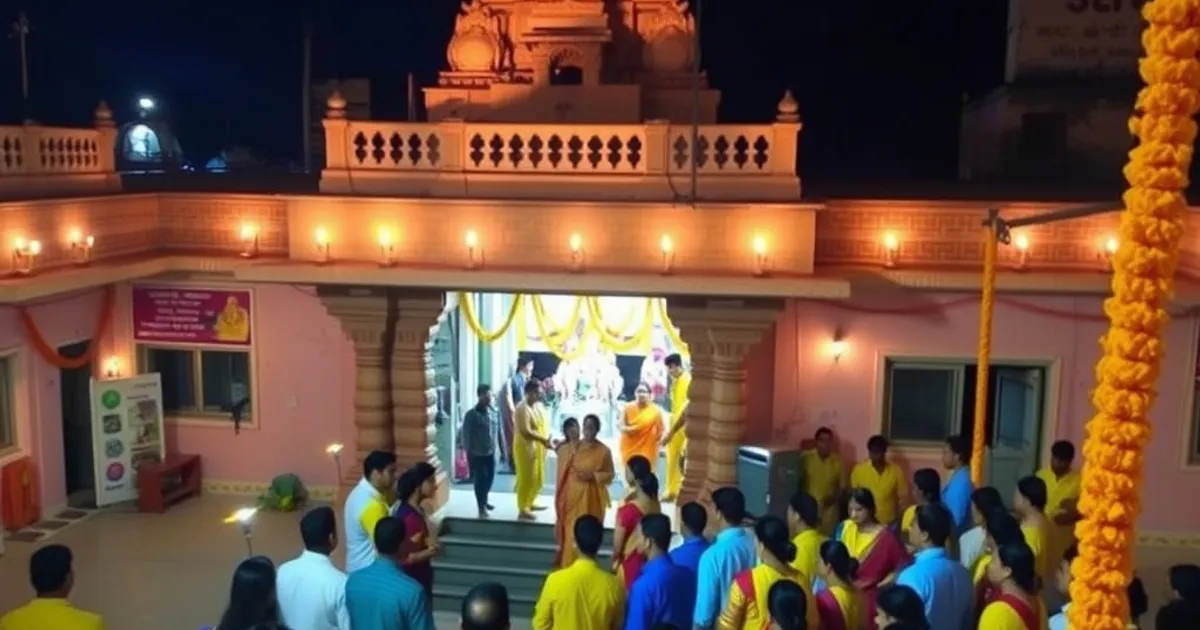
The midnight puja is the heart of the celebration. Devotees gather for bhajan sessions from around 9 PM, singing songs of Krishna's life as anticipation builds. At midnight, a small idol of baby Krishna—often called Laddu Gopal—is bathed in panchamrit, a sacred mixture of milk, honey, yoghurt, ghee, and sugar. The idol is then dressed in fresh clothes, placed in a decorated cradle, and rocked gently as the congregation chants "Jai Shri Krishna." Conch shells and bells fill the air.
Dahi handi is the beloved daytime tradition. Young men form human pyramids to break a clay pot filled with dahi, hung at height in a temple courtyard or community space—reenacting young Krishna's legendary butter-stealing antics. In Piscataway and neighboring Edison and South Brunswick, Desi community groups organize these events and draw large crowds of families and children.
Home preparations begin days before the actual Ashtami. Families trace small footprints from the doorway to the puja room using rice flour, symbolizing Krishna's arrival. Images of Krishna are decorated with peacock feathers and yellow garlands. Sweets are prepared ahead: makhan mishri, kheer, peda, and mathri for the bhog offering.
What to Prepare at Home for Janmashtami
For those celebrating at home in Piscataway, a few organized preparations go a long way.
Puja essentials: A Krishna idol or framed picture, panchamrit ingredients, fresh flowers, incense, a ghee diya, and a small decorative cradle for Laddu Gopal. Most Desi grocery stores in Middlesex County carry everything needed by early August.
Bhog offerings: Makhan mishri—butter and sugar, Krishna's most beloved offering—is the most traditional choice. Kheer, panjiri, fresh fruits, and panchamrit round out the bhog. All items are offered at midnight and then distributed as prasad to the family.
Fasting on Ashtami: Those observing the full Janmashtami fast abstain from grains on Ashtami itself, consuming only dairy and fruits during the day. The fast is broken after the midnight puja with panchamrit as the first taste.
Dress: Yellow, blue, and peacock-green are the colors of Lord Krishna. Many Piscataway families dress children as baby Krishna or Radha for temple events, adding joy and visual warmth to the occasion.
Insider Tip: Do not skip the Ekadashi fast on July 24, 2026. Many devotees in Piscataway who take their Janmashtami celebration seriously begin spiritual preparation here, not on Ashtami itself. Traditional practice holds that the Ekadashi fast two or three weeks before Janmashtami builds merit and sharpens the spiritual focus that carries through to the main celebration. Even a partial Ekadashi observance—skipping grains, focusing on fruits and dairy—is considered meaningful preparation for the season.
FAQ
Q: What date is Janmashtami 2026? Janmashtami 2026 falls in late August on the Ashtami tithi of Krishna Paksha in the month of Bhadrapada. The exact Gregorian date shifts each year with the lunar calendar.
Q: What time does the Janmashtami puja begin? The main ceremony coincides with Lord Krishna's birth at midnight. Temple programs typically begin around 9 PM with bhajans and build toward the midnight abhishek and aarti.
Q: Can I celebrate Janmashtami at home without attending a temple? Yes. A home puja with a Krishna idol, panchamrit, bhog preparations, and bhajan music is a complete observance. Many Piscataway families also tune into live-streamed temple programs simultaneously.
Q: Is dahi handi safe for children to watch? Community-organized dahi handi events maintain reasonable safety standards. Children typically cheer from a safe distance rather than joining the human pyramids.
Q: What sweets are traditional for the Janmashtami bhog? Makhan mishri is the most traditional. Kheer, peda, panchamrit, and fresh fruits are all standard bhog offerings. Grain-based sweets are avoided during the Ashtami fast.
Bottom Line
Janmashtami 2026 is the high point of a sacred season for Piscataway's Desi community—a season that begins with Ekadashi on July 24, flows through Pradosh Vrat, Guru Purnima 2026, Sankashti Chaturthi, and Nag Panchami 2026, and arrives at the Ashtami midnight of Krishna's birth. Start preparations early, keep the fasting calendar close, and this Janmashtami will be among the most spiritually rewarding your household has observed.