
Onam 2026 in Pittsburgh: Events, Puja & Where to Celebrate
TL;DR
- Onam 2026 is one of Kerala's most beloved harvest festivals, and Pittsburgh's Malayali community brings it to life with traditional celebrations 🌸
- Shree Krishna Temple Of Pittsburgh INC and Sri Venkateswara Temple serve as spiritual anchors for Pittsburgh's South Indian community during festival seasons
- Pookalam (flower carpet), Onam Sadhya (grand feast), and Vallam Kali (boat races) are the three pillars that define how the festival is experienced 🍃
- The August–September festival window also includes Guru Purnima, Indian Independence Day, and Nag Panchami — a full season of cultural richness
- Community organizations in Pittsburgh typically organize Onam cultural programs separately from temple observances, so check both calendars
Onam is Kerala's most celebrated festival — a ten-day harvest celebration rooted in the legend of the benevolent King Mahabali, whose spirit is said to visit his beloved people each year during this time. The festival falls in the Malayalam month of Chingam (typically August–September), and in 2026 the main Thiruonam day is expected in late August. For Kerala-origin families in Pittsburgh and the broader Indian community across Western Pennsylvania, Onam is a cultural touchstone that connects generations, maintains traditions, and creates the kind of shared memory that defines diaspora life.
Pittsburgh's Indian community, while smaller than concentrations found in cities like Atlanta or the DC suburbs, is close-knit and active. Malayali families here have built associations that keep Onam alive across decades of settlement, adapting the festival to Pennsylvania's landscape while preserving the essential traditions.
The Meaning Behind the Festival
Onam's mythological heart is the story of Mahabali — a demon king whose just and prosperous rule was cut short by Vamana, the dwarf avatar of Lord Vishnu. Mahabali was so virtuous that Vishnu granted him the boon of visiting his kingdom once a year. That annual return is what Onam celebrates: the idea that under good governance, all people — regardless of caste, class, or origin — prosper equally. It is simultaneously a harvest festival, a homecoming, and a meditation on what a just society looks like.
This mythological narrative is what makes Onam unusual among Hindu festivals. It is joyful rather than austere, focused on communal celebration rather than individual piety. The rituals — making flower carpets, cooking elaborate feasts, playing traditional games, watching boat races — are all expressions of collective abundance.
Pookalam: The Flower Carpet Tradition
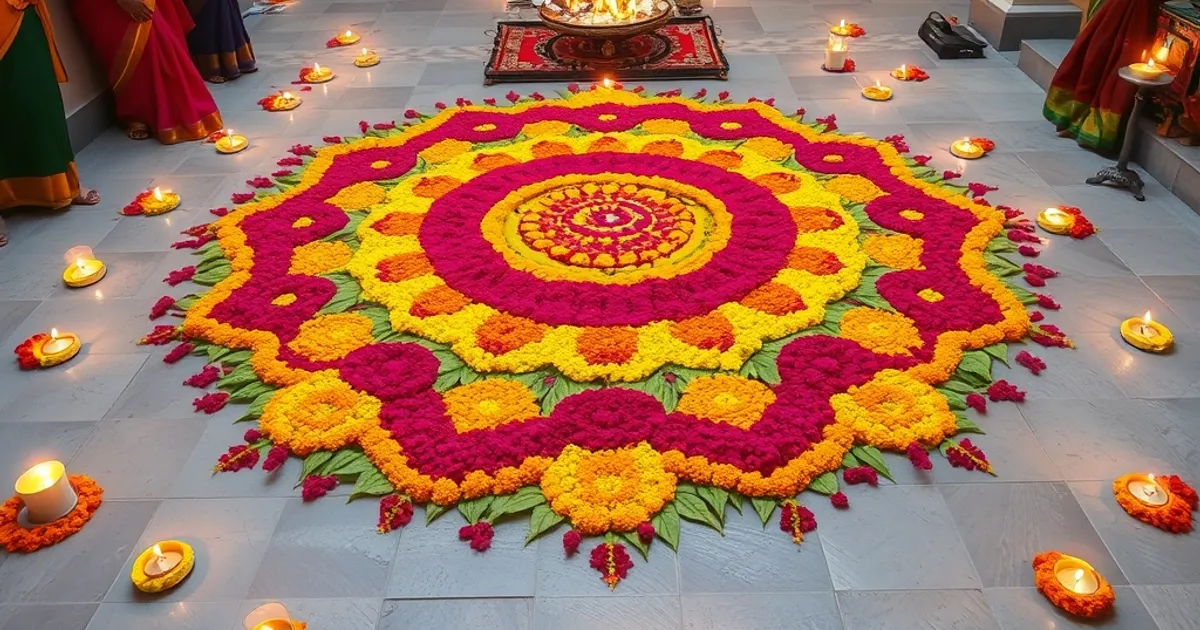
The Pookalam is the visual heart of Onam. Each day of the ten-day festival, families and community groups create intricate floral arrangements on the ground — starting small on the first day (Atham) and growing more elaborate through each successive day until Thiruonam. Traditional Pookalams use specific flowers corresponding to each day of the festival, though in diaspora communities the design matters more than strict adherence to botanical specifications.
Pittsburgh's Onam celebrations typically feature Pookalam competitions among community members. These competitions are genuinely skilled affairs — participants spend hours crafting geometric and figurative designs using flower petals. For families with children, participating is one of the most effective ways to transmit the festival's significance to younger generations.
Insider Tip: If you are attending a Pittsburgh Onam Pookalam competition for the first time, arrive at setup time rather than judging time — watching the design take shape from bare ground to finished carpet is far more memorable than seeing only the completed work.
Onam Sadhya: The Grand Feast
The Onam Sadhya is possibly the most culturally significant meal in the Malayali calendar. Served on a banana leaf, it consists of an elaborate spread of vegetarian dishes — typically 26 or more preparations arranged in a specific sequence on the leaf. Rice is the center, surrounded by dishes ranging from pickles and pappadam to elaborate preparations like avial (a mixed vegetable and coconut curry), olan (ash gourd and black-eyed peas in coconut milk), erissery (pumpkin and lentils), pulissery (a yogurt-based curry), and multiple pachadi (yogurt-based accompaniments).
The meal ends with payasam — Kerala's beloved kheer — in multiple varieties, with Palada payasam and Ada pradhaman being the most traditional.
In Pittsburgh, Onam Sadhya is served at community Onam programs organized by Malayali associations and South Indian community groups. The logistics of preparing a full Sadhya for a large gathering represent a significant community undertaking, and the cooks who coordinate these events deserve recognition.
Vallam Kali and Cultural Programs
Vallam Kali — snake boat races — are central to Onam in Kerala itself, where the Nehru Trophy Boat Race in Alappuzha is one of the most famous events in the Indian cultural calendar. Diaspora communities don't have the Pampa River's backwaters, but the competitive spirit of Vallam Kali finds expression in community sports events and cultural programming.
Pittsburgh's Onam celebrations typically include a range of cultural performances: classical Mohiniyattam and Bharatanatyam dance, folk performances like Thiruvathirakali (a group dance performed by women), and Puli Kali (tiger dance) representations. Music programs featuring Malayalam film songs and classical Carnatic pieces are common. These cultural programs serve double duty — entertainment for current community members and cultural transmission for the next generation.
Temples and Spiritual Observances
The spiritual dimension of Onam is observed alongside the cultural celebrations. Shree Krishna Temple Of Pittsburgh INC serves Pittsburgh's Vaishnava community and provides a space for the religious observances that accompany the harvest festival season. Lord Krishna's connection to Kerala's spiritual traditions makes this temple a natural gathering point during Onam.
Sri Venkateswara Temple is one of the landmark institutions of Pittsburgh's South Indian Hindu community. Known to devotees as the Balaji Temple, Sri Venkateswara Temple serves a large and devoted congregation from across Western Pennsylvania. During festival seasons, the temple hosts special pujas, cultural events, and community gatherings that bring together Tamil, Telugu, Kannada, and Malayalam-speaking families. The temple's August programming typically encompasses the full arc of the harvest festival season.
The Broader Festival Calendar Around Onam
Onam doesn't arrive in isolation. The weeks leading up to Thiruonam in 2026 are filled with significant observances that set the devotional tone for the season.
Guru Purnima 2026 falls on July 29, which coincides with Purnima — the full moon. This is a day of deep significance for communities connected to any spiritual tradition, as it honors the guru-disciple relationship at the heart of Indian spiritual life. Pradosh Vrat on July 26 observes the bimonthly fast dedicated to Lord Shiva, particularly relevant for the Shaivite families who form part of Sri Venkateswara Temple's congregation.
Sankashti Chaturthi on August 2 marks the monthly Ganesha fast, and given that Ganesha is invoked at the beginning of all auspicious undertakings, this is a natural preparatory observance before the main Onam season. Nag Panchami 2026 on August 17 — the fifth day of the bright fortnight of Shravan — is particularly significant in South Indian tradition, where serpent worship has deep roots.
Indian Independence Day on August 15 creates a natural cultural bridge in the community calendar. Many Pittsburgh Indian organizations combine Independence Day programming with early Onam preparations to kick off the season.
FAQ
When is Onam 2026? Onam 2026's main day, Thiruonam, falls in late August. The ten-day celebration begins with Atham and builds toward Thiruonam. Check with Malayali community associations in Pittsburgh for the specific community celebration dates, which sometimes differ from the astronomical Thiruonam depending on local scheduling.
Do I need to be Malayali to celebrate Onam in Pittsburgh? Onam is explicitly inclusive — the festival's mythology celebrates the idea of a just society where all people prosper together, and Pittsburgh's Onam events are typically open to all members of the Indian community and beyond.
What role do temples play in Onam celebrations? Shree Krishna Temple Of Pittsburgh INC and Sri Venkateswara Temple provide the spiritual observance framework, with special pujas and programs during the festival period. The major cultural celebrations — Sadhya, Pookalam, performances — are often organized separately by Malayali community associations.
Is Onam Sadhya vegetarian? The traditional Onam Sadhya is entirely vegetarian — no meat, fish, or eggs. This is one of the largest and most elaborate vegetarian meals in any culinary tradition.
What is the connection between Onam and Lord Vishnu? The festival commemorates the story of Vamana, Vishnu's dwarf avatar, who displaced King Mahabali. Rather than being a story of conquest, the narrative is typically interpreted as a story of grace — Mahabali's devotion was so pure that Vishnu blessed him with the annual return to his people.
Bottom Line
Onam 2026 in Pittsburgh will be another chapter in a community tradition that Malayali families and South Indian diaspora organizations have built over decades. With Shree Krishna Temple Of Pittsburgh INC and Sri Venkateswara Temple providing the spiritual infrastructure and community associations coordinating the cultural programming, Pittsburgh's Onam celebrations offer the full experience — Pookalam, Sadhya, dance, and devotion. The surrounding festival calendar, from Guru Purnima through Nag Panchami and Indian Independence Day, makes the August–September window one of the most culturally active periods of the year for Pittsburgh's Indian community. Celebrate well.