
Port of Spain Celebrates 180th Indian Arrival Day as Community Plans Grand Ram Mandir
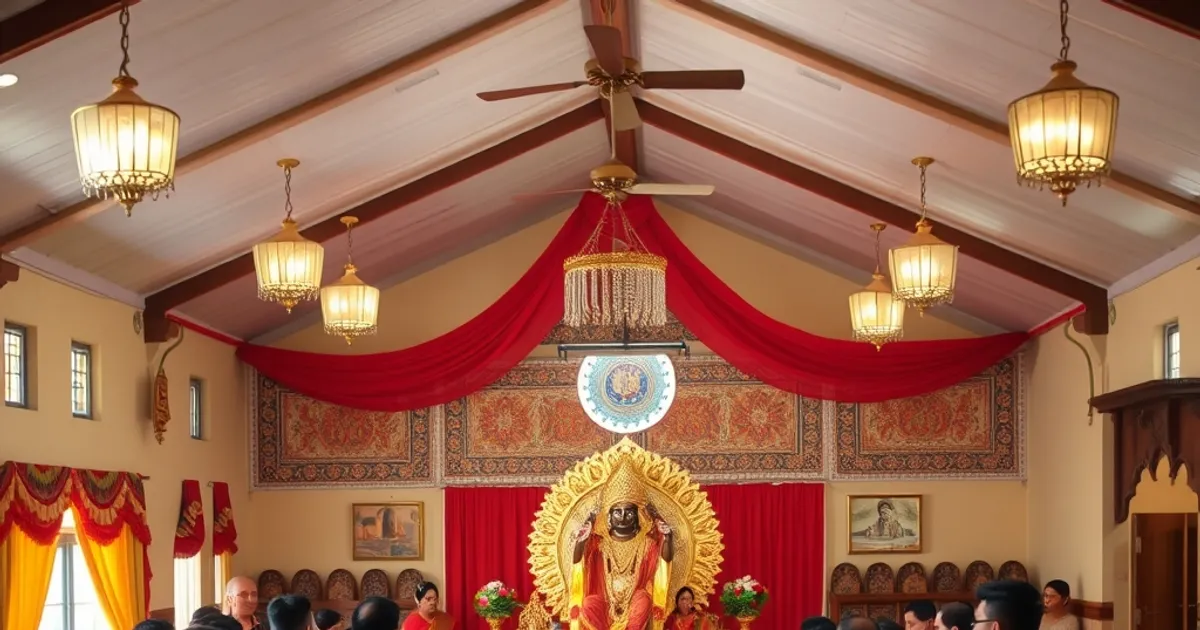
Trinidad and Tobago's Indo-Trinidadian community, numbering more than 548,000 people — roughly a third of the nation's population — marked the 180th anniversary of Indian Arrival Day in Port of Spain, honouring the first group of Indian immigrants who landed in 1845. The celebration, hosted for the first time by the Indian High Commission, drew senior government ministers and community leaders, reflecting the deep political and cultural integration of the South Asian diaspora in the twin-island republic. News of plans to build a grand Ram Mandir in the capital, alongside a 50th-anniversary retrospective of India's legendary 1976 cricket triumph at Queen's Park Oval, further underscored the enduring vitality of Indo-Trinidadian identity.
🤝 High Commission Hosts Landmark 180th Indian Arrival Day Celebration
The Indian High Commission in Trinidad and Tobago hosted its first-ever official celebration of Indian Arrival Day, marking the 180th anniversary of the moment in 1845 when the first group of Indian immigrants set foot on Caribbean soil. Minister of Foreign and Caribbean Community Affairs Sean Sobers served as Chief Guest at the gathering in Port of Spain, alongside Speaker of the House of Representatives Jagdeo Singh, Deputy Speaker Dr Aiyna Al, senior ministers, officials, and community leaders from across the country. The High Commission shared video of dance and music performances that formed part of the day's programme, capturing a festive atmosphere of sunshine and community pride. The event was accompanied by a striking reminder of the community's scale: according to the Ministry of External Affairs, 548,279 persons of Indian origin live in Trinidad and Tobago, a nation of approximately 1.5 million people, meaning those of Indian descent make up more than a third of the total population. The celebration underlined how the descendants of those early arrivals — who came as indentured labourers under British colonial rule — have woven themselves into every layer of Trinidadian national life, from the legislative chamber to the arts and cultural institutions. [3]
🪔 Grand Ram Mandir Planned for the Heart of Port of Spain
Trinidad and Tobago is moving forward with plans to construct a grand Ram Mandir in Port of Spain, a development that would establish one of the most significant Hindu houses of worship in the Caribbean and deepen Hindu spiritual ties in the twin-island republic. The planned mandir, dedicated to Lord Ram, would serve as a major centre of devotional practice, cultural programming, and community gathering for a Hindu population whose roots stretch back to the indentured labourers who arrived from the Indian subcontinent beginning in 1845. Trinidad and Tobago is home to one of the largest concentrations of Hindus in the Western Hemisphere outside South Asia, with temples and mandirs spread across the country serving not only as places of prayer but as anchors of language education, festival observance, and intergenerational cultural transmission. A grand Ram Mandir in the national capital would carry symbolic weight well beyond its religious function, representing a visible statement of the community's deep and permanent presence in Trinidadian civic life. Hindu organisations in T&T have long combined spiritual leadership with social welfare, and the planned structure is expected to extend that tradition of community service in the heart of Port of Spain. [2]
🎬 Fifty Years On: India's Legendary 1976 Chase at Queen's Park Oval
Queen's Park Oval in Port of Spain, a cricket ground celebrated for the beauty of its setting beneath the Northern Range mountains, became the site of one of cricket's most celebrated achievements when India completed a seemingly impossible fourth-innings chase there in April 1976. On the 50th anniversary of that match, commentators have revisited the feat as a landmark not only in the sport but in the story of Indian cricket's journey to global confidence. India successfully chased a target of 406 runs — at the time the highest successful fourth-innings total in Test history — against a formidable West Indian side on a slow, turning track. The only previous instance of a team chasing over 400 in a Test was Don Bradman's Australian 'Invincibles' of 1948. The triumph was shaped by the tenacity of Sunil Gavaskar and Mohinder Amarnath, the artistry of Gundappa Viswanath, and the finishing aggression of Brijesh Patel. Notably, the match was the first Test in which both Gavaskar and Viswanath each scored a century. The chase has been described as a lesson in collective mental resilience, with each batsman pacing his innings with composure to convert what had appeared an insurmountable target into a defining moment of Indian sporting history. [1]
🎉 Gita Mahotsav Extends India's Cultural Reach to T&T's Diaspora
Indian diplomatic missions around the world, including in the Caribbean region, marked the International Gita Mahotsav 2025, an annual global celebration centred on the teachings of the Bhagavad Gita that has grown into a coordinated programme of cultural and spiritual events at Indian High Commissions and embassies abroad. The celebration involves readings, lectures, recitations, and cultural performances organised by Indian missions in their host countries, providing overseas communities with a structured connection to a shared scriptural and literary heritage. In Trinidad and Tobago, where Hindu traditions have been practised continuously for more than 180 years, events of this kind carry particular resonance for a community that has sustained festivals, rituals, and religious instruction across generations, thousands of kilometres from the South Asian subcontinent. Annual observances including the Gita Mahotsav, Indian Arrival Day, and Divali now occupy recognised positions in Trinidad and Tobago's national calendar, reflecting the degree to which Indo-Trinidadian traditions have been woven into the country's broader cultural identity. These occasions also serve as touchpoints for renewed engagement between the diaspora and India, through performances, diplomatic visits, and programmes that strengthen the living ties connecting Port of Spain's Indian-descended community to the subcontinent. [5]
Sources: [3] The Indian Express · [2] NewsGram · [1] Counterview · [5] The Assam Tribune