
Janmashtami 2026 in Raleigh: Events, Puja & Where to Celebrate
Janmashtami 2026 in Raleigh: Events, Puja & Where to Celebrate
TL;DR 🎉
- Krishna Janmashtami falls on September 4, 2026 — the emotional and devotional anchor of the festival season for Raleigh's Indian-American community
- The July–September calendar is rich: Guru Purnima 2026 (July 29), Nag Panchami 2026 (August 17), Raksha Bandhan 2026 (August 27), and Ganesh Chaturthi 2026 (September 14) all land in quick succession
- Research Triangle Park draws a large and well-organized Indian-American population that coordinates celebrations at every major date
- Community registrations for Janmashtami midnight events fill up weeks in advance — plan accordingly
- Ekadashi and Pradosh Vrat dates this season offer quieter devotional moments between the big community gatherings
The Festival Calendar for Raleigh in 2026
Raleigh's Indian-American diaspora observes the same lunisolar calendar as their counterparts across South Asia and across the world, and the July–September 2026 stretch is one of the fullest periods on that calendar. Community organizations, cultural associations, and local temples coordinate so that families separated from their ancestral cities can mark these occasions with shared ritual and celebration.
Ekadashi falls on July 24, August 8, August 23, September 7, and September 22. These fortnightly fasting days honoring Vishnu are often maintained as personal household observances — grains are avoided, prayer intensifies, and readings from the Bhagavata or Ramayana fill the evening hours.
Pradosh Vrat arrives on July 26, July 27, August 10, August 25, and September 8. The thirteenth-tithi observance sacred to Shiva prompts families to visit any local temple following a Shaivite tradition for the evening puja — or, where no suitable temple is close, to maintain the vrat at home with a simple lamp and prayer.
Guru Purnima 2026 (July 29) honors the teacher-student lineage across Hindu, Buddhist, and Jain traditions. In Raleigh, the day often manifests as community satsang — bhajan evenings held in cultural centers or homes, where gratitude to teachers and elders is expressed collectively.
Purnima on July 29 and August 27 are full-moon days especially favorable for worship. The August 27 Purnima shares the date with Raksha Bandhan 2026 this year, adding a layer of devotional significance to the sibling-bond festival.
Sankashti Chaturthi on August 2 and August 31 are Ganesha-centered observances timed to the moonrise. Families gather to make modak offerings and prayers to the remover of obstacles.
Amavasya on August 12 and September 10 prompt ancestral remembrance. In diaspora life, these new-moon days are maintained as personal moments of quiet ritual — simplified versions of the riverbank rites of the homeland, adapted to context without losing their essential meaning.
Nag Panchami 2026 (August 17) is observed in many Indian-American homes with milk offerings and prayers to Nag Devata. Community temples in the greater Raleigh-Durham area may organize specific pujas on this date.
Raksha Bandhan 2026 (August 27) is among the most durably maintained diaspora celebrations. The act of tying a rakhi requires nothing beyond the thread, a prayer, and a sibling — its emotional resonance keeps it alive generations into diaspora life. Cultural associations in the Research Triangle often host community rakhi events so that families without extended family nearby can participate in the collective warmth of the festival.
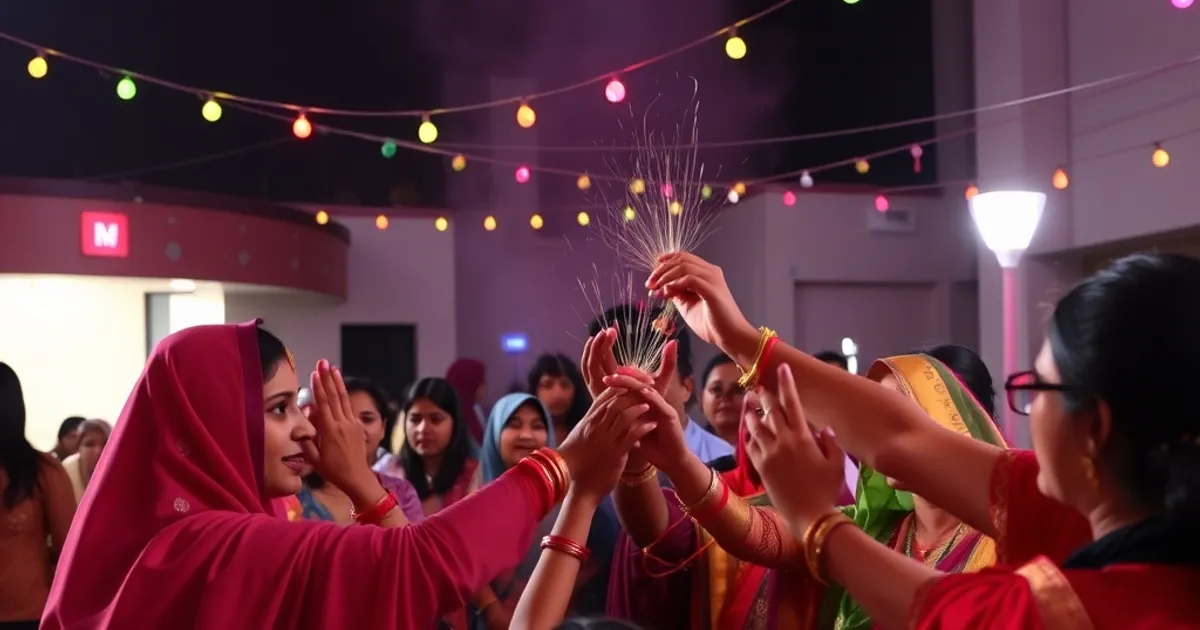
Krishna Janmashtami 2026 (September 4) is the headline event of the entire season. The midnight birth of Krishna is marked with bhajan marathons running deep into the night, dahi-handi events that enact young Krishna's love of butter and the community's love of festivity, and midnight abhishekam at Vaishnavite temples. In the Research Triangle, the Indian-American community is large enough and organized enough that multiple groups coordinate events simultaneously — expect rangoli competitions, classical dance and drama performances, elaborate tableaux depicting Krishna's life, and community meals centered on traditional Janmashtami prasad. The atmosphere on the night of September 4 is genuinely festive.
Ganesh Chaturthi 2026 (September 14) brings the season to its close with the festival of the elephant-headed deity. Eco-friendly clay Ganesha idols, pandal setups, daily aartis for four or ten days depending on the organizing community, and the ceremonial farewell of visarjan make this a multi-day investment of community energy. Children and multi-generational families participate at every stage.
The Research Triangle and Its Festival Life
Raleigh sits at the center of the Research Triangle — alongside Durham and Chapel Hill — which has attracted a substantial Indian-American population over the past three decades. Engineers, scientists, physicians, and technology professionals from across India settled here initially for graduate study or research careers and built communities that have now extended to second and third generations.
This demographic breadth means the festival calendar is observed across regional lines. Gujarati families celebrate Janmashtami alongside Tamil families who have adopted the midnight vigil as their own. Telugu communities run Ganesh Chaturthi pandals that welcome all comers. Punjabi families organize Raksha Bandhan events with North Indian traditions, while South Indian families bring their own rituals to the same occasion. The result is a diaspora festival culture that is simultaneously specific and inclusive.
The lunisolar calendar creates shared structure — a recurring rhythm of Ekadashi, Pradosh Vrat, Purnima, and the major seasonal festivals — around which community life organizes itself. These dates are the moments when dispersed families become a gathered community again.
Insider Tip
For Janmashtami 2026, identify the organizing groups in your area no later than mid-August. ISKCON-affiliated communities, Hindu temple associations, and Indian cultural centers in the Triangle typically publish event details and registration links two to four weeks ahead. Midnight programs at well-attended venues fill up. If you miss the main event, many temples hold an open darshan window in the early evening of September 4 that is accessible without prior registration — Krishna's birthday is celebrated generously.
FAQ
When is Krishna Janmashtami 2026? September 4, 2026. The midnight celebration begins on the evening of September 4 and peaks at midnight.
Are there Hindu temples in Raleigh for festival events? The broader Raleigh-Durham-Chapel Hill area has multiple Hindu mandirs and cultural centers. Checking with local Indian-American associations and community Facebook groups is the most reliable way to find current event listings.
When is Raksha Bandhan 2026? August 27, 2026. It falls on Purnima (full moon) this year.
When is Ganesh Chaturthi 2026? September 14, 2026, with multi-day celebrations continuing through the following days depending on the community.
Is Guru Purnima 2026 observed in Raleigh? Yes — July 29, 2026. Look for satsang events and bhajan evenings organized by local spiritual groups and cultural associations.
Bottom Line 🙏
Raleigh's Indian-American community has built a devotional and cultural life anchored in the same lunisolar calendar that governs festival observance across South Asia. Janmashtami 2026 on September 4 is the season's main event — a midnight celebration that brings the community together in bhajan, dahi-handi, and shared prayer — but the weeks surrounding it, from Guru Purnima 2026 in late July through Ganesh Chaturthi 2026 in mid-September, deliver a nearly continuous festival season. Register early, connect with local associations, and show up for all of it.