
Flood Warnings, a Mega Hospital, and Infrastructure Ambitions: Rawalpindi in the News
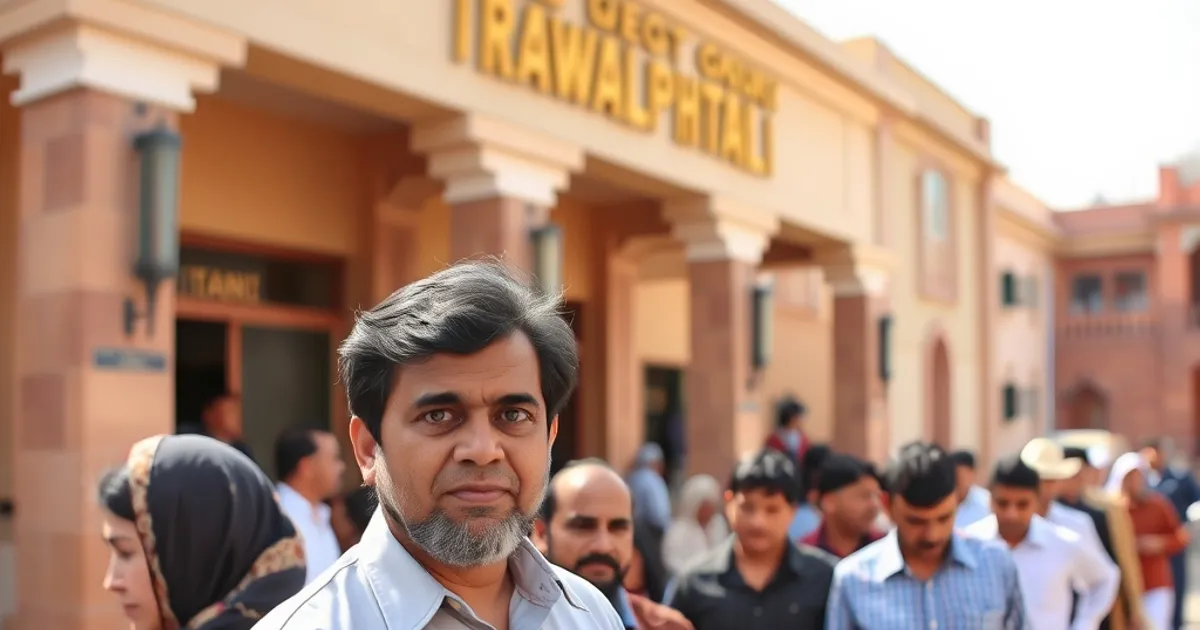
Rawalpindi is navigating an urgent monsoon season alongside a wave of major infrastructure announcements and civic reform. Flood warnings loom over low-lying neighborhoods as the Nullah Lai and surrounding drainage systems strain under heavy rain, while simultaneously the Punjab government has approved a Rs 50 billion hospital, unveiled a new signal-free corridor, allocated funds for high-speed rail, and launched mosque cleanliness drives — all while a Ring Road NOC controversy and flour supply disruptions add layers of civic complexity to one of Pakistan's most consequential cities.
Monsoon Rains Raise Urban Flood Alarms Across Rawalpindi and Islamabad
Rawalpindi and Islamabad are on heightened alert as monsoon rains intensified across the twin cities in late July 2026, bringing renewed warnings of urban flooding that could threaten lives and property across low-lying neighborhoods. According to Dawn, light to heavy rain has already struck the area, and meteorological forecasts indicate that the monsoon season has considerably further to run. The city's chronic flooding vulnerability is rooted in decades of unchecked urban expansion along the banks of Nullah Lai and its tributaries — water channels that quickly exceed their capacity when rainfall is sustained or intense. City authorities have urged residents in flood-prone localities to remain vigilant and to move to higher ground if water levels rise rapidly. The threat of flooding in Rawalpindi carries the gravest human cost: in previous monsoon seasons, flash floods along the Lai have caused fatalities, displaced thousands of families, and destroyed homes and livelihoods across the city. Civic agencies including the Rawalpindi Development Authority, district administration, and rescue services have been placed on standby. Residents — particularly those in older neighborhoods built close to the nullahs — are being urged to clear drain outlets and avoid encroachments on water channels that impede natural flow during heavy downpours. [1]
Rs 50 Billion Kulsoom Nawaz Sharif Hospital Approved for Rawalpindi's Peshawar Road
The Punjab government has approved one of the largest public healthcare projects in Rawalpindi's history: a 3,000-bed hospital to be constructed on the 36-kanal site of the former Government Transport Service depot along Peshawar Road in Chohar Harpal, Rawalpindi Cantonment. Named the Kulsoom Nawaz Sharif General Hospital, the project is estimated to cost Rs 50 billion, with funding to be shared between the federal and provincial governments. Construction is scheduled to begin in the 2027-28 financial year, pending final clearance from the Punjab Planning Board. The hospital will feature thirteen operation theatres, outpatient and emergency departments, and specialised wards covering maternity, cardiac, orthopaedic, neurosurgery, kidney, eye, ENT, and paediatric care. An attached teaching hospital, nursing hostel, doctors' hostel, and research laboratories will complement the clinical facilities, making the complex a comprehensive healthcare and training hub. Positioned on Peshawar Road with close access to the GT Road and the motorway, the site is expected to significantly improve emergency response times for accident victims. The land, owned by the Punjab Communications Department, has remained largely vacant for 35 years after a brief period of use as a private bus terminal, and its transfer to the Health Department marks a long-overdue repurposing of prime urban land. [9]
🏢 Signal-Free Rawalpindi Opens, and Punjab Eyes High-Speed Rail for the Twin Cities
Rawalpindi celebrated a major urban milestone in May 2026 when Chief Minister Maryam Nawaz Sharif inaugurated Marka-e-Haq Square, the centrepiece of the city's Signal-Free Rawalpindi project. Delivered in just 179 days, the initiative has produced five underpasses, two overhead bridges, and the city's first purpose-built pedestrian bridge, transforming the congested stretch from Rawalpindi Kutchery Chowk to the Rekhi Din area into a continuous signal-free corridor capable of handling over 200,000 vehicles daily. The pedestrian bridge at Marka-e-Haq Square adds a modern, safe crossing for commuters in an area previously dominated by chaotic mixed traffic. Looking to longer-horizon mobility, Dawn reports that Punjab has separately allocated funds for high-speed rail and glass train projects in the twin cities region, reflecting the provincial government's stated ambition to modernize inter-urban connectivity and ease pressure on overcrowded roads as Rawalpindi and Islamabad continue to expand. Together, the signal-free corridor and rail funding represent a sustained infrastructure push aimed at making the twin cities more liveable. Observers note that delivery timelines and political continuity remain the key variables determining whether these ambitious plans translate into lasting gains for ordinary residents. [5]
🗳️ Ring Road NOC Controversy Deepens as Punjab Reviews Disputed Approvals
A controversy over the Rawalpindi Ring Road project has escalated, with the Punjab government initiating formal proceedings to revoke No Objection Certificates issued for proposed service areas along the multibillion-rupee highway. The Express Tribune reports that provincial authorities allege former district officials in Rawalpindi issued the NOCs without the required prior approval from Punjab, potentially altering the project's original design in an unauthorized manner. A comprehensive review of the legal, administrative, and financial records is now underway, with all documentation to be forwarded to Punjab for examination. Minutes of a disputed meeting held before the approvals were granted will also be placed before provincial authorities, and if irregularities are confirmed, action may be taken against those responsible. The controversy deepens an already troubled project: the inauguration deadline set for the second week of July 2026 passed without the road opening to traffic. Fencing along multiple sections remains incomplete, and the relocation of utility infrastructure — including electricity, gas, and irrigation works — continues to be coordinated among the Rawalpindi Development Authority, IESCO, SNGPL, and the National Highway Authority. Newly appointed officials are described as proceeding cautiously, focused on placing all previous decisions before Punjab for thorough review before committing to further action. [2]
🗳️ Clean Punjab Drive, Flour Crisis Fears, and Food Safety Action Shape Rawalpindi's Week
A cluster of civic and consumer-protection developments is reshaping daily life in Rawalpindi. Under the Clean Punjab programme, the Rawalpindi Waste Management Company launched a special cleanliness drive in mosques and their surroundings across the district on July 25, with sanitation workers cleaning interiors, washing premises, and treating areas to provide a hygienic environment for worshippers — part of Chief Minister Maryam Nawaz Sharif's broader urban sanitation mandate. On the food security front, a dispute between the Pakistan Flour Mills Association and the Punjab Food Department triggered alarm across Rawalpindi and Islamabad after wheat procurement permits issued to mills in the division were reportedly revoked. The PFMA warned of a production shutdown that would threaten flour supply to millions of residents in a region that produces little wheat locally, and called for immediate restoration of permits. Meanwhile, food safety authorities destroyed around 3,000 rotten eggs during a crackdown on substandard products circulating in Rawalpindi's markets. These developments — a religious-hygiene campaign, supply-chain disruption fears, and active food safety enforcement — reflect an uneven civic landscape in which government programmes and market pressures are simultaneously shaping the lives of ordinary Rawalpindi residents. [3]
Sources: [1] Dawn · [9] The Express Tribune · [5] RADIO PAKISTAN · [2] The Express Tribune · [3] The News Pakistan