
Onam 2026 in Rome: Events, Puja & Where to Celebrate
TL;DR
- 🌸 Onam 2026 is the centrepiece of the Desi calendar this season — Kerala's harvest festival celebrated by the Indian community across Rome
- 🌕 Guru Purnima 2026 (July 29) opens the festive stretch with a full moon dedicated to teachers and spiritual lineages
- 🐍 Nag Panchami 2026 (August 17) and Raksha Bandhan 2026 (August 27–28) carry the season through late August
- 🙏 Krishna Janmashtami 2026 (September 4) and Ganesh Chaturthi 2026 (September 14) close out an extraordinary run of major festivals
- 🇮🇹 Rome's small but close-knit Desi community makes every festival an occasion for genuine connection
The Most Festive Months of the Year for Rome's Desi Community
Rome is not a city you would typically associate with Hindu festival celebrations. And yet, tucked within its ancient neighbourhoods, the city holds a community of Indian and South Asian families — IT professionals, students, healthcare workers, academics, and longtime residents — who carry their culture with them and find ways to mark the festivals that define the rhythm of life back home.
For this community, the months from late July through mid-September 2026 represent one of the most festival-dense stretches of the entire year. The calendar runs from Guru Purnima 2026 in late July through to Ganesh Chaturthi 2026 in mid-September, with several major observances in between. At the heart of the season is Onam 2026 — the Kerala harvest festival that, for many South Indians in Rome, is the celebration of the year.
Guru Purnima 2026: Honoring the Teacher
The season opens on July 29 with Guru Purnima 2026, the full moon of the month of Ashadha. This is one of the most profound observances on the Hindu calendar — a day dedicated to honouring the guru, the teacher, the lineage of wisdom that connects the present practitioner to the source of their tradition.
For Hindus, Guru Purnima honours the sage Vyasa, compiler of the Vedas and author of the Mahabharata. Buddhists mark it as the day the Buddha gave his first teaching at Sarnath. Jains observe it as Treenok Guha Purnima. For Rome's Desi community, the day is an occasion to gather, to call home, to reflect on gratitude. Without a dedicated Hindu temple in the immediate vicinity, many families observe Guru Purnima 2026 through home puja, virtual gatherings with family and community back in India, and quiet personal reflection.
Also falling in this opening window: Ekadashi (July 24 and 25) — the eleventh lunar day, observed as a fast by Vaishnavite families — and Pradosh Vrat (July 27), a Shiva-dedicated fast on the thirteenth day of the lunar fortnight. Sankashti Chaturthi (August 2) follows shortly after, a monthly fast for Lord Ganesha observed primarily by Marathi and South Indian families.
Nag Panchami 2026 and Raksha Bandhan 2026: Late August
Nag Panchami 2026 (August 17) is the festival of the serpent deities, falling on the fifth day of the bright fortnight of Shravan. In India, it is marked by offerings of milk at serpent shrines and anthill formations. In Rome, as with many festivals in the diaspora, it becomes a domestic observance — puja at the home altar, the preparation of traditional foods, and often a video call with parents or grandparents who are marking the day more elaborately at home.
Raksha Bandhan 2026 (August 27–28) is one of the festivals that diaspora families feel most acutely. The rakhi thread that a sister ties on her brother's wrist is a gesture of love and protection, and the separation of distance makes it even more charged with meaning. In Rome, many Indian families arrange for rakhis to be sent from India in advance, or for siblings who have both settled in Europe to travel and meet on the day. For those without family nearby, Raksha Bandhan 2026 is often observed through community gatherings where the bonds of friendship become a substitute for the bonds of blood.
Insider Tip: Raksha Bandhan rakhi-tying and small community iftar-style gatherings for Indian residents in Rome are often organized through WhatsApp groups and local Indian cultural associations. Connecting with the Indian Cultural Association of Rome or enquiring through local Indian restaurants and grocery stores is one of the most reliable ways to find out what is being organized this season.
Onam 2026: Kerala's Harvest Festival Comes to Rome
Onam 2026 is the centrepiece of this season for Rome's Desi community. The festival runs for ten days, culminating on Thiruvonam — the day when, according to tradition, the beloved King Mahabali returns from the underworld to visit the people of Kerala. It is a festival of abundance, gratitude, and homecoming.
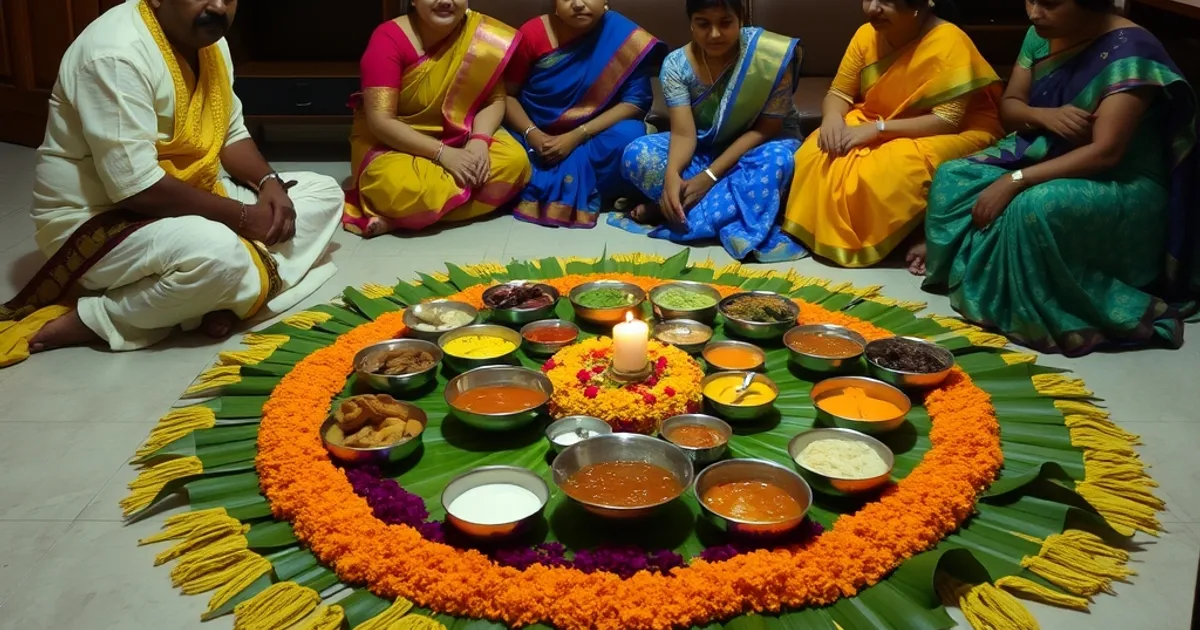
For Kerala's diaspora in Rome, Onam is the festival. Even families who have lived in Italy for fifteen or twenty years maintain Onam traditions with extraordinary fidelity. The pookalam — an intricate carpet of fresh flowers arranged in concentric rings outside the front door — appears in European apartments as faithfully as it does in houses in Thrissur or Kochi. The Onam Sadhya, the elaborate traditional feast served on a banana leaf with dozens of dishes including avial, thoran, olan, payasam, and more, becomes an all-day cooking project and a communal meal.
In Rome, Onam 2026 is likely to be marked through community potluck gatherings, apartment celebrations, and shared online events connecting Keralite families across Italy. The Malayali community in Italy is small but deeply networked. If you are Keralite and new to Rome, reaching out to local Malayali WhatsApp networks or Indian cultural groups before the festival will connect you to wherever the celebrations are happening.
For non-Keralite Indian families in Rome, Onam 2026 is also a beautiful invitation to experience one of India's most visually stunning and culinarily extraordinary festivals. The Sadhya alone — with its precision of flavors and its culture of communal hospitality — is worth attending if you can find a gathering open to guests.
Krishna Janmashtami 2026 and Ganesh Chaturthi 2026: The Grand Finale
The season closes with two of Hinduism's most joyfully celebrated festivals.
Krishna Janmashtami 2026 (September 4) marks the birth of Lord Krishna at midnight. The vigil, the songs, the decorated jhula (swing) set up for the infant Krishna, and the moment of celebration at the exact hour of birth — these traditions are maintained by Krishna devotees wherever they are in the world. ISKCON has a presence in several major Italian cities, and Rome's Desi community may find ISKCON events a way to observe Janmashtami in a collective setting.
Ganesh Chaturthi 2026 (September 14) — ten days after Janmashtami — is the festival of Lord Ganesha, beloved as the remover of obstacles and the lord of new beginnings. In Maharashtra, it is celebrated publicly on a massive scale; in Tamil Nadu it is a quieter domestic observance. In Rome, Ganesh Chaturthi 2026 is typically observed at home with an idol of Ganesha installed, modaks offered, and the family gathering for puja over the festival days.
FAQ
Q: Are there Hindu temples in Rome where these festivals can be observed communally? A: Rome does not have a dedicated large Hindu temple in the way that cities like London, Toronto, or Amsterdam do. Small community prayer halls exist, and ISKCON centers are sometimes used for major festivals. For most observances, Rome's Desi community gathers in private homes or community halls organized through cultural associations.
Q: How do diaspora families in Rome typically find out about Onam and other festival events? A: Word of mouth and community WhatsApp groups are the primary channels. Connecting with the local Indian cultural association, Indian grocery stores, or Indian restaurant communities is the most reliable way to stay in the loop.
Q: Is Onam 2026 only for Keralite Hindus, or can anyone participate? A: Onam is celebrated across communities in Kerala regardless of religion, and many non-Keralites who attend an Onam Sadhya or pookalam event find it one of the warmest cultural experiences they have had. In the diaspora, Onam gatherings are often open and welcoming to anyone interested in celebrating together.
Bottom Line
For Rome's Desi community, the months ahead hold an extraordinary run of festivals — from Guru Purnima 2026 in late July to Ganesh Chaturthi 2026 in mid-September. The season's centrepiece is Onam 2026, the Kerala harvest festival that brings Malayali families together across Europe with food, flowers, and memory. Krishna Janmashtami 2026, Raksha Bandhan 2026, and Nag Panchami 2026 fill out a calendar that, for those who observe it, transforms the late summer in Rome into something that feels, briefly and beautifully, like home.