
Raksha Bandhan 2026 in Rome: Events, Puja & Where to Celebrate
TL;DR
- Raksha Bandhan 2026 on August 27 is the emotional center of this season for South Asians in Rome — a festival of sibling bonds that sharpens the feeling of distance. 🪡
- Guru Purnima 2026 on July 29 opens the season; Ganesh Chaturthi 2026 on September 14 closes it.
- Nag Panchami 2026 and Krishna Janmashtami 2026 arrive between them, each with distinct traditions that adapt well to home observance or diaspora gatherings.
- Regular fasting days — Ekadashi, Pradosh Vrat, Sankashti Chaturthi — give the weeks between major festivals a steady structure.
- This guide covers the full calendar from late July through late September 2026 for the South Asian community in Rome.
Carrying the Calendar to Rome
Living in Rome as a South Asian means carrying your calendar with you. The festivals that once surrounded you — announced by agarbatti from a neighbor's flat or the sound of temple bells — now arrive more quietly. You might catch the date in a panchang app or a message from family back home. But the observance, if you choose it, still carries weight.
The stretch from late July through mid-September 2026 contains five major festivals in roughly seven weeks: Guru Purnima 2026, Nag Panchami 2026, Raksha Bandhan 2026, Krishna Janmashtami 2026, and Ganesh Chaturthi 2026. For the South Asian diaspora in Rome, these dates are opportunities to gather, maintain tradition, and connect with others who share the same roots.
Raksha Bandhan 2026 sits at the center of this guide because it is the festival most acutely felt at a distance. A thread tied around a wrist, a promise exchanged, a memory of family close enough to touch — the ritual is simple, but geography makes it complicated.
July: Guru Purnima 2026 Opens the Season
Ekadashi arrives on July 24 and 25 — a Vishnu fast on the eleventh lunar day that spans two calendar dates this month. Those keeping the fast avoid grains and lentils for the day.
Pradosh Vrat follows on July 27, dedicated to Lord Shiva and observed during evening twilight. Finding a Shiva temple in Rome may require advance planning, but the observance is equally valid at home: a lamp lit, a simple prayer, the twilight window honored with intention.
The full moon on July 29 brings both Purnima and Guru Purnima 2026. This is the full moon of Ashadha, the traditional day for honoring one's spiritual teacher. The occasion crosses sectarian lines — it holds significance in Hindu, Buddhist, and Jain traditions alike. A home ceremony needs very little: a lamp, flowers, a chanted guru stotram, a moment of gratitude. If Rome's South Asian community has organized any gathering around this date, reach out through cultural associations in the city.
August: Shravan, Nag Panchami 2026, and the Heart of the Season
August carries the holy month of Shravan for much of its length, amplifying the weight of every observance within it. Sankashti Chaturthi on August 2 — the monthly Ganesha fast, broken after moonrise — opens the month. Check a panchang app set to Rome's coordinates for the local moonrise time.
Amavasya on August 12 is the new moon day, traditionally used for ancestral rites: pitru tarpanam, the offering of water and sesame to honor the departed.
Nag Panchami 2026 — August 17
Nag Panchami 2026 falls on the fifth day of Shravan's bright fortnight. It honors the serpent deities — the Nag — revered across Hindu traditions as Shiva's companion, as the canopy sheltering the resting Vishnu, and as the symbol of Kundalini energy in yogic lineages.
In traditional practice, offerings of milk, flowers, and incense are made near anthills or rivers. For South Asians in Rome, the ritual typically moves indoors: a drawn or printed serpent image on a small altar, milk poured as an offering, a prayer spoken. Families with roots in Maharashtra, Karnataka, or North India often observe Nag Panchami 2026 with particular care.
Raksha Bandhan 2026 — August 27
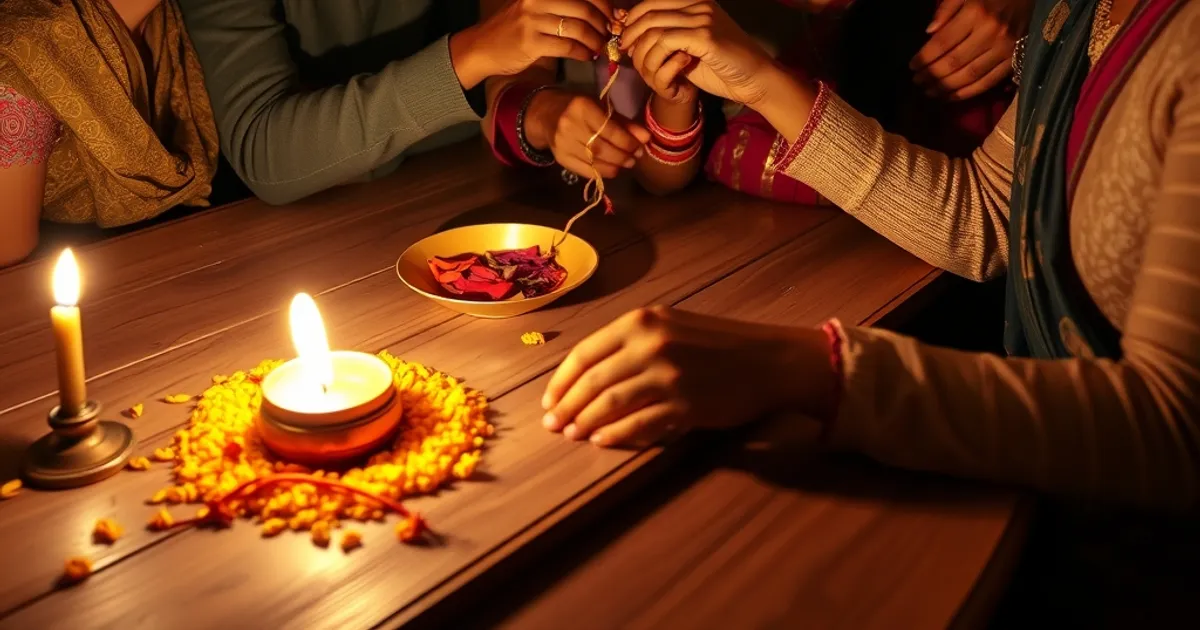
Raksha Bandhan 2026 falls on the full moon of Shravan — Purnima coincides with the festival this year — giving it added sacred weight. A sister ties a rakhi thread around her brother's right wrist; he pledges his care in return. Sweets follow. The exchange is brief, but it carries the full weight of the relationship.
For South Asians in Rome, Raksha Bandhan 2026 often requires planning weeks in advance. International post from Italy takes two to three weeks, which means mailing rakhis by early August at the latest. Many families send a backup via courier to reduce the risk of delay. When siblings are in different countries, the ceremony happens over video call — and those who have done this for years say that intention carries as much as presence.
For those who have siblings or close friends nearby in Rome, the day is a chance to make something of the occasion: a proper ceremony with a lamp and flowers, a shared meal, a moment that anchors the date.
Sankashti Chaturthi — August 31
The second Sankashti Chaturthi of the season arrives just four days after Raksha Bandhan. With Ganesh Chaturthi 2026 now under two weeks away, this moon-sighting fast carries an energy of anticipation for Ganesha devotees.
September: Krishna Janmashtami 2026 and the Season's Close
Krishna Janmashtami 2026 — September 4
Krishna Janmashtami 2026 marks the midnight birth of Lord Krishna. The festival calls for an overnight fast, bhajans through the evening, and an aarti at the birth moment. For South Asians in Rome, coordinating with others in the community makes the late-night ceremony more meaningful. A small gathering, a decorated cradle, devotional music, and the ritual breaking of fast at midnight: these are enough to honor the occasion fully.
Ekadashi on September 7 and Pradosh Vrat on September 9 arrive in the quiet days after Janmashtami before the season's final celebration.
Ganesh Chaturthi 2026 — September 14
Ganesh Chaturthi 2026 is the most publicly celebrated festival of this entire sequence. The traditional ten-day observance begins with Sthapana — the installation of a Ganesha idol — on September 14 and concludes with Visarjan, the immersion ceremony, on Anant Chaturdashi.
For the South Asian diaspora in Rome, public community events for Ganesh Chaturthi 2026 are worth researching in advance. Indian cultural associations in Italian cities sometimes organize programs for major festivals. Begin reaching out in August. Whether observed privately or with a group, Ganesha's welcome on September 14 is a fitting close to a season that opened with Guru Purnima 2026 and moved through the full arc of devotion.
Insider Tip
Mail the rakhi for Raksha Bandhan 2026 to India by early August at the latest. International post from Italy takes two to three weeks and is prone to summer delays. Sending a backup via courier gives the thread a real chance of arriving before August 27.
FAQ
What is the date for Guru Purnima 2026 in Rome? Guru Purnima 2026 falls on July 29 for the Rome time zone.
Can Raksha Bandhan 2026 be observed without a biological sibling? Yes. Many families tie a rakhi to close friends, cousins, or anyone who holds a sibling-like place in their lives. The intention matters as much as the blood relationship.
Does Nag Panchami 2026 require a temple visit? No. The festival can be observed at home with a drawn or printed serpent image, an offering of milk and flowers, and the relevant mantra or prayer.
What time does the Pradosh Vrat window fall in Rome? Pradosh Vrat covers roughly 90 minutes around sunset. Rome's sunset ranges from approximately 8:45 PM in late July to 7:30 PM by mid-September. Use a panchang app set to Rome's time zone for the precise window each month.
How does Ganesh Chaturthi 2026 differ from Sankashti Chaturthi? Sankashti Chaturthi is a monthly fasting observance for Ganesha. Ganesh Chaturthi 2026 is the annual festival of his birth — a multi-day celebration with idol installation, daily worship, cultural events, and a public immersion ceremony at the close.
Bottom Line
The two months from Guru Purnima 2026 to Ganesh Chaturthi 2026 ask something of the South Asian community in Rome: to remember, to observe, to find those around you who share the same roots, and to carry your traditions into a city that was not built for them. Raksha Bandhan 2026 on August 27 is the emotional center — the festival most rooted in human relationship, and the one most felt at a distance. Nag Panchami 2026, Krishna Janmashtami 2026, and the returning cycle of Sankashti Chaturthi each offer their own reason to pause and connect. Prepare early, reach out to others in Rome, and let the calendar bring what it always has: structure and meaning to the days.