
Desi Culture & Faith Highlights in Sacramento
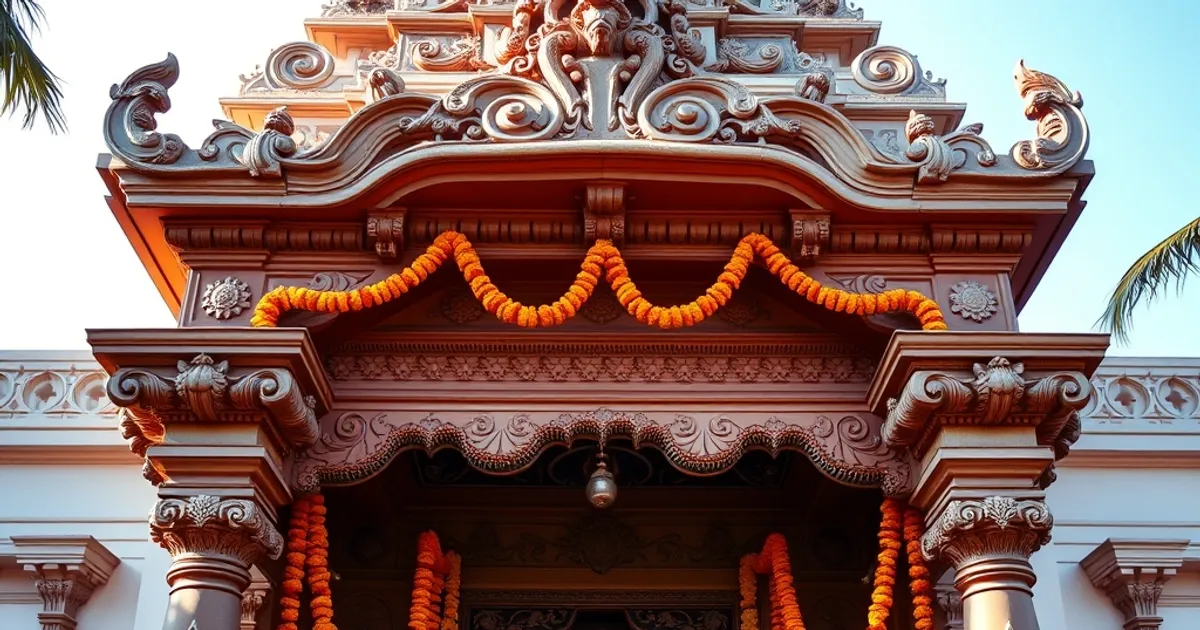
Desi Culture & Faith Highlights in Sacramento
TL;DR
- 🛕 Sacramento's South Asian spiritual community spans nine distinct institutions representing Vedantic philosophy, Sikh worship, Vaishnava devotion, Shaivite practice, and Sai Baba tradition
- Vedanta Society of Sacramento and Sikh Temple Sacramento anchor the most established parts of the community's faith life
- 🪔 Vaishnavism has the deepest footprint in the city — ISKCON, a Radha-Krishna mandir, and a Krishna cultural center all operate in the Sacramento area
- Sai Seva Sadan and Satya Sanatan Dharm Mandir Sacramento reflect the range of traditions within the broader Hindu community
- For a mid-sized diaspora city, Sacramento has built a faith infrastructure that serves South Asians from many different regional and theological backgrounds
Sacramento does not always receive the same attention as the Bay Area or Los Angeles when the conversation turns to South Asian diaspora life in California. But the city and its surrounding metro area have built a faith and cultural infrastructure that is genuinely impressive for its size. Nine distinct South Asian spiritual institutions operate in or near Sacramento, each serving different traditions, lineages, and community needs. Together they represent one of the most complete expressions of Desi spiritual life outside the major coastal metros.
This piece looks at what Sacramento's South Asian faith community has built, why it matters to the Indian diaspora here, and what each major tradition contributes to the city's cultural fabric.
A City of Many Traditions
The breadth of Sacramento's Desi spiritual landscape is worth pausing on. Within the broader South Asian religious world, there are meaningful differences between a Vedantic philosophy center, a Sikh gurdwara, a Shaivite mandir, a Vaishnava temple, an ISKCON center, and a Sai Baba institution. These are not interchangeable. They represent distinct theological lineages, different modes of worship, different community cultures, and different relationships to the subcontinent's religious history.
What Sacramento has built is not a monolithic "Hindu community" organized around a single institution. It is a genuinely pluralistic landscape where South Asians from different regional backgrounds, different states of origin, and different philosophical commitments can each find a community.
The Vedanta Society of Sacramento at 1337 Mission Avenue represents one of the oldest and most philosophically distinctive strands of Indian religious thought to reach North America. Vedanta — the tradition derived from the Upanishads, systematized across centuries, and brought to the West in the late nineteenth century — has a different character from devotional temple worship. The Sacramento center provides a space for meditation, philosophical inquiry, and engagement with Vedantic texts. For South Asian professionals and seekers whose connection to Indian spirituality is more philosophical than ritual, this kind of institution is irreplaceable.
The Sikh Community
The Sikh Temple Sacramento at 2301 Evergreen Avenue is a central institution for the city's Sikh community. The Punjabi Sikh diaspora has roots in California going back over a century — some of the earliest South Asian immigrants to the American West were Sikh farmers from Punjab — and the Sacramento Valley, with both its agricultural communities and more recent professional immigrants, has a substantial Sikh population.
A gurdwara is more than a house of worship. The institution of langar — the community meal served free to all who come, regardless of background or faith — means a gurdwara functions as a social institution as much as a religious one. The Sikh Temple Sacramento plays this dual role in the city's South Asian community, providing both spiritual practice and the kind of practical community network that is especially important for newly arrived families.
Insider Tip: Many of Sacramento's South Asian faith institutions hold public festival celebrations that are genuinely open to visitors — Diwali, Vaisakhi, Janmashtami, Navratri. Attending one of these events is among the most direct ways to experience the living culture of the city's Desi community without any prior connection to the community.
The Vaishnava World
If there is a single tradition that has the deepest institutional footprint in Sacramento's South Asian faith landscape, it is Vaishnavism — the devotional tradition centered on Vishnu and his avatars, particularly Krishna. Three institutions represent this lineage in the Sacramento area.
The International Society For Krishna Consciousness of Sacramento at 2424 Arden Way brings the global ISKCON movement to the city. Founded by Srila Prabhupada in 1966, ISKCON has been one of the most successful vehicles for transmitting Vaishnava devotional practice to both the Indian diaspora and Western practitioners. The Sacramento center offers Sunday feasts, public kirtans, and educational programming that serves both devotees and curious visitors.
Hari Om Shiri Raadha Krishna Mandir at 7778 La Mancha Way and Team Yamuna Mayi Krishna Cultural Center at 9032 Marina Soleil Court both represent the Radha-Krishna devotional tradition in a more intimate institutional form. These smaller organizations often provide a community function closer to an extended family than a large temple — regular bhajan, puja, and the kind of cultural continuity that sustains diaspora identity at the neighborhood level.
Shaivite Mandirs and Multi-Tradition Spaces
Shree Sanatan Dharam Shiv Mandir INC at 803 Blaine Avenue represents the Shaivite tradition — worship of Shiva as the supreme being. Shaivism has deep roots in South Indian and some North Indian communities, and a dedicated Shiva mandir serves those community members whose theological background diverges from the Vaishnava majority.
Sri Narayan Temple at 12 Mast Court and Satya Sanatan Dharm Mandir Sacramento at 3717 Haywood Street each function as multi-tradition spaces where South Asian families can observe regular puja, celebrate festivals together, and maintain the ritual continuity that is central to Hindu religious life. These institutions are the backbone of everyday religious practice for many diaspora families — places where children are introduced to the traditions, where life events are marked ceremonially, and where the connection to regional Indian culture is kept alive.
Sai Baba Devotion
Sai Seva Sadan at 10415 Old Placerville Road represents a distinct strand of South Asian spiritual life — the devotional community centered on Shirdi Sai Baba. Sai Baba devotion has an enormous following across Maharashtra, Andhra Pradesh, and Telangana, and the tradition has spread throughout the global South Asian diaspora. Sai Seva Sadan provides a gathering point for Sacramento-area Sai devotees, offering a space for bhajan and community that serves a specific regional diaspora whose spiritual center lies in Shirdi.
Why Faith Infrastructure Matters to the Diaspora
For South Asian diaspora communities, faith institutions do more than provide religious services. They function as anchors of cultural identity, spaces for transmitting traditions across generations, and community networks for newly arrived families navigating an unfamiliar city. The depth of Sacramento's South Asian faith infrastructure — nine institutions spanning Vedantic philosophy, Sikh worship, Vaishnava devotion in multiple forms, Shaivite practice, and Sai Baba tradition — means that a South Asian family moving to Sacramento can find a community that matches their specific background and tradition.
FAQ
Are these temples and faith centers open to visitors who are not South Asian? Most South Asian spiritual institutions in Sacramento welcome respectful visitors. Policies on public access vary by institution and time of visit, so checking ahead before going is always advisable.
Does Sacramento have a significant South Asian population? Yes. Sacramento has a substantial South Asian community with significant Punjabi Sikh, Hindu, and Indian professional populations. The metro area's Desi community has grown steadily and is well-established across multiple neighborhoods.
What festivals does Sacramento's South Asian community celebrate publicly? Diwali, Vaisakhi, Holi, Navratri, and Janmashtami are among the major festivals observed across the city's institutions, often with programs that are open to the public.
Is the ISKCON center in Sacramento welcoming to first-time visitors? ISKCON centers are generally known for welcoming visitors, and the International Society For Krishna Consciousness of Sacramento is typical in this respect. The Sunday feast tradition is a good entry point for newcomers.
Bottom Line
Sacramento's South Asian faith landscape is one of the city's understated strengths. Vedanta Society of Sacramento, Sikh Temple Sacramento, three Vaishnava institutions, dedicated Shaivite mandirs, multi-tradition temples, and Sai Seva Sadan together give the South Asian community here a spiritual infrastructure that exceeds what most cities of comparable size provide. For the Indian and South Asian diaspora in Sacramento, this network supports not just religious practice but cultural continuity, social belonging, and the intergenerational connection that sustains diaspora identity across decades.