
Weekend Activities for Desi Kids in San Mateo
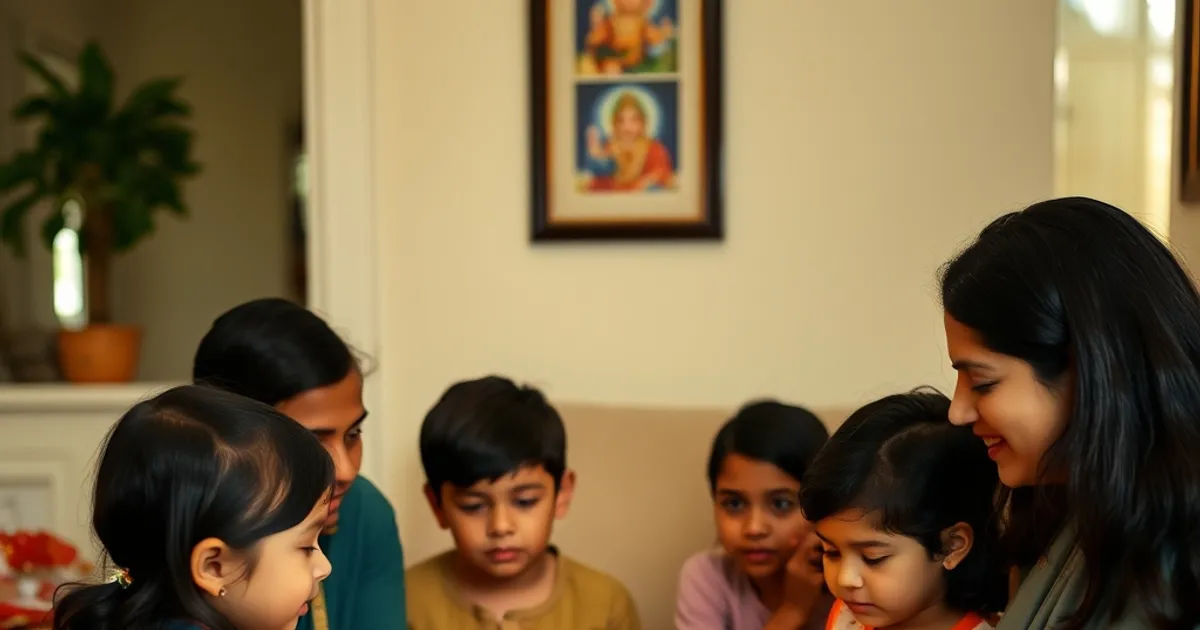
Weekend Activities for Desi Kids in San Mateo
TL;DR
- 🌿 Ekadashi on July 24 gives Desi kids a low-key weekend of fasting stories and special foods
- 🔱 Pradosh Vrat on July 26 is a twilight ritual children can take an active part in at home
- 🌕 Purnima and Guru Purnima 2026 on July 28-29 fill the weekend with full-moon family tradition
- 🐘 Sankashti Chaturthi on August 2 teaches children about Ganesha through storytelling and moon-sighting
- 🙏 A second Ekadashi on August 8 gives kids another turn at the practice by month's end
Growing Up Desi in the Bay Area
San Mateo occupies a particular position in the Bay Area's South Asian landscape. Flanked by tech-dense communities in Santa Clara and San Jose to the south and the cultural energy of San Francisco to the north, San Mateo has become home to thousands of South Asian families whose children are growing up at the intersection of two worlds. They go to school with classmates from dozens of different backgrounds, speak English with ease, and also know the smell of incense on a Saturday morning and the particular quiet of a house observing a fast.
For Desi parents in San Mateo, the Hindu calendar is one of the most practical tools available for transmitting heritage to the next generation. It provides regular, recurring moments where the values, stories, and practices of South Asian culture become tangible and participatory rather than abstract. Desi.Net's San Mateo page is a useful hub for families looking to coordinate these celebrations with others in the area.
Ekadashi: Teaching Kids the Power of Restraint 🌿
The July calendar opens with Ekadashi on July 24, and a second Ekadashi arrives on August 8 — two opportunities within this stretch for families to introduce children to one of the most foundational practices in the Hindu tradition.
Ekadashi, the eleventh day of the lunar fortnight, centers on fasting from grains and legumes. For adults, this may be a full day's practice. For younger children, it can be a modified version — skipping one grain-heavy meal, trying a fruit-and-dairy lunch, or simply learning why the family kitchen looks different that day.
Bay Area parents often use Ekadashi as a natural conversation starter: why do we fast? What does it feel like to skip something you like? What do we gain from restraint? These questions translate well across age groups, and the answers connect children to a tradition practiced for thousands of years. Telling the story of Ekadashi Devi — her role in cosmic mythology and her connection to Vishnu — adds a layer that children find genuinely engaging.
Special Ekadashi foods like sabudana khichdi, roasted peanuts, fruit salad with rock sugar, and makhana (fox nuts) tend to be things kids actually enjoy, making the observance a low-resistance introduction to the concept of sacred meals.
Pradosh Vrat: Twilight as a Teaching Moment 🔱
Pradosh Vrat on July 26 is a Shiva-centered observance that takes place during the dusk window — the roughly ninety-minute period around sunset known as pradosh kaal. For families with children in San Mateo, this timing is practical: a weekend evening is the right moment for a meaningful ritual that does not require missing school or disrupting weekday routines.
The ritual involves setting up a Shiva puja at home, offering Bilva leaves (or explaining their significance if they are not available), performing an abhishek if you have a Shiva lingam, and reciting Shiva prayers together as a family. For children, the tactile and sensory dimensions of this puja — pouring milk, placing flowers, lighting lamps as the sky darkens — create memories that stick far longer than any classroom lesson.
Parents in Bay Area communities have found that letting children take an active role in the puja — holding the lamp, placing an offering, ringing the bell — transforms the experience from observation to participation. That shift is often what makes a practice carry across generations.
A Full-Moon Weekend: Purnima and Guru Purnima 2026 🌕
The weekend of July 28-29 delivers an exceptional cluster of observances: Purnima on July 28, Guru Purnima 2026 on July 28, and another Purnima on July 29. San Mateo families have a multi-day celebration on their hands.
The full moon — Purnima — has been a time for gathering across virtually every South Asian tradition. In practical terms for Bay Area families, a Purnima evening might mean a dinner gathering with extended family or friends, an outdoor meal under the full moon, or a simple moment where parents point out the full moon to their children and explain what it means.
Guru Purnima 2026 adds specific meaning to this full moon. It is the day to honor teachers — and for Desi children in San Mateo, that framing opens up a rich conversation. Who are the teachers in your life? Your school teachers, yes — but also the grandparent who taught you a language, the classical music or dance teacher who passes on an ancient form, the elder who told you stories. Guru Purnima 2026 is a day to acknowledge those figures, and for children to practice the kind of gratitude and reverence that South Asian culture has always made central.
Some Bay Area families observe Guru Purnima 2026 by having children write notes or make small offerings — flowers, sweets — for teachers they are grateful for. Others use the occasion to visit a guru or teacher in person, or to make a phone call that bridges generations and geography. The additional Purnima on July 29 extends this reflective energy into a second day, giving families room to mark the occasion without rushing.
Sankashti Chaturthi: Ganesha Stories for Young Minds 🐘
August 2 brings Sankashti Chaturthi, and Ganesha — the elephant-headed deity of new beginnings and obstacle removal — takes center stage. For Desi children, Ganesha is often the first deity they encounter: approachable, story-rich, and visually distinctive. Sankashti Chaturthi is a natural opportunity to deepen that connection.
Families observe Sankashti Chaturthi by fasting through the day and breaking the fast after the moon rises in the evening. For children, the moon-sighting ritual at the end of the day is often the most memorable part: everyone goes outside, looks at the sky, finds the moon, and the fast breaks. It is a simple ceremony, but its sensory clarity makes it easy for children to understand and remember.
The day can be spent telling Ganesha stories — there are dozens, from the tale of how he got his elephant head to his victory in the race around the universe — cooking modak or other Ganesha-associated sweets with kids as kitchen helpers, and talking about the kinds of obstacles that Ganesha's devotees ask him to remove. For children navigating school pressures and social challenges, framing Sankashti Chaturthi as a day to ask for help and focus on what you need is surprisingly resonant.
Insider Tip: San Mateo's proximity to South Bay temples and Bay Area cultural organizations means that Guru Purnima 2026 and Sankashti Chaturthi sometimes have community programs families can attend together. Check Desi.Net's San Mateo page ahead of each date to see if any local families or organizations are hosting shared events.
Frequently Asked Questions
Q: At what age can Desi children start observing Ekadashi? There is no fixed rule. Many families introduce a modified version — skipping a single grain-based meal, or learning about the day's significance — from around age 8. Full fasting is typically for older teens and adults.
Q: How do you explain Guru Purnima 2026 to a young child? Simply: it is a special full moon where we say thank you to the people who have taught us things. Connecting it to specific teachers the child knows makes it immediate and meaningful.
Q: What is a child-friendly activity for Pradosh Vrat? Letting children arrange flowers for the puja, pour water or milk during an abhishek, and ring the puja bell are all participatory actions that work well for younger children. Choosing which fruit to offer also builds engagement with the practice.
Q: Is there a way to observe Sankashti Chaturthi without a dedicated puja room? Yes. A small space with a Ganesha image or murti, a lamp, and some flowers is enough. The moon-sighting at the end of the day requires nothing more than a clear view of the sky — something Bay Area families have in abundance on August evenings.
Q: Why are there two Purnima dates listed (July 28 and July 29) for San Mateo? The Purnima tithi can straddle two solar calendar days depending on its exact start and end time. Both July 28 and July 29 carry the observance; families typically choose the day the tithi is more fully present, or observe across both for a longer full-moon window.
Bottom Line
San Mateo's Desi kids have seven meaningful touchpoints this month: Ekadashi on July 24, Pradosh Vrat on July 26, Purnima and Guru Purnima 2026 on July 28, another Purnima on July 29, Sankashti Chaturthi on August 2, and Ekadashi again on August 8. Each one is a different kind of classroom — about restraint, devotion, gratitude, and Ganesha's particular form of help. Check Desi.Net's San Mateo page to find other families walking the same calendar this summer.