
Weekend Activities for Desi Kids in Sandy Springs
TL;DR
- Sandy Springs has one of the densest Desi family communities in Georgia — the panchang gives parents a ready-made weekly structure for weekends 🗓️
- Guru Purnima 2026 (Jul 29) and Purnima open the season with a meaningful teaching about the guru tradition that resonates across age groups
- Nag Panchami 2026 (Aug 17) is one of the richest storytelling festivals in the Desi calendar — ideal for kids who respond to mythology 🐍
- Ekadashi (Aug 08) and Pradosh Vrat (Aug 10) offer gentler, family-friendly observances that children can join at their own level
- Atlanta-area Desi cultural organizations cluster events around Purnima and major festivals — getting into community group chats is the most reliable way to find them 🌕
Why Sandy Springs Works for Desi Families
Sandy Springs sits in the northern arc of Atlanta's metro area and has become one of the most concentrated Desi residential corridors in Georgia. Proximity to the technology employment corridor along GA-400, strong school districts, and a well-established South Asian community have made it a natural gathering point for families from across the subcontinent.
For Desi parents raising children in Georgia, one of the recurring challenges is keeping cultural practice alive and engaging — particularly during summer weekends when school routines disappear and kids have unstructured time. The panchang provides a ready-made framework: auspicious dates that naturally anchor temple visits, family rituals, storytelling sessions, and food traditions. The goal is not to replicate every observance from back home but to give children enough repeated contact with these traditions that they develop their own relationship with them.
The Late-July Panchang: Guru Purnima and Purnima
Guru Purnima 2026 falls on July 29, sharing the date with Purnima — the full moon of Ashadha. This is one of the year's most resonant dates for Desi families, and it carries a particularly strong message for children: the recognition that learning itself is sacred, and that teachers deserve gratitude.
In practice, this translates well to a weekend activity. Many Desi families use Guru Purnima as a day to write a thank-you note to a favorite school teacher, offer flowers to a grandparent or elder, or attend a special program at a local cultural center. The spiritual dimension and the secular dimension of the day are unusually well-aligned — making it approachable for kids who might resist a more explicitly religious observance.
Local temples and cultural organizations in the Atlanta area typically plan events around Purnima dates. Guru Purnima 2026 is a Sunday, which means programs are likely to run through the afternoon and into the evening.
August Weekends: Sankashti Chaturthi and Mid-Month Observances
Sankashti Chaturthi on August 2 falls on a Sunday — the best possible day for a family-oriented observance. This monthly Ganesha fast is particularly accessible for Desi kids: Ganesha is among the most beloved deities for children, the stories are vivid and memorable, and the moon-sighting element of the fast turns into a genuine shared outdoor activity.
Families can make a Ganesha rangoli or pookalam together in the morning, cook modaks or sundal in the afternoon, and then step outside after dark to find the moon. For children, the treasure-hunt quality of the moon-sighting — craning necks in the suburban night sky — tends to be the part they remember.
Three closely spaced observances follow in the second week of August, creating a concentrated devotional stretch.
Ekadashi on August 8 is the eleventh lunar day, traditionally observed as a fast in Vaishnava households. For Desi kids, it can be framed as a mindfulness day — lighter meals, no screens, more time for books or family storytelling. Some families tie the Ekadashi discipline to something children can understand: a deliberate pause from ordinary consumption.
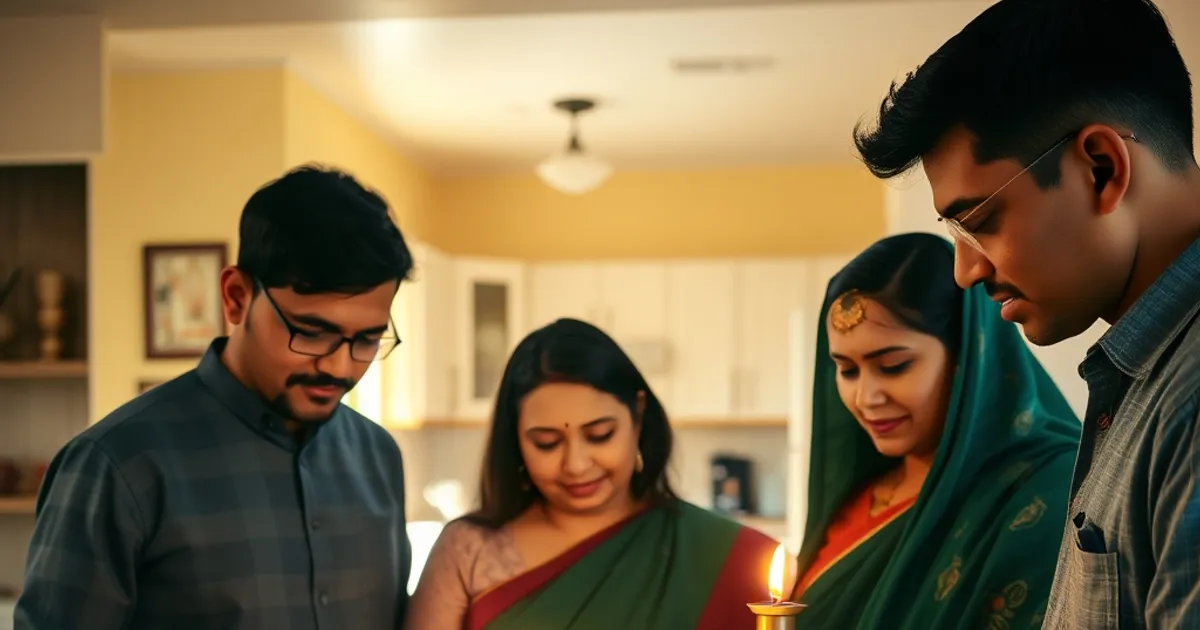
Pradosh Vrat on August 10 is a bimonthly Shiva fast observed during the evening hours of the thirteenth lunar day. It is one of the shorter observances in the cycle and appropriate for families who want to include younger children without the commitment of a full-day fast. An evening puja with a lit lamp, incense, and the chanting of Om Namah Shivaya takes twenty to thirty minutes — entirely manageable for children who can join for part of it before bedtime.
Amavasya on August 12 is the new moon. In Desi households, this is the day for tarpan — prayers and water offerings for departed ancestors. For children growing up in Georgia, far from the places their grandparents called home, Amavasya is one of the most powerful dates for transmitting family history. Who were their great-grandparents? What did they do? The conversations grounded in a ritual context tend to carry further than the same stories told on an ordinary afternoon.
Insider Tip
Insider Tip: Sandy Springs and the broader north Atlanta Desi community tends to announce cultural events and temple programs on WhatsApp group networks weeks before they appear on any public calendar. If you are new to the area or have recently moved, ask at the nearest Desi grocery store — the staff and the bulletin board there are often the fastest way to find what local organizations have planned around Guru Purnima 2026 or Nag Panchami 2026. Getting on two or three community group chats is worth more than any single platform listing.
Nag Panchami 2026: A Heritage Teaching Moment
Nag Panchami 2026 falls on August 17 and is one of the richest storytelling occasions in the Desi festival calendar. The worship of serpent deities — Nag Devta — is ancient and regionally varied across the South Asian subcontinent. For Desi kids, it opens into a world of mythology: Vasuki who served as the rope during Samudra Manthan, Shesha upon whom Vishnu rests, Manasa Devi who is worshipped across Bengal and Assam, and the serpents woven through the Mahabharata and Ramayana.
In Sandy Springs, where there is no sarpa kavu shrine nearby, Nag Panchami can still be meaningfully observed through story, art, and simple home puja. Draw or print a Nag image, offer milk and flowers, light a lamp, and tell the story of Vasuki. For older children, the ecological dimension is also genuinely engaging: why were serpents revered? What role do they play in the landscape? The festival becomes a bridge between mythology and the living world.
Building a Weekend Rhythm That Holds
The weekends that create lasting cultural memory for Desi kids are not always the big festival days — they are the ordinary Saturdays and Sundays anchored to a panchang date. Sankashti Chaturthi is a Sunday this month. That makes it an easy entry point: a Ganesha puja in the morning, an art project in the afternoon, moon-sighting in the evening. Three or four hours of intentional time spread across an otherwise ordinary day.
The same logic applies to Pradosh Vrat (Aug 10) and Amavasya (Aug 12). Neither requires a special venue or elaborate preparation. Both create a moment of cultural memory that, for children, often surfaces years later as something they recognize and feel connected to — a moment they can name and place in the family story.
FAQ
What Desi cultural events are happening in Sandy Springs in August 2026? The key panchang dates are Guru Purnima 2026 (Jul 29), Sankashti Chaturthi (Aug 02), Ekadashi (Aug 08), Pradosh Vrat (Aug 10), Amavasya (Aug 12), and Nag Panchami 2026 (Aug 17). Local temples and Desi cultural organizations in the Atlanta area typically hold programs around these dates.
How do I keep Desi kids engaged with cultural heritage in Georgia? Using the panchang as a family calendar is one of the most sustainable approaches. Anchor weekend activities to lunar dates — temple visits, storytelling, home puja, or shared meals. The regularity matters more than the scale.
Is Sankashti Chaturthi appropriate for children? Yes. Sankashti Chaturthi (Aug 02) is particularly accessible for Desi kids — Ganesha is story-rich and beloved, and the moon-sighting element turns the fast into a shared outdoor activity that children tend to enjoy.
What is Pradosh Vrat? Pradosh Vrat (Aug 10) is a bimonthly Shiva fast observed in the early evening. It is shorter than a full-day fast and appropriate for families who want to include younger children in ritual practice.
How can I find Desi community events in Sandy Springs? Local WhatsApp community groups and Desi grocery store bulletin boards are the most reliable sources for events in Sandy Springs and the north Atlanta corridor.
Bottom Line
Sandy Springs gives Desi families a strong community foundation and a dense panchang calendar to work with this August. From Guru Purnima 2026 (Jul 29) through Nag Panchami 2026 (Aug 17), six dates provide natural anchors for weekend plans, family conversations, or home rituals with kids. Start with what is accessible: a Sunday Sankashti Chaturthi puja, a Pradosh Vrat lamp-lighting, a Nag Panchami story session. Each one deposits something in the cultural account that children will draw on later — not as obligation, but as identity.