
Sargodha Confronts Violent Crime Reckoning as District Bolsters Civic Readiness
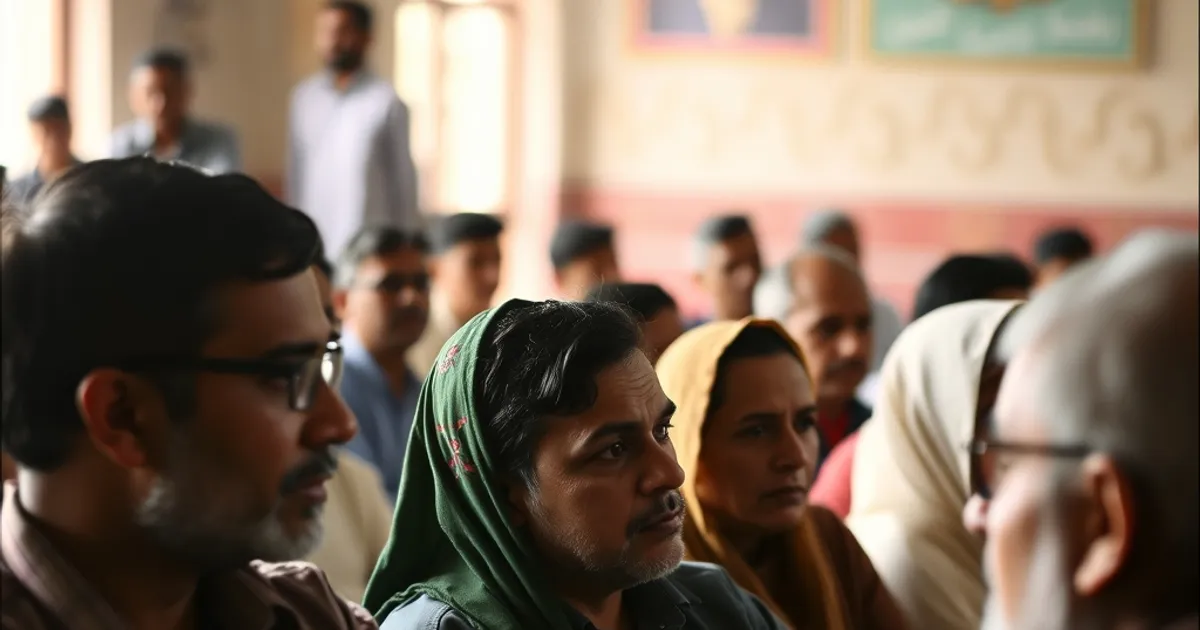
Sargodha, the central Punjab city known for its citrus groves and Air Force heritage, confronted a sharp week of violent crime news: the prime suspect in the rape and murder of a seven-year-old girl was killed in a police encounter, while a separate case saw a man arrested for allegedly murdering his wife and five children in a so-called honour killing. District authorities simultaneously reviewed monsoon preparedness and anti-narcotics coordination, underscoring the civic demands placed on Punjab's administrative machinery amid compounding law and order challenges.
Prime Suspect in Sargodha Child Murder Killed in Police Encounter
The prime suspect in the rape and murder of a seven-year-old girl in Sargodha was killed in a Counter-Crime Division encounter, according to reporting by Dawn and Arab News Pakistan. The girl's family had been publicly demanding stern and swift punishment since the case emerged, drawing significant public attention and protest pressure on Punjab police to act. The encounter killing of the suspect has produced both relief among some community members and renewed debate about extrajudicial policing: while the victim's family expressed some satisfaction, civil society and legal observers in Pakistan have long criticized the use of police encounters as substitutes for formal judicial process. Counter-Crime Division encounters in Punjab periodically revive debate over whether such mechanisms reflect an admission that the formal court system cannot reliably deliver justice in high-profile child abuse and murder cases. The incident spotlights a persistent gap in Pakistan's justice infrastructure, where public pressure in heinous crime cases — particularly those involving violence against children — can translate into extrajudicial outcomes that bypass due process, raising questions about accountability for both the alleged criminal and the security apparatus itself. [3]
Sargodha Man Arrested for Allegedly Killing Wife and Five Children
A man in Sargodha has been arrested after allegedly killing his wife and five children in what police have described as an honour-motivated killing, according to a Dawn report dated July 26. The six deaths in a single family constitute one of the most severe domestic violence incidents reported from the district in recent memory. Honour killings — the murder of family members, most often women, over perceived threats to family reputation — remain a documented and recurring problem across rural and peri-urban Punjab, despite legal reforms including Pakistan's 2016 Anti-Honour Killing Laws amendment. The arrest of the alleged perpetrator marks a formal step toward accountability, but human rights organizations consistently note that convictions remain uneven and that the legal mechanism of family pardon — permitted under Pakistani law — continues to allow many perpetrators to avoid meaningful punishment. The Sargodha case has reignited calls for stronger enforcement of existing anti-honour killing statutes and for sustained investment in social programs targeting the cultural and social attitudes that enable family members to frame such violence as a matter of honour or communal standing. [7]
Sargodha Officials Coordinate on Anti-Narcotics Prosecution and Monsoon Readiness
District authorities in Sargodha convened key coordination meetings on two distinct civic fronts: anti-narcotics prosecution and monsoon disaster preparedness. The Associated Press of Pakistan reported that Public Prosecution Officer Malik Amir Shahzad met with the Director of the Punjab Counter Narcotics Force for the Sargodha Division, Colonel (Retired) Jawad Masood, to align legal strategies and strengthen coordination in narcotics-related prosecutions handled through the District Prosecution Office — part of a continuing effort to close gaps between enforcement agencies and the prosecution system. Separately, the District Coordination Committee convened to review progress on monsoon readiness and ongoing development projects, a critical administrative exercise as Punjab braces for the annual monsoon season that can bring flooding and infrastructure strain to urban and rural areas alike. Sargodha sits in the fertile Rechna Doab between the Jhelum and Chenab rivers and is historically susceptible to flooding during heavy monsoon periods. The dual focus on crime prosecution and infrastructure readiness reflects the wide-ranging responsibilities placed on district-level governance in Punjab, where the DCC serves as the primary coordination interface between federal priorities and local community needs. [1]
🤝 Sargodha's Partition-Era Legacy Surfaces in Ancestral Home Documentation
An Architectural Digest India feature brought renewed attention to Sargodha's role in the shared cultural memory of the subcontinent's partition, profiling the ancestral home of a figure known as Keenu — a property rooted in what is now Pakistani Punjab. Titled 'Main Vaapas Aaunga' (I Will Return), the piece captures the emotional geography of partition families whose homes in Sargodha remain standing on the other side of a border that many descendants may never cross. Sargodha, with a deep pre-partition history that encompassed significant Hindu, Sikh, and Muslim communities living alongside one another, carries within its streets and buildings the layered stories of a region transformed by the violence and displacement of 1947. Documentary and design journalism projects that revisit such ancestral homes serve a growing appetite among South Asian communities — particularly in the diaspora — for understanding the physical places that shaped their family histories across generations. The feature reflects a broader cultural moment in which Sargodha is being seen not only through the lens of its current civic and security challenges but also as a city whose precolonial and pre-partition heritage deserves careful documentation, narration, and preservation for the communities whose roots lie within it. [6]
Sources: [3] Dawn · [7] Dawn · [1] | Associated Press Of Pakistan · [6] Architectural Digest India