
Srinagar in Turmoil: Floods Halt Amarnath Yatra, Smart City Under Fire, and Schools Extend Vacation
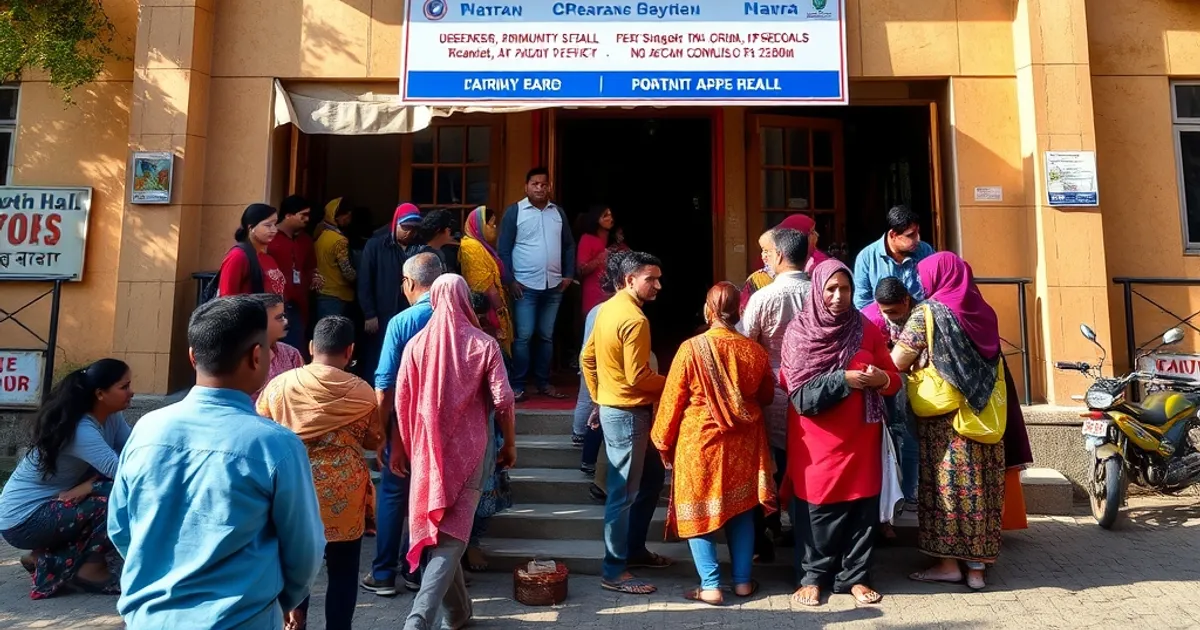
Srinagar and the broader Jammu and Kashmir region faced a storm-buffeted week, as unprecedented monsoon flooding paralyzed key public infrastructure, halted the sacred Amarnath yatra, shuttered schools, and put the flagship Smart City project under serious public scrutiny — all while the Kashmir Valley bade farewell to a historic former chief secretary who lived to 108 years.
🗳️ J&K Floods Halt Amarnath Yatra, Submerge Srinagar's Smart City Zones
Severe flooding swept through Jammu and Kashmir this week, prompting authorities to suspend the annual Amarnath yatra pilgrimage — one of the most significant Hindu pilgrimages in the subcontinent — and shut schools across Srinagar. The Indian Express reported that the iconic Ghanta Ghar area in Srinagar was among the landmarks impacted by surging floodwaters, with streets submerged and vehicular movement disrupted across large sections of the city. The Times of India shared harrowing aerial footage showing a shopping complex near Kashmir being consumed by raging floodwaters, illustrating the scale of destruction. Katra, the key staging point for the Vaishno Devi pilgrimage in Jammu, recorded 107.1 mm of rainfall in 24 hours — the highest in J&K in recent memory — according to Rising Kashmir. The Kashmir Observer reported that Srinagar's heavily invested Smart City infrastructure failed to prevent widespread waterlogging, drawing sharp public criticism over the returns on major urban development expenditure. Dr. Farooq Abdullah weighed in with a call for a formal audit of the Smart City project in the wake of the flooding failures, as reported by Kashmir Life. The Special Crime Wing of Kashmir Police also made news, dismantling an extortion racket through coordinated raids across Srinagar and Ganderbal. Deccan Herald noted a rare meteorological anomaly: Srinagar recorded a higher daytime temperature than Jammu, an unusual reversal attributed to the broader disrupted weather pattern gripping the region. [4]
Summer Vacations Extended to July 26 Amid Flood Disruption; NIFT Quota Row Continues
Educational developments dominated conversations in Srinagar alongside the flooding crisis. Rising Kashmir reported that summer vacations for schools in Kashmir — including winter-zone schools in Jammu — have been extended through July 26, following the disruption caused by unprecedented monsoon rainfall and flood conditions across the region. The extension keeps thousands of students at home during a period when academic calendars are already compressed by the region's unique winter-zone scheduling, further complicating the already challenging academic year for students and parents in the Kashmir Valley. A separate educational controversy continued to simmer in parallel: Kashmir Life reported that NIFT Srinagar — the National Institute of Fashion Technology's campus in J&K — does not maintain a separate reservation quota for candidates from Ladakh, despite the region's status as a Union Territory since 2019. The issue of Ladakh's representation in centrally operated educational institutions has grown in prominence following the bifurcation of the erstwhile Jammu and Kashmir state, and students and legislators from Ladakh have periodically raised concerns about access to professional programs in what they regard as their home region. The NIFT reservation matter has prompted calls for a policy review from community advocates and elected representatives. Together, the school vacation extension and the NIFT quota controversy reflect the dual pressures facing Srinagar's education ecosystem: immediate climate-driven disruption on one side and longer-term structural equity questions on the other. [1]
J&K Mourns Former Chief Secretary Syed Muzaffar Aga, Who Lived to 108
The people of Jammu and Kashmir and Srinagar's administrative circles observed a period of mourning this week with the passing of Syed Muzaffar Aga, a former Chief Secretary of the erstwhile state of Jammu and Kashmir, who died at the remarkable age of 108. Greater Kashmir reported on his passing, describing him as one of the most senior surviving figures from the early decades of the Jammu and Kashmir administrative service. Aga's career spanned a transformative era in the region's history — a period encompassing India's independence, the formation of the Indian republic, multiple armed conflicts involving the Kashmir region, and sweeping political changes that reshaped J&K's constitutional status across the decades. As a top civil servant, he was involved in shaping governance structures that defined J&K's administration for generations of officials and citizens alike. His longevity meant that he witnessed — and in some cases participated in — virtually every major chapter of the modern Kashmiri political narrative, making his passing a moment of genuine historical significance for those who study the region. Community leaders, former civil servants, and political figures paid tribute to his contributions, with many noting that his life story encompassed a rare breadth of institutional memory that is now lost with his passing. His death comes at a moment when the broader J&K region is grappling with questions of governance, infrastructure accountability, and institutional credibility — challenges that Aga himself navigated during his long tenure in public service. [5]
Sources: [4] The Indian Express · [1] Rising Kashmir · [5] Greater Kashmir