
Weekend Activities for Desi Kids in Stamford
TL;DR
- 👨👩👧👦 Stamford's Desi community offers a summer full of family-friendly activities tied to the Hindu religious calendar
- 🕉️ Guru Purnima 2026 on July 29 is an ideal occasion to introduce kids to the guru-shishya tradition and classical arts
- 🌕 Purnima falls on the same day, making July 29 a special family evening for moon-watching and shared celebration
- 🎨 Ekadashi, Pradosh Vrat, and Sankashti Chaturthi each offer hands-on activities for children of all ages
- 🤝 Stamford's proximity to New York City means the Desi community here has access to a wide range of cultural institutions and events
Why the Hindu Calendar Is a Family Resource
The Hindu calendar is often described as a spiritual framework, but for Desi families raising children in Stamford, it functions as something more. It is a curriculum — a structured series of occasions for teaching, gathering, and practicing the cultural and spiritual heritage that might otherwise be difficult to transmit in a non-South Asian environment.
When parents mark Ekadashi with their children, they are not only observing a religious day. They are teaching kids about lunar calendars, dietary discipline, and the concepts of mental clarity and gratitude that fasting traditions embody. When families gather for Guru Purnima, children learn about the relationship between teachers and students, the value of lineage, and the way that knowledge is transmitted across generations. These are lessons that stay with children long after the specific day is forgotten.
In Stamford, where the Desi community is well established but still in the minority in most day-to-day settings, these observances provide concentrated moments of cultural immersion that are hard to find elsewhere.
Ekadashi on July 24: Making Fasting Meaningful for Kids
Ekadashi falls on July 24 this month. For adults, Ekadashi is a fasting day — grains are avoided, the diet is simplified, and time is redirected toward prayer and reflection. For children, the experience is a little different, and Desi families in Stamford have developed creative ways to make Ekadashi engaging for younger members.
One approach is to reframe the day as a "special food day" rather than a day of restriction. Ekadashi-friendly foods — fruits, nuts, dairy, and specific root vegetables — are often prepared with extra care on this day, and cooking them together can be a meaningful activity. Children who participate in kitchen preparation gain both a practical skill and an understanding of why the day is significant.
Evening prayer or bhajan sessions on Ekadashi are typically short and family-friendly. In Stamford-area Desi homes and community gatherings, Ekadashi evenings often feature simple devotional songs that children can participate in without needing specialized training. For children who are studying classical music, Ekadashi provides a natural occasion to practice and share what they have learned.
Pradosh Vrat: Introducing Kids to Shiva Worship
Pradosh Vrat falls on both July 26 and July 27 this period. This double Vrat — occurring when the lunar thirteenth and a solar day overlap across two consecutive days — is a Shiva-dedicated observance centered on twilight worship.
For children, Pradosh Vrat is an opportunity to learn about one of the most visually compelling figures in the Hindu tradition. Shiva's mythology is rich and dramatic — from his role as the cosmic dancer (Nataraja) to his relationship with Parvati, Ganesha, and Kartikeya. Parents and grandparents who share these stories during Pradosh Vrat turn the observance into an active teaching moment rather than just a ritual to sit through.
Many families in Stamford observe Pradosh Vrat with a simple home puja at sunset, lighting incense and a lamp before a small Shiva image or symbol. This is an activity children can participate in directly, giving them a hands-on connection to the practice. For older children, Pradosh Vrat can open conversations about the philosophy behind Shiva worship — the concept of transformation, the symbolism of the third eye, and the deeper meaning of the trishula.
Having two consecutive Pradosh Vrat days this period also gives families flexibility. If one evening is disrupted by school activities or other commitments, the second evening provides another opportunity.
Guru Purnima 2026: The Teacher Appreciation Day Children Understand
Guru Purnima 2026 on July 29 is probably the most accessible observance in this stretch for children and families. The Purnima (full moon) coinciding with Guru Purnima makes it a visually striking day — looking at the full moon together on the night of July 29 is a simple, memorable family activity that requires no preparation and no specialized knowledge.
The concept behind Guru Purnima translates naturally for children: it is a day to honor teachers. Every child in Stamford already understands what teachers mean to them. Guru Purnima extends that understanding into the cultural dimension — honoring not just school teachers but grandparents, music and dance teachers, sports coaches, and the broader concept of mentorship.
Desi cultural organizations in the Stamford and greater Connecticut area often hold Guru Purnima programs that include children's performances — brief music recitals, dance numbers, or recitations from students who have been studying classical arts. These events are designed to showcase young students' progress and give children a sense of accomplishment and pride in their cultural training.
For families who are not yet connected to a classical arts school or community program, Guru Purnima is an ideal time to begin that search. Many academies hold open events around this date specifically to welcome new students and families.
Sankashti Chaturthi on August 2: Ganesha Day for the Whole Family
Sankashti Chaturthi on August 2 is perhaps the most child-friendly observance in the entire Hindu calendar. Lord Ganesha — with his elephant head, his love of modak, and his role as the patron of new beginnings — is the deity most universally beloved by children across regional and linguistic divisions.
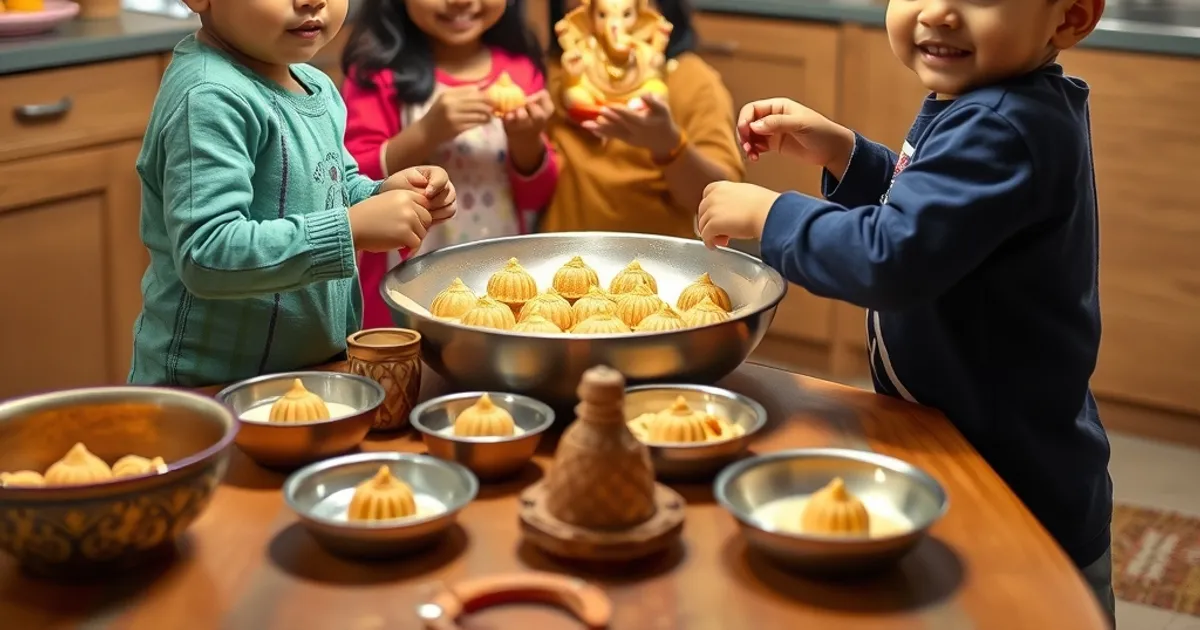
Family activities around Sankashti Chaturthi in Stamford often include making or purchasing modak together, drawing or painting Ganesha figures, and listening to Ganesha stories before the evening puja. For younger children, these creative activities are engaging regardless of how much they understand about the devotional significance. For older children, the mythology of Ganesha — particularly the famous race around the universe between Ganesha and his brother Kartikeya — provides a narrative that rewards re-reading and discussion at every age.
Sankashti Chaturthi also provides a natural close to the observance period that began with Ekadashi on July 24. Children who have been involved across this stretch often feel a sense of completion at Sankashti Chaturthi, having participated in a meaningful cycle.
Insider Tip: Stamford has a compact but active Desi community, and temple programs for children tend to fill up quickly during peak observance periods. If you want your children to participate in organized Guru Purnima or Ganesha programs, ask about registration or RSVP requirements a week in advance rather than showing up and hoping for space. The Connecticut Desi community often advertises events informally through school parent networks and community WhatsApp groups before they appear on public platforms.
Building a Cultural Rhythm for Your Children
What is most valuable about the July–August observance period for Desi families in Stamford is not any single event but the cumulative effect. When children experience Ekadashi, Pradosh Vrat, Guru Purnima 2026, Purnima, and Sankashti Chaturthi within a few weeks, they begin to understand the Hindu calendar as a living structure — not just a list of holidays but an ongoing relationship with time, practice, and community.
Parents in Stamford who intentionally engage their children with these observances report that the ritual structure helps children navigate identity in a diverse environment. They have something concrete and meaningful to share with classmates — not as performance, but as authentic cultural knowledge.
Stamford's location in Fairfield County, within an hour of New York City, also gives Desi families here access to a broader range of cultural resources: classical music concerts, dance performances, and community festivals that can supplement what the local community provides. The summer Guru Purnima period in particular often coincides with New York-based events that are accessible for a day trip.
FAQ
What age is appropriate for children to start observing these days? Children can participate in simple ways from a very young age. Full fasting practices are generally introduced gradually, often in the early teen years, and only when children are ready.
Are there organized children's programs in Stamford for Guru Purnima? Many South Asian cultural and dance academies in the Stamford and Fairfield County area organize Guru Purnima student showcases. Checking with your child's current cultural teacher is the best starting point.
Can non-Hindu children attend these observance events? Hindu observances are generally open and welcoming. Many children from outside the South Asian community who attend these events with Desi friends find them genuinely interesting.
How do I keep Sankashti Chaturthi engaging for young children who do not yet know the mythology? Starting with the simplest stories — Ganesha's elephant head, his love of sweets — and adding detail as children grow is a natural approach. Illustrated books about Ganesha are widely available and a good resource.
Bottom Line
Stamford's Desi families have a meaningful window of observances in late July and early August: Ekadashi on July 24, Pradosh Vrat across July 26–27, the dual celebration of Guru Purnima 2026 and Purnima on July 29, and Sankashti Chaturthi on August 2. Each day is an opportunity to involve children in culturally rich activities — from kitchen preparation to storytelling to community performances — that build their connection to their heritage in practical, memorable ways.