
Raksha Bandhan 2026 in Sylhet: Events, Puja & Where to Celebrate
TL;DR 🎀
- Sylhet marks Raksha Bandhan 2026 with family rituals, temple visits, and community celebrations on the Purnima of Shravana 🙏
- Guru Purnima 2026 arrives just before Raksha Bandhan, opening a spiritually dense fortnight
- The panchang for this period covers more than twenty tithis — from Dashami through Amavasya and back — including Ekadashi, Pradosh Vrat, and Sankashti Chaturthi
- Sylhet's Bengali and Sylheti Hindu tradition gives these observances a distinctive regional character
- The monsoon season itself — lush, green, and rain-heavy — forms the natural backdrop for these mid-year festivals
Raksha Bandhan in Sylhet's Cultural Landscape
Sylhet is a city of rivers, tea gardens, and centuries of layered Bengali and Sylheti tradition. Its Hindu community — rooted in generations of practice and shaped by the rhythms of the Bengali panchang — marks the festival calendar with a devotion that weaves family ritual together with public celebration.
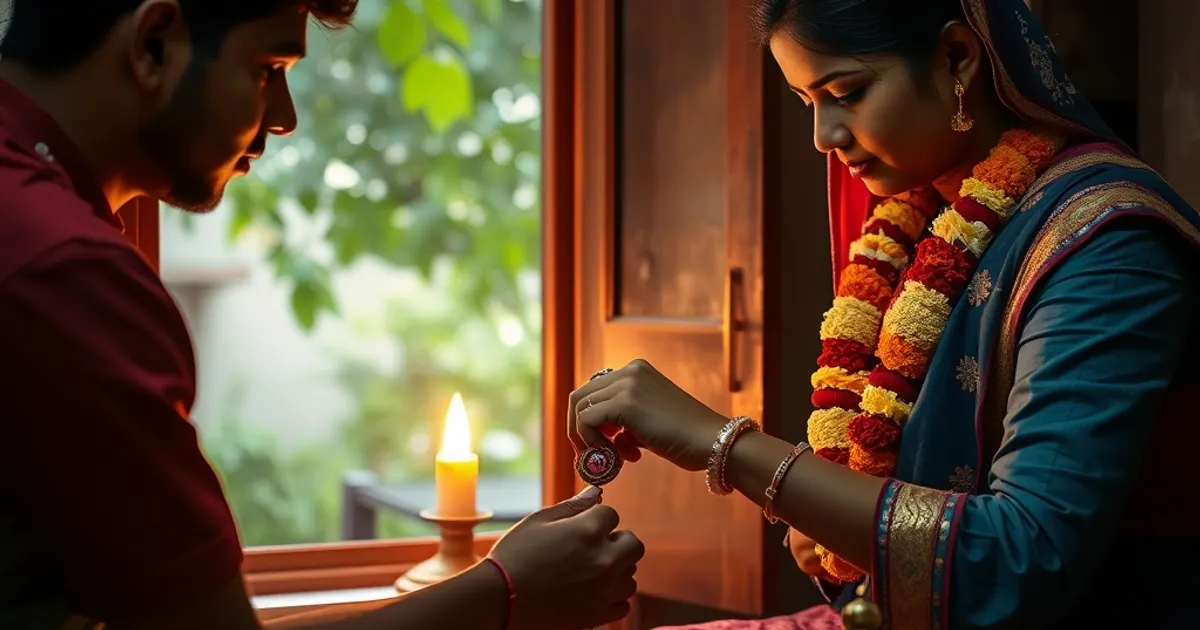
Raksha Bandhan falls on the Purnima of the month of Shravana, and in 2026 it arrives at the center of an unusually rich fortnight on the lunar calendar. The word "raksha" means protection; "bandhan" means bond. The festival is organized around the ritual tying of a woven thread — the rakhi — from a sister's hand to her brother's wrist, a gesture that invokes divine protection for the brother and acknowledges mutual care between siblings.
In Sylhet, this ritual carries both intimate family significance and a broader community meaning. The city's temples, riverside gathering points, and cultural organizations all play a role in how the festival is observed publicly. And because Raksha Bandhan arrives inside a fortnight already populated with significant tithis, families here often experience late July and early August as a continuous period of elevated spiritual attention rather than a single isolated day.
Guru Purnima 2026: The Fortnight Opens
The sequence that leads to Raksha Bandhan begins with Guru Purnima 2026, which falls on the Purnima of Ashadha — the lunar month that precedes Shravana. Guru Purnima is dedicated to the honoring of teachers and gurus across Hindu, Buddhist, and Jain traditions. In the Bengali cultural sphere, the guru-shishya relationship — the bond between teacher and student — holds a specifically elevated place, formalized in the tradition through this annual observance.
In Sylhet, Guru Purnima is observed through temple gatherings, recitations of scripture, and formal acts of acknowledgment toward spiritual teachers. Families may gather at local temples in the morning and spend the remainder of the day in quieter home practice.
Guru Purnima 2026 coincides with the Purnima tithi itself — the full moon that anchors the day spiritually. Depending on the panchang system followed, Purnima is reckoned to fall across late July in a window that some calendars distribute between two dates. The full moon overhead, visible through the monsoon cloud cover that characterizes Sylhet in this season, is itself part of the observance.
The Full Lunar Arc: From Dashami to Amavasya
One of the defining features of the 2026 Raksha Bandhan window is how complete the panchang is in the weeks surrounding Purnima. The full arc of lunar tithis moves through this period in continuous succession: Dashami, Ekadashi, Dwadashi, Trayodashi, Chaturdashi, Amavasya, Pratipada, Dwitiya, Tritiya, Chaturthi, Panchami, Shashti, Saptami, Ashtami, Navami — each a named day with its own ritual associations and traditional practices.
Ekadashi, arriving before the full moon, is a widely observed fast day in Sylhet's Hindu households, particularly those following Vaishnava traditions. Pradosh Vrat, on the Trayodashi, is observed in the evening with Shiva worship and is especially notable for families in the Shaiva tradition. Ashtami carries associations with Durga, while Navami has its own devotional significance in the Shakta calendar. Sankashti Chaturthi arrives in the dark fortnight after Purnima, dedicated to Ganesha — a deity whose presence is felt across Hindu households regardless of primary sectarian affiliation.
Amavasya, the new moon that falls midway through this overall sequence, brings its own observances: rituals for ancestors (pitru tarpan), home lamps kept burning through the dark night, and prayers designed for the deepest point of the lunar cycle. In the Bengali tradition, Amavasya is treated with particular care.
Raksha Bandhan: The Festival at the Center
Raksha Bandhan itself unfolds on the Purnima morning, traditionally in a muhurta — an auspicious time window — before the full moon reaches its peak. Sisters prepare the rakhi thread, often woven or decorated, along with a thali bearing sweets, kumkum, and a lit lamp.
The ritual involves the sister tying the rakhi around her brother's wrist while performing a brief aarti and offering sweets. The brother receives this gesture and responds with a symbolic or practical pledge of care and protection. In extended families across Sylhet, this ritual multiplies across the household: aunts and cousins observe it alongside sisters, and the morning can expand into a sustained family gathering.
Public celebrations complement the home ritual. Women often begin the Raksha Bandhan morning with a visit to a local temple before returning home for the family ceremony. Community gathering points along the Surma River and in central Sylhet become active with families moving through the morning in festival dress.
Sylhet's Regional Character
Sylhet's Hindu community practices a form of Bengali Vaishnavism and Shakta worship that has developed its own regional inflection over centuries. The local Sylheti dialect, the regional cooking traditions, and the musical forms associated with festival observance all carry a character distinct from Dhaka or Kolkata, even as the calendar itself is shared.
The specific songs sung during Raksha Bandhan in Sylhet, the types of sweets prepared for the thali, and the particular forms of morning prayer used at local temples all reflect this regional identity. For families with deep roots in Sylhet, these details are not incidental — they are the specific texture of the tradition as it has been lived and passed down here.
The monsoon season, which settles over Sylhet during Ashadha and Shravana, gives the festival landscape an atmospheric quality that is inseparable from the time of year. The hills to the north and east of the city are deep green, the air is warm and heavy with moisture, and the rivers run full. The Shravana full moon — when it appears between the clouds — feels aligned with the ritual life beneath it.
Insider Tip
The best time to experience Raksha Bandhan in Sylhet publicly is in the early morning hours of Purnima, when families are moving toward temples and sisters can be seen carrying rakhi sets through the streets. Community programs at local temples and cultural societies typically begin early and include group prayer, cultural performances, and shared meals. If you are visiting family in Sylhet for the occasion, arriving a day or two before Purnima gives you time to be part of the preparatory activity — the gathering of sweets, the preparation of rakhis, and the family organization that makes the morning ritual feel continuous rather than sudden.
FAQ
What is the correct date for Raksha Bandhan 2026 in Sylhet? Raksha Bandhan falls on the Purnima of Shravana month. Based on the 2026 panchang, this is expected in late July or early August — the precise muhurta for Sylhet's coordinates should be confirmed through a current panchang.
What is the significance of the rakhi thread itself? The rakhi is more than ornamentation — it is understood as a visible vow of protection. The sister's act of tying it invokes divine blessing for the brother's safety and wellbeing, while the brother's acceptance acknowledges a responsibility of care.
Has Raksha Bandhan expanded beyond biological siblings in Sylhet? In many communities, the festival now includes non-biological bonds — women tying rakhis on male friends, neighbors, or community figures as a gesture of goodwill. The core sibling ritual remains central, but the reach has broadened.
What other festivals coincide with Raksha Bandhan season in Sylhet? This season includes Guru Purnima 2026, Ekadashi, Pradosh Vrat, Sankashti Chaturthi, Navami, Ashtami, and a full arc of tithis from Dashami through Amavasya and Pratipada. The fortnight is exceptionally active on the panchang.
Is Raksha Bandhan only a Hindu observance? Raksha Bandhan originated in Hindu tradition and remains primarily observed by Hindu families. In South Asia it is sometimes observed more broadly as a cultural festival of sibling bonds, but its core puja rituals are Hindu in nature.
Bottom Line
Raksha Bandhan 2026 in Sylhet arrives at the center of a spiritually charged fortnight that encompasses Guru Purnima 2026, Purnima, Ekadashi, Pradosh Vrat, Sankashti Chaturthi, and the full arc from Dashami through Amavasya. The festival combines intimate family ritual with public celebration in a way that is well-suited to Sylhet's culture and landscape. If you are in the city this season, the Purnima morning is the heart of it all — and the weeks surrounding it are worth marking on your calendar as fully as the day itself.