
Thrissur: Rain-Soaked Aanayoottu Devotion, High Court Protects Thekkinkadu Maidan, Family Tragedy Strikes Pazhanji
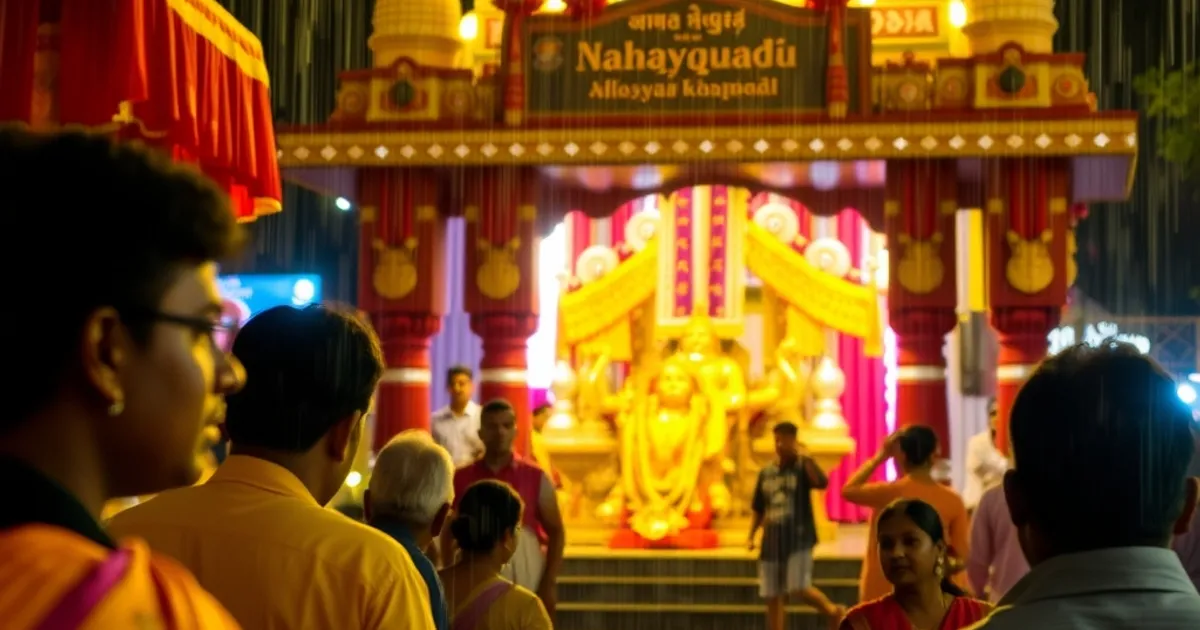
Thrissur was a city of spiritual celebration, judicial landmark, and quiet heartbreak this week. At the Sree Vadakkunnathan Temple, thousands braved torrential monsoon rain for the annual Aanayoottu, where 49 elephants received a feast of rice, jaggery, and fruit in a ritual born from the 1982 Asian Games. The Kerala High Court simultaneously barred political parties from holding gatherings at the iconic Thekkinkadu Maidan. And in Pazhanji village, a family shattered by unemployment in Qatar was found in the aftermath of a suspected suicide pact that cost a father and teenage daughter their lives.
🪔 Thousands Brave Monsoon Rains for Aanayoottu at Vadakkunnathan Temple
Hinduism Today, drawing on reporting from The Hindu dated July 17, 2026, describes how thousands of devotees gathered at the Sree Vadakkunnathan Temple in Thrissur for the annual Aanayoottu — the ceremonial feeding of elephants — despite relentless monsoon rain. As dark clouds massed over the temple, 49 elephants including tuskers, female elephants, and calves lined up near the southern gopuram, their rain-darkened forms a striking sight: unadorned by caparisons or Pooram finery, they appeared in their natural state, rare in a city accustomed to festival-dressed elephants. Families, children, pilgrims, and elephant enthusiasts waited patiently in the rain to offer food to the animals. The ceremony opened when chief priest Payyappilly Madhavan Namboodiri offered the first rice ball to female elephant Thiruvambady Lakshmi. The feast comprised 1,100 pounds of cooked rice mixed with jaggery and turmeric, formed into large balls, alongside pineapple, cucumber, watermelon, maize, bananas, other fruits, and a herbal digestive mixture. Hinduism Today traces the ritual's origin to 1982, when Kerala's temple elephants returned exhausted from the Asian Games opening ceremony in New Delhi and the Vadakkunnathan Temple launched a recovery feeding programme — a practice that evolved into the annual Aanayoottu now held on the first day of Karkkidakam. [8]
🗳️ Kerala High Court Bars Political Events at Thrissur's Thekkinkadu Maidan
Bar and Bench, in a report by Praisy Thomas published July 21, 2026, covers a significant Kerala High Court ruling that prohibits political parties from using Thrissur's Thekkinkadu Maidan — formally the Vadakkumnatha Kshethra Maidan — for protests or public gatherings. The court held, in the case of Madhu VB v State of Kerala and connected matters, that political organisations cannot commandeer the maidan surrounding the historic Vadakkumnatha Temple for demonstrations or rallies. Only cultural activities will be permitted going forward. Bar and Bench explains that the Thekkinkadu Maidan carries exceptional significance in Thrissur's identity: it is the stage for the world-renowned Thrissur Pooram festival and is inseparable from the heritage of the Vadakkumnatha Temple, one of Kerala's oldest Shiva shrines. The High Court's decision has been widely welcomed as a move to preserve the sanctity of a space that belongs to culture and faith rather than partisan activity. The ruling draws a firm line between political demonstration and protected heritage space — a distinction with implications for similar disputes at historically significant public grounds across Kerala. Bar and Bench frames the order as a legal milestone, noting the Devaswom Board's involvement in proceedings and the court's clear position on preserving the maidan's cultural character. [9]
Qatar Job Loss Leads to Suspected Suicide Pact in Pazhanji; Father and Daughter Dead
The Indian Express, in a report by Shaju Philip published July 13, 2026, covers a devastating family crisis in Pazhanji village in Thrissur district. Siby, 51, a designer who recently lost his job in Qatar and returned to Kerala the previous week, and his daughter Aleena, 18, died in what police describe as a suspected suicide pact. His wife Beena, 45, and son Adithyan, 17, were hospitalised. Adithyan made a distress call alerting police that his father and sister had died and that he and his mother had also consumed poison. Officers found Aleena's body hanging from the ceiling and Siby's body in a well within the family compound. Beena, who consumed poison, had also slashed her wrist. A police officer told the Indian Express: it is possible that Siby jumped into the well after his daughter hanged herself, and the mother may have made a further attempt after finding them. A short suicide note at the home read: 'We are fed up with life.' Kattakambal panchayat president K Jayasankar told the Indian Express that Adithyan and Aleena were good students. The case has focused attention on the precarious situations facing Kerala migrant worker families when overseas employment suddenly collapses. [10]
Sources: [8] Hinduism Today · [9] Bar and Bench · [10] The Indian Express