
Desi Things to Do in Tucson (July 2026)
TL;DR
- 🌕 Guru Purnima 2026 lands on July 29 — the auspicious full moon of Ashadha, observed across Tucson's Indian community
- 🙏 Sankashti Chaturthi on August 2 calls Ganesha devotees to fast and pray until moonrise
- ☀️ Pradosh Vrat on August 10 is timed to Tucson's spectacular monsoon-season sunsets
- 🌑 Amavasya on August 12 is the new moon for ancestral remembrance and pitru rites
- 🐍 Nag Panchami 2026 on August 16 closes the month's festival run
Tucson occupies a particular place in the American Southwest — a university city, a desert city, and increasingly a city with a meaningful Indian and South Asian presence. The University of Arizona draws graduate students and faculty from across India, and the broader professional community has grown steadily over the past decade. In a desert city where the summer monsoon arrives every July and the heat is relentless, the Hindu calendar's Shravana month carries a different feel than it does in a coastal city: the rains actually mean something here, arriving with visible drama over the Rincon and Santa Catalina mountains.
The late July and August calendar this year is dense. The cluster runs from Guru Purnima 2026 on July 29 through Nag Panchami 2026 on August 16 — seven observances in under three weeks, each drawing from a different layer of Hindu tradition.
Guru Purnima 2026 and Purnima: July 29
Guru Purnima 2026 and Purnima coincide on July 29. This is the full moon of Ashadha — the month that, in the Vedic calendar, marks the beginning of the monsoon season. In Tucson, the monsoon has typically arrived by late July, so this Purnima comes with actual rain in the sky and the distinctive scent of creosote after the storm.
Guru Purnima is traditionally a day to honor one's teachers. For Indian families and students in Tucson, this takes several forms. Those enrolled in cultural classes — classical Bharatanatyam, Carnatic vocal, yoga, tabla — observe the occasion by formally acknowledging their teachers. Families with children in Indian cultural programs treat it as a meaningful ceremonial date rather than just another Sunday.
For the broader Indian community, Guru Purnima 2026 is also an occasion for satsang gatherings. It is worth reaching out to local temple organizations or cultural associations in the city a couple of weeks before July 29 to ask about planned programs. This is the full moon most likely to generate a community event.
Purnima fasting — observed monthly by many Hindu households — also applies on this date. The Guru Purnima Purnima is considered especially significant, and many who do not keep the fast on every full moon make a point of observing this one.
Insider Tip: July 29 is also a time when Tucson's Indian student population — particularly those at the University of Arizona — tends to gather informally. If you are new to the city and looking to connect with the community, Guru Purnima is a natural occasion to reach out to Indian student organizations or cultural associations. These groups often serve as the connective tissue between the student community and the longer-established Indian families in Tucson.
Sankashti Chaturthi and Ekadashi: August 2 and 8
Sankashti Chaturthi on August 2 falls on the fourth day of the waning moon — the chaturthi of the Krishna paksha. The fast is for Ganesha: prayers and worship through the day, the observance completed after sighting or calculating the moonrise in the evening. In Tucson, evening monsoon clouds can sometimes obscure the moon; traditional practice holds that if the moon is not visible, the moonrise time is used as the reference point regardless.
The Sankashti Chaturthi fast is one of the more universally practiced individual observances in the Indian community, maintained by families from Maharashtra, Gujarat, Tamil Nadu, and other states. The specifics of the offerings vary — modak in some households, rice dumplings or coconut preparations in others — but the intention is shared: seeking the removal of obstacles through Ganesha's grace.
Ekadashi on August 8 follows six days later. The eleventh-day fast of the waning fortnight in Shravana is observed by Vaishnava households and many others in Tucson's Indian community, which includes families from varied regional backgrounds — Gujarati, Telugu, Tamil, Kannada, and others. Ekadashi is widely maintained, though the form of the fast adapts to diaspora life: some avoid all food, others fast from grains specifically, and many keep a simpler version around a full work or school schedule.
Pradosh Vrat: August 10
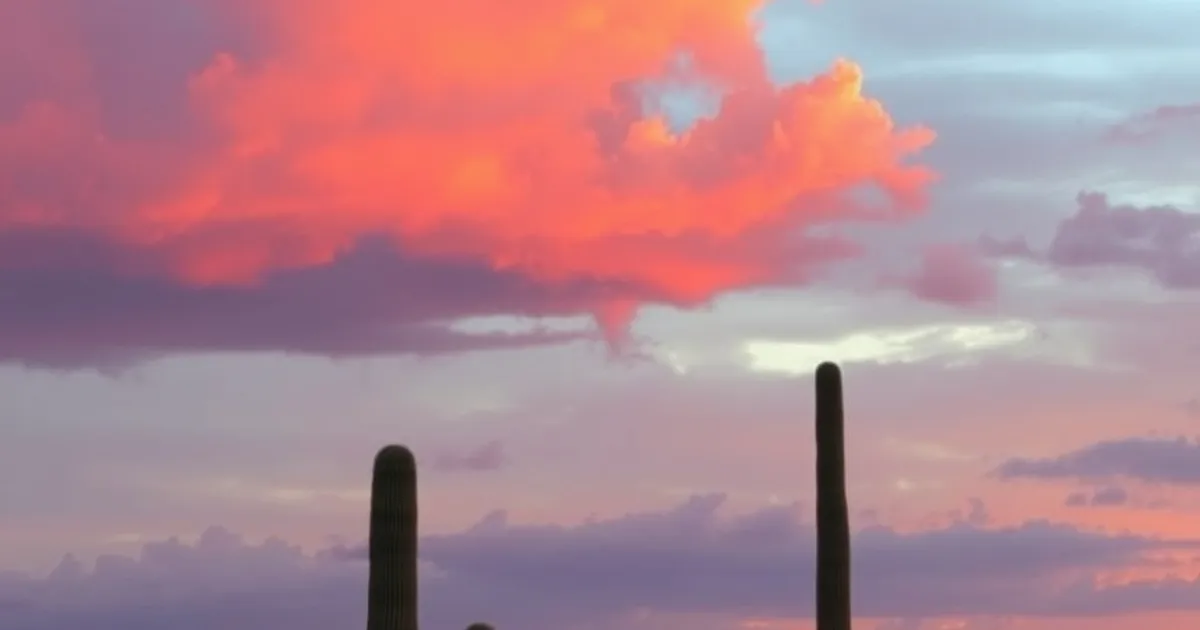
Pradosh Vrat on August 10 deserves particular attention for Tucson observants. The pradosh kalam — the window during which the observance is performed — falls specifically at twilight, roughly ninety minutes spanning the sunset hour. In Arizona in August, sunset comes in the early evening, and the twilight is one of the most dramatic of the desert day. Monsoon clouds catch the last light over the mountains in ways that are genuinely arresting.
For Shiva devotees in the city, Pradosh Vrat is a personal and household observance. The fast through the day, the abhisheka — the ritual bathing of a Shivalinga — at the evening hour, and prayers during the twilight window align particularly well with Tucson's natural rhythms in the monsoon season. Families from Tamil Nadu, Karnataka, and Andhra Pradesh are most likely to maintain this vrat, though it is observed across communities.
The timing makes Pradosh Vrat one of the few observances where the setting of a desert city actively enhances the experience rather than making it feel removed from its original context.
Amavasya and Nag Panchami 2026: August 12 and 16
Amavasya on August 12 — the new moon — is the day for ancestral rites across Hindu traditions. Tarpana, the water offering to departed ancestors, is ideally performed near a river or body of water. Tucson has limited natural water sources year-round, though the monsoon-swollen Rillito River and Santa Cruz River do carry water during peak season. Many Indian families in Tucson perform a simplified version of the rite at home, or make charitable donations in the names of their ancestors as the diaspora's practical equivalent.
Amavasya carries a quieter energy than Purnima — more inward, more somber, given to remembrance rather than celebration. For families far from home, it can be an occasion to call parents and grandparents in India, to hear the names of those who have passed, and to maintain the thread of ancestral memory across the distance.
Nag Panchami 2026 on August 16 closes the month's cluster of observances. Among Indian communities in Tucson, this festival is observed with particular engagement by families from Maharashtra and the southern states. At-home observance typically involves prayers to serpent deities, offerings of milk, and the preparation of specific regional sweets and foods. Some families maintain small shrine spaces for the occasion; others mark it more simply through prayer and the day's customary food restrictions.
FAQ
When is Guru Purnima 2026 in Tucson? Guru Purnima 2026 falls on July 29 in Tucson.
How does Pradosh Vrat timing work in Arizona? Pradosh Vrat is observed during the twilight hour — roughly ninety minutes spanning the sunset window. In Tucson in August, this falls in the evening, making it manageable around a standard workday.
Are there Indian temples in Tucson where these events are observed? Tucson's Indian community has cultural and religious organizations that host programs. For specific event listings, reach out directly to local Indian cultural associations or temple organizations in the city.
How do you observe Amavasya away from a river? Many diaspora families observe Amavasya through home prayers, tarpana performed at any available body of water, or through charitable giving in memory of ancestors.
Is Nag Panchami 2026 observed the same way across all regional communities? No — regional traditions vary significantly. Families from Maharashtra, Karnataka, Andhra Pradesh, and other states each have distinct customs around food, offerings, and household observances on Nag Panchami.
Bottom Line 🌵
Tucson's Indian community has seven observances running from July 29 through August 16: Guru Purnima 2026 and Purnima on July 29, Sankashti Chaturthi on August 2, Ekadashi on August 8, Pradosh Vrat on August 10, Amavasya on August 12, and Nag Panchami 2026 on August 16. For a community that is geographically spread across a sprawling desert city, these calendar moments function as gathering points — occasions to observe at home, to connect with other Indian families, and to maintain the rhythms that make a place feel like home regardless of how far you are from where you started.