
Janmashtami 2026 in Varanasi: Events, Puja & Where to Celebrate
Janmashtami 2026 in Varanasi: Events, Puja & Where to Celebrate
TL;DR 🪔
- Janmashtami falls on August 24, 2026 — Krishna's birthday is observed across Varanasi with fasting, midnight pujas, and citywide celebrations
- Varanasi's temple network is vast; Kal Bhairav Temple, Annapurna Mandir, Maa Kashi Vishalakshi Temple, and Tulsi Manas Temple are among the key sites for the festival 🛕
- The festival calendar extends through Ganesh Chaturthi (Aug 27), Navratri (October), and Diwali (October) — Janmashtami opens an extraordinary autumn of observance
- The Ganga ghats add a dimension to Janmashtami in Varanasi that no other city can replicate
- Evening aarti at the ghats and temple midnight celebrations are the two unmissable experiences 🙏
There are cities that celebrate Janmashtami, and then there is Varanasi — Kashi — Benares. One of the oldest continuously inhabited cities on earth, Varanasi is where the spiritual grammar of Hinduism is most legibly written. Every lane has a shrine, every ghat has its ritual, and every festival here carries the weight of a tradition that has been observed for longer than most institutions in the world have existed. Janmashtami 2026 falls on August 24, and in Varanasi, the city does not simply mark the occasion — it transforms around it.
This guide covers the temples, the timeline, and the practical logistics of being in Varanasi for Janmashtami and the weeks around it.
The Festival Calendar: August Through October 2026
Janmashtami does not arrive in isolation. The weeks before it build steadily.
Guru Purnima on July 29 is the first major observance of the season — a full moon day for honoring teachers, observed at temples and ghats with lamp-lighting and prayer. The Purnima gathering at the Ganga is particularly striking at this time of year, when the river is full from monsoon rains and the city's spiritual energy is high.
Sankashti Chaturthi (August 2) draws Ganesha devotees for evening puja. Ekadashi (August 9) brings a fasting day. Amavasya, the new moon, arrives August 12 — an important day for ancestral offerings (pitru tarpan) at the ghats, when dozens of priests line the river steps conducting rituals for families who have come to honor their dead.
Nag Panchami on August 17 is a significant day in Varanasi — snakes are worshipped with milk and flowers, and the living city-temple complex takes on an ancient character particularly visible in the older neighborhoods near the ghats.
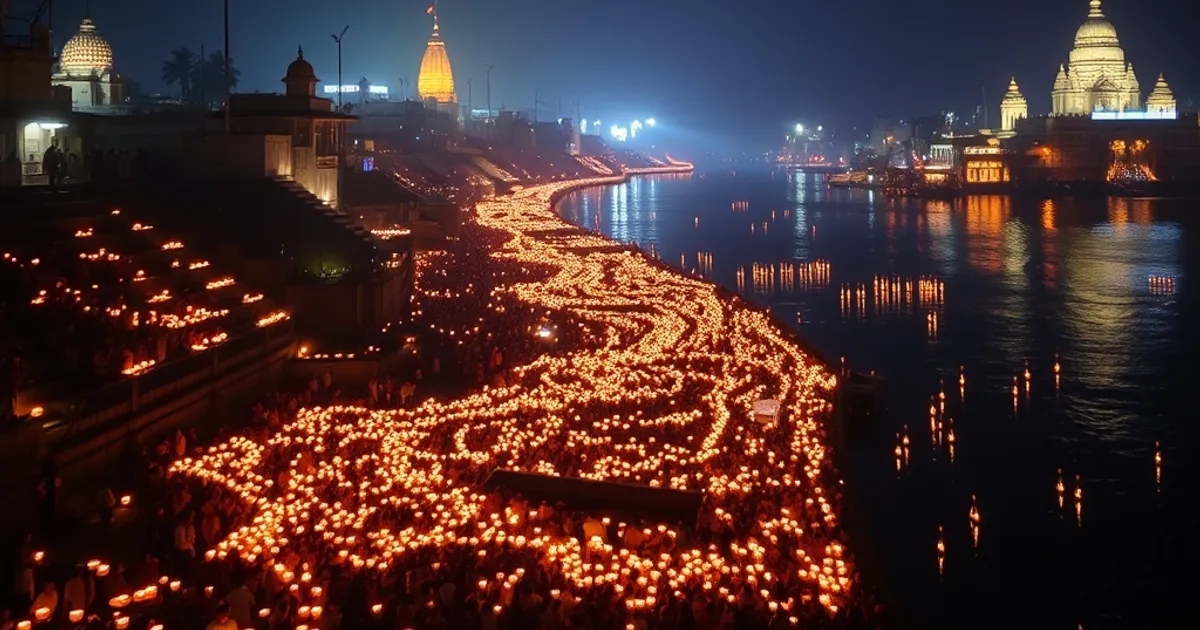
Then Janmashtami: August 24, 2026. Three days later, Ganesh Chaturthi on August 27 launches a ten-day period of celebration before Ganesha's immersion. October brings Navratri — nine nights of the goddess — and Diwali, the festival of lights, which reaches one of its most spectacular expressions on the Varanasi ghats, where thousands of oil lamps (diyas) are floated on the Ganga.
Janmashtami in Varanasi: How the City Observes
Janmashtami marks the birth of Krishna, who according to tradition was born at midnight. The festival is therefore built around the night — unlike many Hindu observances that center on dawn. Devotees fast through the day of Janmashtami, breaking the fast only after midnight, when the birth is celebrated with abhishek (ritual bathing of the idol), the rocking of a decorated cradle, and the chanting of Krishna's names and stories.
In Varanasi, this midnight moment happens simultaneously across hundreds of temples, large and small. The city's sound environment between 11 PM and 1 AM on Janmashtami is unlike any other night of the year — conch shells, bells, ululations, and recorded bhajans layering over each other from every direction.
The ghats take on their own energy. Boats carry lanterns on the Ganga. Priests at the main ghats conduct extended evening aartis. Families who have come specifically for Janmashtami fill the lanes around the major temples.
Insider Tip: The Dashashwamedh Ghat aarti, which happens every evening, is significantly amplified during festival periods. On Janmashtami evening, arrive by 6:30 PM for a good position — the aarti typically begins around 7 PM. The midnight puja at the temples is the spiritual peak, but the evening aarti sets the tone for the night.
Key Temples for Janmashtami
Varanasi's temple geography is dense and layered. These are the sites most relevant to Janmashtami celebrations and the broader festival season.
Vishwanath Temple — the Kashi Vishwanath, the golden temple dedicated to Shiva — is the axis around which Varanasi's religious life turns. Janmashtami here involves extended pujas and large congregations. The queue management during major festivals has improved in recent years; arriving before 6 AM gives the best access.
Kal Bhairav Temple is dedicated to Bhairava, a fierce form of Shiva who is considered the guardian of Kashi. This temple has a distinct character — the deity is offered alcohol as prasad, a practice unique in this form among Varanasi's major shrines. Kal Bhairav is revered by residents as the city's protector, and his temple draws consistent crowds year-round. During festival periods, the approach lanes fill quickly.
Maa Kashi Vishalakshi Temple honors the goddess Vishalakshi — one of the 51 Shakti Peethas, sites associated with the body of the goddess Sati. It sits near the Vishwanath complex and draws devotees particularly during Navratri, but its significance is continuous throughout the year. The temple is one of Varanasi's ancient Shakti sites.
Annapurna Mandir, dedicated to the goddess of food and nourishment, is another major temple near the Vishwanath complex. Annapurna is revered as the one who feeds the city — Varanasi's identity as a place of abundance and hospitality is tied to her worship. During Janmashtami and the festivals that follow, the Annapurna Mandir is particularly crowded as devotees seek her blessings before the season of fasting and feasting ahead.
Tulsi Manas Temple, built at the site associated with Tulsidas composing the Ramcharitmanas, is a white marble structure that draws visitors for its architectural clarity as much as its devotional significance. It carries a different atmosphere from the older ghee-lamp temples of the central ghats — more spacious, better lit, with murals depicting scenes from the Ramcharitmanas on its walls. During Janmashtami it stages presentations of Krishna's life alongside the standard puja.
Rohiteshwar Mandir in the Gandhinagar Naria area of the city is a neighborhood temple that serves its local community throughout the festival season. Alongside the larger landmark temples, sites like Rohiteshwar Mandir are where the majority of Varanasi's residents actually worship — quieter, more intimate, and often displaying the most concentrated local devotion.
Logistics for Janmashtami in Varanasi
Varanasi's lanes are narrow and can become impassable during major festivals. Pedestrian movement is the only practical option near the ghats and the Vishwanath complex from the afternoon of Janmashtami through the following morning. Book accommodation early and stay within walking distance of the ghats if possible.
The lanes fill with food stalls during festivals — mostly vegetarian, with sweets (particularly those associated with Krishna: makhan-mishri, panchamrit) available at most corners. Devotional music plays from loudspeakers continuously through the night of Janmashtami.
For the midnight puja, choose one temple to be at rather than trying to move between locations — congestion makes multi-temple touring impractical after 10 PM. Kal Bhairav Temple, Annapurna Mandir, and the Vishwanath area all have distinct midnight atmospheres; decide based on your devotional inclination or aesthetic preference.
FAQ
What time does the main Janmashtami puja happen in Varanasi? The birth is celebrated at midnight. Most temple celebrations peak between 11:30 PM and 12:30 AM on August 24–25, 2026.
Is Vishwanath Temple open to non-Hindus? The Kashi Vishwanath Temple has specific entry requirements; non-Hindus may be restricted from the main sanctum. Other temples in Varanasi generally allow all respectful visitors.
How crowded does Varanasi get during Janmashtami? Very crowded. The central ghats and temple lanes see tens of thousands of people on the festival night. Arrive early for any specific temple puja.
Are there boat rides available on the Ganga during Janmashtami? Yes, though demand is very high. Book a boat in advance or negotiate with boatmen early in the afternoon before the crowds peak.
Which temples are most accessible for first-time visitors? Tulsi Manas Temple has more space and better pedestrian access than the central lanes. Rohiteshwar Mandir in Gandhinagar Naria is less crowded than city-center sites.
Bottom Line 🙏
Janmashtami in Varanasi is not a performance designed for visitors — it is one of the oldest cities in the world doing what it has always done, on one of its most significant nights. Kal Bhairav Temple, Maa Kashi Vishalakshi Temple, Annapurna Mandir, Tulsi Manas Temple, and Rohiteshwar Mandir anchor the city's observance across neighborhoods and traditions. The Ganga at midnight, the temple bells layering across the lanes, and the collective fast-breaking at moonrise together create an experience that belongs to a very short list of genuinely irreplaceable things. If August 24, 2026 finds you in Varanasi, stay up for it.