
Onam 2026 in Varanasi: Events, Puja & Where to Celebrate
TL;DR
- Varanasi runs on a near-continuous festival rhythm from late July through September 2026 -- twenty observances across sixty days. 🏛️
- Onam 2026, falling in late August or early September, is celebrated by Varanasi's Kerala community with sadya feasts and floral pookkalam.
- Anchoring dates include Guru Purnima 2026 (July 29), Nag Panchami 2026 (August 17), Raksha Bandhan 2026 (August 28), Krishna Janmashtami 2026 (September 4), and Ganesh Chaturthi 2026 (September 14). 🪔
- Temples like Vishwanath Temple, Durga Temple, and Sankat Mochan Hanuman Mandir serve as the city's anchors for festival worship through all of it.
- Varanasi does not have an off-season for spirituality -- it simply changes character month to month.
Onam 2026 in Varanasi
Varanasi is not Kerala. But Varanasi is one of those cities where many communities have arrived over centuries and stayed -- university families, traders, pilgrims who settled, professionals drawn by institutions. Kerala families are among them, and when Onam arrives, it does so through these communities: living rooms spread with pookkalam (floral rangoli patterns), sadya feasts served on banana leaves with the full spread of accompaniments, and the particular collective effort that happens when a celebration has to be recreated far from its home geography.
Onam 2026 falls in late August or early September. The exact Thiruvonam day -- the main day of the festival -- lands when the moon occupies the Sravana nakshatra during the Malayalam month of Chingam. Check current Malayalam calendar sources as the date approaches to confirm the precise day. What is clear is that it lands in the same stretch as Raksha Bandhan 2026 (August 28) and close to Krishna Janmashtami 2026 (September 4) -- meaning late August in Varanasi is saturated with festivity from multiple directions at once.
The Temple Circuit for Festival Season
Varanasi has more temples per square kilometer than almost any city in the world. During a stretch this dense with observances, it helps to know which ones to plan around.
Vishwanath Temple is the axis of the city's religious life. Any major occasion -- from Nag Panchami 2026 to Ekadashi to Pradosh Vrat -- draws expanded crowds here. Lines can be very long during peak festival days; early morning visits, before 7 AM, are consistently the best approach.
Durga Temple on Sankat Mochan Road is the principal Durga shrine in Varanasi. The approach along this road also brings you past Sankat Mochan Hanuman Mandir (the full name as it appears in local signage is "Sankat Mochan Hanuman Mandir"), which is one of Varanasi's most beloved temples regardless of occasion. Both are worth visiting during major festivals.
Maa Kashi Vishalakshi Temple is dedicated to the goddess Vishalakshi, one of the shakti peethas associated with Varanasi. Purnima days and festival occasions see special puja here.
Adi Keshav Temple at Rajghat sits at the confluence of the Varuna and Ganga rivers -- one of the oldest Vishnu shrines in Varanasi. Ekadashi observances have particular resonance here given the Vaishnava connection.
Bharatmata Mandir (also listed locally as Bharat Mata Mandir) holds a different kind of significance: its primary object of veneration is a marble relief map of undivided India rather than a deity image. During national observances and festive periods, it draws visitors from across the country.
The broader circuit also includes Rohiteshwar Mandir in Gandhinagar Naria, New Vishwanath Temple on the BHU campus, Vishalakshi Temple, Bhaskar Shiv Madir in Bhullanpur, and Ramjiyawan Baba Mandir in Nathupur -- each with its own regular congregation and programming during major festival days.
Insider Tip
Varanasi's famous Ganga aarti at Dashashwamedh Ghat happens every evening, but on full moon nights -- Purnima on July 29 and August 28 -- and on Guru Purnima 2026, it draws significantly larger crowds. Arriving 45 minutes early is the minimum; an hour is better if you want a standing spot on the steps or a boat seat. Festival evenings are not occasions to arrive at 6:30 PM expecting any kind of view.
The Full Calendar: July Through September
Every observance in this sixty-day stretch:
July 25 -- Ekadashi (Devshayani Ekadashi, marking the start of Chaturmas)
July 27 -- Pradosh Vrat (Ravivar Pradosh -- Sunday evening Shiva worship)
July 29 -- Guru Purnima 2026 and Purnima (Ashadha full moon; the year's most significant full moon for spiritual communities)
August 2 -- Sankashti Chaturthi (Ganesh fast; moon-sighting required to break it)
August 9 -- Ekadashi (Kamika Ekadashi -- first Ekadashi of Shravan month)
August 12 -- Amavasya (new moon -- ancestral rites, river bathing at dawn)
August 17 -- Nag Panchami 2026 (snake worship; Varanasi observes this with particular intensity given Shiva's serpent iconography)
August 23 -- Ekadashi (Putrada Ekadashi of Shravan -- considered highly auspicious)
August 26 -- Pradosh Vrat (Mangalwar Pradosh -- Tuesday Pradosh, significant in Shiva traditions)
August 28 -- Raksha Bandhan 2026 and Purnima (Shravan Purnima -- the year's most festive full moon by popular observance)
September 1 -- Sankashti Chaturthi
September 4 -- Krishna Janmashtami 2026 (midnight birth celebration; temples across Varanasi hold programs through the night)
September 7 -- Ekadashi
September 9 -- Pradosh Vrat
September 11 -- Amavasya (new moon; ancestral practices active on Varanasi's ghats)
September 14 -- Ganesh Chaturthi 2026 (ten-day Ganesh festival begins; major public installations across neighborhoods)
September 22 -- Ekadashi
September 24 -- Pradosh Vrat
Twenty observances. Varanasi does not have a quiet stretch anywhere in this window.
Raksha Bandhan 2026 and Shravan Purnima
August 28 carries two things at once. Raksha Bandhan 2026 -- the sibling-bond celebration -- falls on Shravan Purnima, the full moon of the holiest month. The combination means the city is running on two tracks: the domestic celebration of Raksha Bandhan and the ritual significance of Shravan Purnima with its temple programs and Ganga bathing.
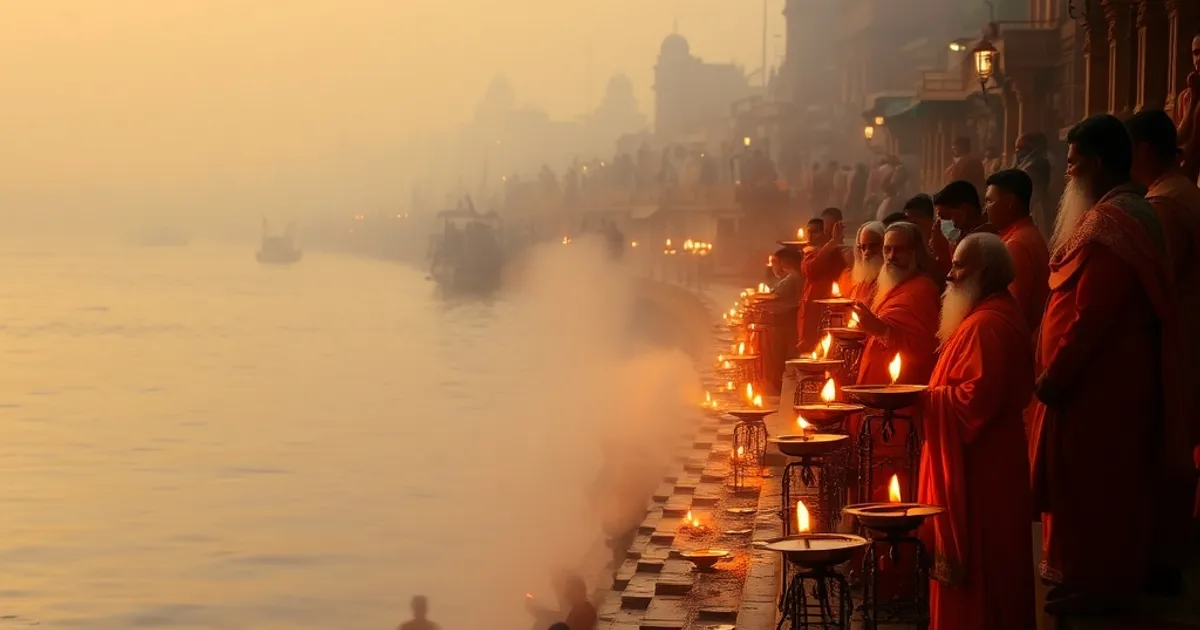
The ghats are active by 5 AM on Shravan Purnima mornings. Families come for the river bath, priests conduct puja, and the whole city carries an early-morning energy absent on ordinary days. By evening, the Ganga aarti at Dashashwamedh Ghat will be among the largest of the year.
Krishna Janmashtami 2026
September 4 brings Krishna Janmashtami 2026 -- the midnight celebration of Krishna's birth. Varanasi's character is primarily Shaiva, so Janmashtami here differs in atmosphere from Mathura or Vrindavan. Programs are held at the New Vishwanath Temple on the BHU campus, at Krishna-dedicated shrines across the city, and in neighborhood mandaps. The midnight hour -- when Krishna's birth is traditionally marked -- sees a city-wide celebration that runs past 12 AM. Families stay up, temples stay open, and the streets near major Krishna mandaps are active through the night.
Ganesh Chaturthi 2026
September 14 begins Ganesh Chaturthi 2026 and a ten-day festival. Large clay Ganesh idols are installed in public pandals across neighborhoods. Evening aarti programs run daily through the ten days. The final day -- visarjan -- ends with the immersion of the idol, and Varanasi's ghats become the focal point, with the Ganga receiving the idols as the festival concludes.
FAQ
Is Onam celebrated publicly in Varanasi?
Onam is primarily a community celebration in Varanasi, centered around Kerala families and cultural associations. It is not a city-wide public festival like Diwali or Janmashtami, but the celebrations within those communities are full and genuine. Connecting with Kerala cultural organizations in the city is the best way to participate.
Which temples are best for Nag Panchami 2026 in Varanasi?
Nag Panchami observances are strongest at Shiva temples -- since Shiva is depicted wearing serpents -- and at dedicated naga shrines across the city. Vishwanath Temple and Durga Temple both hold programs. Some neighborhoods have specific serpent shrines that come alive on this day alone.
How do I manage crowds at Vishwanath Temple during major festivals?
Arrive before 7 AM consistently. Festival afternoons and evenings are peak crowding periods. The queue management system at the temple has improved in recent years but is still stretched on major festival days.
Is Ganesh Chaturthi 2026 as large in Varanasi as in Maharashtra?
The scale is different. Varanasi's celebrations are significant but less focused on massive public spectacle than the Maharashtra-style Ganesh Chaturthi. The ten days of programs build in energy, and the visarjan is a genuine event on the ghats -- but the city's Shaiva identity means Ganesh Chaturthi 2026 is one major festival among many rather than the festival of the year.
What is Amavasya and how is it observed in Varanasi?
Amavasya is the new moon day, observed with ancestral rites, river bathing at dawn, and charitable giving. In this calendar it falls on August 12 and September 11. Varanasi's ghats are particularly active on Amavasya mornings because the city's association with ancestral practices is among the strongest in the country.
Bottom Line
Varanasi from late July through September 2026 is a sixty-day stretch of near-continuous festivity: Guru Purnima 2026 on July 29, Nag Panchami 2026 on August 17, Raksha Bandhan 2026 on August 28, Krishna Janmashtami 2026 on September 4, Ganesh Chaturthi 2026 on September 14, and Onam 2026 from Varanasi's Kerala community falling somewhere in late August or early September alongside all of this. Temples like Vishwanath Temple, Durga Temple, Maa Kashi Vishalakshi Temple, and Sankat Mochan Hanuman Mandir serve as the anchors throughout. The city does not pause between occasions -- it simply transitions from one to the next.