
Janmashtami 2026 in Vasai-Virar: Events, Puja & Where to Celebrate
Janmashtami 2026 in Vasai-Virar: Events, Puja & Where to Celebrate
TL;DR
- 🦚 Krishna Janmashtami 2026 falls on September 04 — one of the most celebrated nights in Vasai-Virar's festive calendar
- 🛕 Multiple temples across the twin cities host overnight pujas, devotional music, and Dahi Handi events
- 📅 The festive run-up includes Nag Panchami 2026 (Aug 17) and Raksha Bandhan 2026 (Aug 28), leading directly into Ganesh Chaturthi 2026 (Sep 14)
- 🌸 Temples like Hanuman Mandir and Laxminarayan Mandir are established community anchors for puja and darshan through the season
- 🙏 For those seeking ashram-based observance, Tapovan Ashram in Medhe Village offers a quieter, spiritually focused setting
Vasai-Virar's Festival Season: A Calendar Built for Celebration
Vasai-Virar, the twin-city municipal area stretching north of Mumbai along Maharashtra's Palghar coast, has a festive culture that rivals any part of the Konkan region. The months of July through September bring an almost uninterrupted sequence of observances, each carrying its own flavor of community, devotion, and tradition.
The season opens with Pradosh Vrat on July 27, 2026, followed two days later by Purnima and Guru Purnima 2026 on July 29. The full moon of Guru Purnima 2026 is one of the most spiritually significant dates of the Hindu year — a day when students, disciples, and devotees offer thanks to their teachers and seek blessings. Many of Vasai-Virar's temples and ashrams hold special programs on this date, including Tapovan Ashram in Medhe Village, which draws seekers from across the region for its satsang sessions and spiritual gatherings on Guru Purnima 2026.
From there, the calendar moves through Sankashti Chaturthi on August 02 — a Ganesh fast observed until moonrise — and into the preparations for Nag Panchami 2026 on August 17, followed by Raksha Bandhan 2026 on August 28, and culminating in the twin peak of Krishna Janmashtami 2026 and Ganesh Chaturthi 2026 in September.
Key Temples Across Vasai-Virar
Vasai-Virar's religious landscape is genuinely diverse, with temples serving different communities and traditions spread across the urban sprawl.
Hanuman Mandir on Mahatma Gandhi Road is one of the most accessible and well-established temples in the area. It sees steady footfall through the week and notably higher crowds on Saturdays and auspicious calendar dates.
Laxminarayan Mandir in Mittal Enclave is dedicated to the combined Lakshmi-Narayan form, making it a natural center for Vaishnava devotees — the same tradition that places Krishna Janmashtami 2026 at the very top of the celebration calendar. This temple is typically among the most active venues for Janmashtami observances in the city.
Shree Tulja Bhavani Temple on Gass Road Park along Vasai-Gass Road serves devotees of the goddess Tulja Bhavani, a form of Durga particularly venerated in Maharashtra. The temple sees some of its highest turnout during Shakti-focused festivals but remains active and attended through all seasons.
Om Uttaleshwar Mahadev Mandir on Atodiwadi Road is a Shiva temple that draws worshippers especially on Pradosh Vrat and Shivratri observances. For the July-August season, this temple is a focal point for devotees observing the bi-monthly Pradosh fast.
Shree Shree Kalimata Mandir and Virat Vinayajk Mandir, both on Yashavant Nagar Road, represent the range of Vasai-Virar's temple ecosystem — a Kali temple and a Ganesh temple standing close together in the same locality, reflecting the area's multi-tradition devotional culture. Virat Vinayajk Mandir draws particular attention as Ganesh Chaturthi 2026 approaches.
Nag Panchami 2026 to Raksha Bandhan 2026: The Pre-Janmashtami Build
August in Vasai-Virar is preparation month for the grand festival of Janmashtami. Nag Panchami 2026 on August 17 brings its own specific observances: families fast, serpent images are worshipped, and milk is offered at shrines. Local temples sometimes install special Nag (serpent) figures in the days before the festival.
Raksha Bandhan 2026 on August 28 shifts the festive tone toward family. Sisters tie rakhis on brothers' wrists; sweets are exchanged; markets fill with rakhi stalls in the weeks before. Vasai-Virar's crowded market lanes come alive in the days preceding Raksha Bandhan 2026, and temples see devotional visits early in the morning before family celebrations begin.
Insider Tip: For Janmashtami 2026 puja items — clay Krishna idols, matka (earthen pot) decorations for Dahi Handi, and jhula (swing) sets — shop at Vasai's main market bazaar in the week before September 04. By the day itself, the more popular handcrafted items sell out. Local artisan-made clay idols from street vendors near major temples carry a character that mass-manufactured versions simply do not match.
Krishna Janmashtami 2026: The Night Vasai-Virar Stays Awake
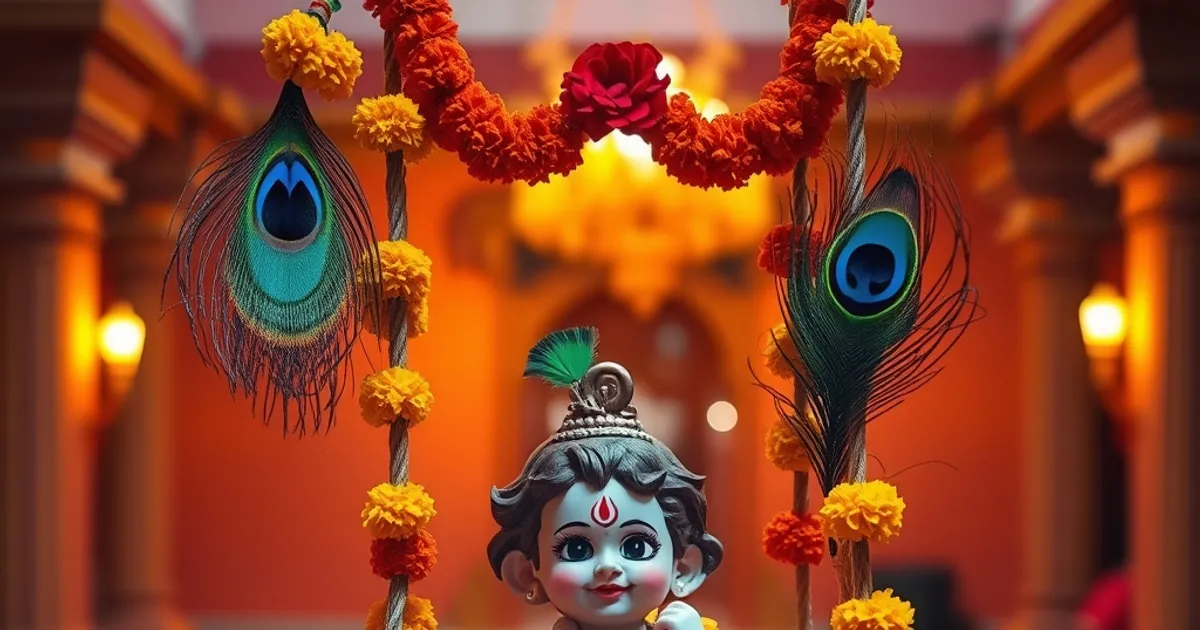
Krishna Janmashtami 2026 on September 04 is the climax of the season. The birth of Krishna is celebrated at midnight, the traditional hour of his birth, meaning temples across Vasai-Virar run overnight programs. Devotional singing in the form of bhajans and kirtans, flute music, the swinging of the baby Krishna idol in a decorated jhula, and a midnight abhishek (ritual bath) are the standard elements of a proper Janmashtami puja.
Laxminarayan Mandir is particularly active on this night, given its Vaishnava dedication. Virat Vinayajk Mandir draws Ganesh devotees who also celebrate the proximity to Ganesh Chaturthi 2026, just ten days away on September 14.
Dahi Handi, the next morning's event, brings young men together in human pyramids to break a pot of curd hung high above the street — a tradition especially energetic in the Mumbai metropolitan region, of which Vasai-Virar is an outer extension. Community associations organize these events in residential areas across both Vasai and Virar.
Ganesh Chaturthi 2026 on September 14 follows so closely that families barely pause between the two festivals. Streets that host Dahi Handi on September 05 are often the same streets where Ganesh idols will be installed and worshipped less than ten days later.
FAQ
When is Janmashtami 2026 in Vasai-Virar? Krishna Janmashtami 2026 falls on September 04, 2026. The main puja occurs at midnight, with celebrations continuing into the morning on September 05 for Dahi Handi events.
Which temples in Vasai-Virar celebrate Janmashtami? Laxminarayan Mandir in Mittal Enclave and Virat Vinayajk Mandir on Yashavant Nagar Road are among the well-known temple destinations for Janmashtami. Other temples including Hanuman Mandir on Mahatma Gandhi Road also hold programs — contact each temple directly for timing and visitor arrangements.
What is Dahi Handi and where is it held? Dahi Handi is a Janmashtami tradition held the morning after midnight puja. Groups form human pyramids to break an earthen pot of curd. In Vasai-Virar, residential associations and cultural groups organize these events in open grounds and streets across the twin cities.
What comes after Janmashtami in the festival calendar? Ganesh Chaturthi 2026 arrives on September 14, just ten days after Janmashtami. Many families and community groups move almost directly from one celebration into the next.
Can I visit Tapovan Ashram for Guru Purnima or Janmashtami? Tapovan Ashram in Medhe Village follows its own calendar of spiritual programs. For ashram-specific schedules and visitor arrangements, contacting the ashram directly well in advance is advised.
Bottom Line
Vasai-Virar's festive calendar from late July through mid-September 2026 is one of the most compact and richly varied of any city in the Mumbai region. Pradosh Vrat and Guru Purnima 2026 open the season; Nag Panchami 2026 and Raksha Bandhan 2026 carry it through August; and Krishna Janmashtami 2026 delivers the emotional and devotional peak before Ganesh Chaturthi 2026 closes the chapter. With temples like Hanuman Mandir, Shree Tulja Bhavani Temple, Om Uttaleshwar Mahadev Mandir, and Shree Shree Kalimata Mandir spread across the twin cities, residents have no shortage of places to mark each occasion with intention and community.