
Onam 2026 in Vasai-Virar: Events, Puja & Where to Celebrate
TL;DR
- Onam 2026 lands in late August — the Malayalam community in Vasai-Virar marks it with pookalams, communal sadya feasts, and cultural programs 🌸
- The festive arc stretches from Guru Purnima (Jul 29) to Ganesh Chaturthi (Sep 14), packing ten weeks of continuous observance
- Key temples include Om Uttaleshwar Mahadev Mandir, Shree Tulja Bhavani Temple, Virat Vinayak Mandir, and Tapovan Ashram
- Nag Panchami (Aug 17) and Raksha Bandhan (Aug 28) fall on either side of Onam, keeping the fortnight unusually full
- Community sadya events are organized by Kerala associations and housing societies — check local channels early, they fill fast
Vasai-Virar is a twin city at the northern edge of the Mumbai Metropolitan Region, where the city sprawl gives way to residential neighborhoods, coastal strips, and a dense network of temple precincts. What makes it culturally layered is the same thing that makes it geographically useful: it draws families from across Maharashtra and from the southern states into a single civic geography, producing a festival calendar that holds multiple traditions in parallel without flattening any of them.
Onam 2026 sits close to the center of this calendar's most active period. The ten-day harvest festival from Kerala, which culminates on Thiruvonam and is expected in late August 2026, runs alongside Nag Panchami, Raksha Bandhan, Krishna Janmashtami, and — closing the arc with full Maharashtra force — Ganesh Chaturthi on September 14. The season stretches from the quiet Ekadashi fast in late July through the Ganesh processions of mid-September, and it rewards those who track it across its full length.
What Onam Means in Vasai-Virar
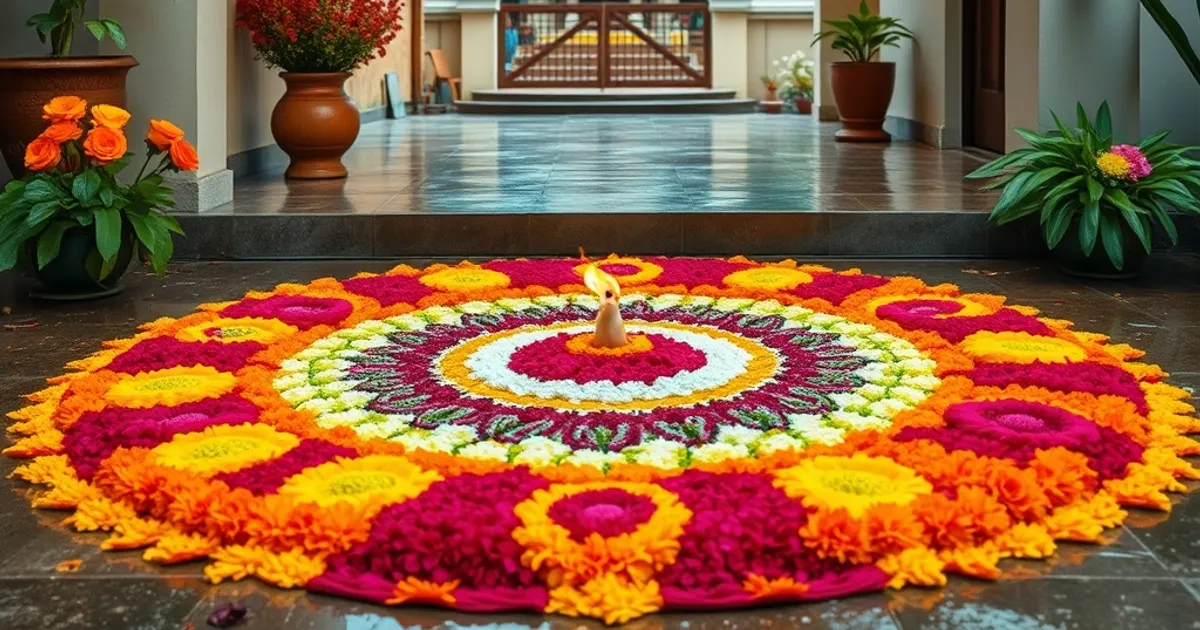
Onam belongs to the Malayalam tradition, marking the legendary homecoming of King Mahabali and the prosperity of the harvest season. The ten-day celebration begins on Athacham and builds toward Thiruvonam, the culminating day of pookalams (elaborate floral designs laid at home entrances), Onam sadya (a vegetarian feast served on banana leaves), and cultural performances including Thiruvathirakali dance.
The Malayalam community in Vasai-Virar — concentrated around Nalasopara, Navghar, and Virar East — carries these traditions with genuine consistency. Housing societies with a strong South presence often organize communal sadyas that bring together hundreds of residents from across a building or colony. The sadya itself — rice, sambar, avial, thoran, olan, payasam — is the emotional center of Thiruvonam, and community-organized versions are typically both more abundant and more authentic than anything a restaurant can offer.
Announcements for 2026 events will circulate through local WhatsApp groups and Kerala Samajam social media channels in the two to four weeks before Thiruvonam. Register early; these events tend to fill.
The July–September Calendar
The season opens on July 25 with Ekadashi, observed through fasting and evening prayers. Pradosh Vrat on July 27 follows, drawing Shiva devotees to temple for the bimonthly evening puja.
Guru Purnima on July 29 — coinciding that year with the month's Purnima — is one of the more emotionally resonant days in the spiritual calendar. It is set aside for honoring teachers and the unbroken lineage of knowledge. Tapovan Ashram in Medhe Village, which maintains a tradition of long-form spiritual instruction and retreat, draws devotees from across Vasai-Virar and neighboring Palghar district on this day. Temples across the city hold kirtans and discourses through the evening.
Sankashti Chaturthi on August 2 marks the monthly Ganesha fast — particularly significant in Maharashtra, where Ganesha's communal importance will become fully apparent by September. Nag Panchami arrives on August 17, when serpent deities receive offerings of milk at household shrines and temple premises across the twin city. The tradition carries deep rural Maharashtra roots but is observed with full care in Vasai-Virar's urban fabric.
The ten-day Onam period runs through the final week of August. Raksha Bandhan falls on August 28, coinciding with the Purnima, and arrives just after Thiruvonam — making the final stretch of August a near-continuous cycle of harvest celebration and familial observance.
Krishna Janmashtami on September 4 brings the midnight vigil: overnight bhajans, reenactments of Krishna's birth, and the Dahi Handi events that are a public fixture of Janmashtami across Maharashtra. Then Ganesh Chaturthi on September 14 arrives, and Vasai-Virar shifts completely. Large public Ganesh installations go up across neighborhoods; processions move through the main roads; and coastal immersions close the festival with the entire city at the water's edge. In Maharashtra, this is less a holiday than a civic occasion.
Temples of Vasai-Virar 🛕
The mandir network here is dense and varied. For those tracking the season through temple visits, five names in particular are worth knowing.
Om Uttaleshwar Mahadev Mandir on Atodiwadi Road is a Shiva temple that stays consistently active through the monsoon months, with Pradosh Vrat evenings and Mondays drawing steady streams of devotees. The location is accessible and the atmosphere more contemplative than the larger city temples on ordinary days.
Shree Tulja Bhavani Temple on Gass Road is dedicated to Goddess Tulja Bhavani, the presiding deity of Maharashtra. This goddess commands deep reverence across the state, and the temple carries that cultural weight through auspicious Fridays and the entire festival season. Among the goddess temples in Vasai-Virar, this one holds the deepest Maharashtrian identity.
Shree Shree Kalimata Mandir on Yashavant Nagar Road and Virat Vinayak Mandir, also on Yashavant Nagar Road, sit within the same neighborhood corridor and represent the Shakti and Ganesha traditions side by side. Virat Vinayak Mandir becomes a focal point during Ganesh Chaturthi, when the multi-day program extends across the festival's full run.
Laxminarayan Mandir in Mittal Enclave is a Vaishnav temple with particular relevance on Ekadashi days, when fasting devotees come for darshan and evening kirtan. Hanuman Mandir on Mahatma Gandhi Road serves as a daily anchor for the surrounding area — centrally located and consistently active.
Insider Tip: Guru Purnima (July 29) is one of the better windows for an unhurried temple visit during this season. Footfall is meaningful but far below Ganesh Chaturthi levels, and many temples organize extended evening programs with discourses and bhajans that run past sunset. Tapovan Ashram holds particularly full programs on this day, drawing speakers and students from outside the immediate area. The energy is contemplative rather than procession-style, and that shift in gear is worth experiencing on its own terms.
FAQ
When is Thiruvonam 2026? Thiruvonam, the main day of Onam, is expected in late August 2026. Verify the exact date on a current Malayalam panchangam as the year approaches.
Where can I attend an Onam sadya in Vasai-Virar? Community sadyas are organized by Malayalam associations, Kerala Samajam chapters, and housing society committees rather than through formal restaurant venues. Announcements reach local WhatsApp groups and community social media channels in the weeks before Thiruvonam.
Which temples matter most during this season? For Shiva-focused observances, Om Uttaleshwar Mahadev Mandir on Pradosh evenings. For Shakti, Shree Tulja Bhavani Temple on Gass Road. For the Ganesh Chaturthi period, Virat Vinayak Mandir and any neighborhood mandal in your area.
Is Ganesh Chaturthi bigger than Onam in Vasai-Virar? In public scale, yes. Ganesh Chaturthi is Maharashtra's defining communal festival and transforms the cityscape for its entire run. Onam carries deep personal and cultural weight for the city's Malayalam families, but the two celebrations differ considerably in how they occupy public space.
Are these temples open to visitors from outside the community? Yes. Visitors are welcome at all the temples listed. The standard expectations apply: dress modestly and remove footwear before entering the premises.
Bottom Line
The July-to-September arc in Vasai-Virar is a layered festival season rather than a single event. Onam brings the harvest tradition to the city's Malayalam households in late August; Nag Panchami and Raksha Bandhan bracket it with their own observances; and Ganesh Chaturthi on September 14 closes the sequence with the collective energy that Maharashtra reserves for its most beloved deity. Plan around the community sadya for Onam, move through Shree Tulja Bhavani Temple and Om Uttaleshwar Mahadev Mandir during the Pradosh and Purnima nights, and build in time for the Ganesh procession. The season's arc is earned by following it.