
Vasai-Virar Flood Toll Reaches Nine After 48-Hour Blackout Leaves Two Million Without Power
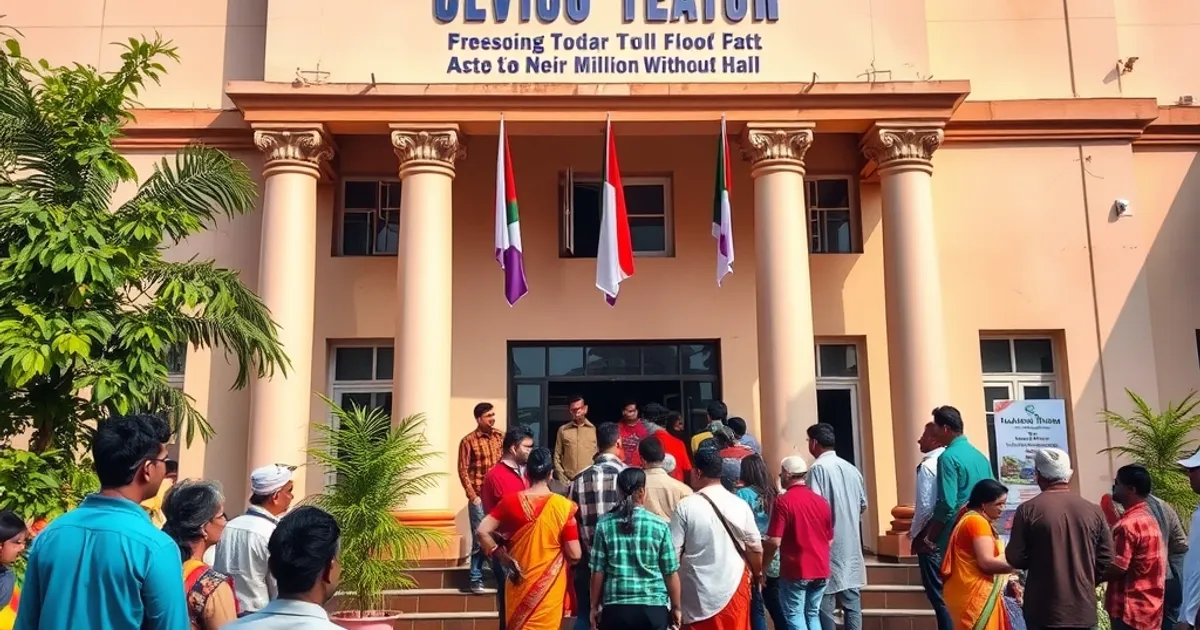
Days of relentless rainfall between July 4 and July 8 brought parts of Vasai-Virar under five feet of floodwater, knocking out electricity for over 48 hours and leaving roughly two million residents without power, piped water and mobile connectivity. The death toll from the monsoon episode in the region has climbed to nine, and residents are only now beginning to recover as floodwaters recede and the task of restoring essential services continues.
Death Toll Climbs to Nine as Floodwaters Recede
Floodwaters in the Vasai-Virar region began to recede after several days of severe rainfall between July 4 and July 8, but the retreat of the water exposed the full human cost of the disaster. Nine people died in monsoon-related incidents during the flooding period, a toll confirmed as rescue workers and relief teams were finally able to reach previously inaccessible areas. The protracted power outage and the near-total breakdown of essential services amplified the scale of the emergency, with residents unable to reach hospitals, contact authorities, or even receive official emergency alerts because their phones had run out of charge. District administration teams and the National Disaster Response Force conducted search operations through submerged lanes and low-lying areas throughout the crisis. Civil society groups and local volunteers stepped in to supply food packets and drinking water to residents stranded in housing societies where lifts had stopped working and ground floors were under water. Authorities have promised a detailed review of flood preparedness, drainage infrastructure and emergency response protocols before next year's monsoon season. [9]
🗳️ 48-Hour Power Outage Leaves Residents Stranded
For more than 48 hours, thousands of residents across Vasai-Virar lived without electricity after floodwaters submerged transformers belonging to the Maharashtra State Electricity Distribution Company Limited (MSEDCL), forcing the utility to suspend power supply as a safety measure to prevent accidents. The outage cascaded quickly into a broader crisis: water pumps stopped, elevators went dark, and residents in multi-storey buildings found themselves unable to move between floors. Shops shuttered as roads became impassable, and families found themselves relying on dwindling stocks of food and water. According to MSEDCL officials, disconnecting supply was unavoidable given the risk of short circuits in the submerged network. An official quoted in the Indian Express noted that the disruption was more prolonged than in previous years due to the unrelenting nature of the rainfall: even after water receded, transformers and distribution lines had to be individually inspected before supply could be restored, a process the utility warned could take one to two additional days. Field staff were themselves out of contact for long stretches as their own devices ran out of battery. [5]
Two Million Residents Cut Off from Power, Water and Telecom
At the height of the flooding, approximately two million Vasai-Virar residents were simultaneously without power, piped water and reliable telephone connectivity, making it one of the most disruptive urban flooding events in the Mumbai Metropolitan Region in recent memory. Khaleej Times, reporting on the Indian diaspora angle of the crisis, highlighted the severity of the situation for families with relatives in the region who were unable to establish contact for extended periods. The convergence of three critical service failures — electricity, water and telecom — meant that residents could not access emergency helplines, banks, or medical facilities that depended on stable power. Housing societies that had invested in rooftop water tanks or private generators were better placed than those relying entirely on the municipal grid. Local councillors and residents' associations reported being overwhelmed with distress calls but were themselves hamstrung by the inability to coordinate relief due to communication blackouts. The episode has reignited demands for underground power cabling and dedicated flood-resilient telecom infrastructure in the rapidly urbanising Vasai-Virar belt. [8]
Water Treatment Plants Go Dark, City-Wide Supply Halts
A power outage at key water treatment plants across Vasai-Virar brought the city's piped water supply to a complete halt, the Times of India reported, adding a critical public-health dimension to the flooding crisis. The Vasai-Virar Municipal Corporation's treatment and pumping infrastructure depends entirely on a reliable electricity supply, and when MSEDCL cut power to prevent electrical accidents in the flooded network, the plants could no longer purify or distribute water. Residents who had already exhausted their stored water reserves found themselves in desperate need, with many turning to bottled water supplies that were themselves becoming scarce as delivery vehicles struggled to navigate submerged roads. The simultaneous absence of power and water in densely populated residential clusters — many of which house working-class families with limited means to stockpile emergency supplies — drew sharp criticism of the civic body's disaster-preparedness. The VVMC has faced repeated calls in recent years to install backup generator capacity at critical water infrastructure nodes, a measure that remains only partially implemented. Officials indicated that supply would be progressively restored ward by ward as electricity returned. [1]
🗳️ Five-Foot Floodwaters Bring the City to a Halt
Floodwater reached depths of up to five feet in the worst-affected neighbourhoods of Vasai-Virar, an extraordinary inundation that effectively paralysed normal life across the twin-city region for several days. The Hindustan Times documented the scale of the flooding, describing streets in Nalasopara East and Virar West as rivers through which only those in higher-clearance vehicles or on foot wading through chest-high water could move. Residents living on ground floors were forced to relocate to upper floors or seek shelter with neighbours, while entire housing society basements — containing electrical panels, parking and water storage — were completely underwater. Small businesses, shops and street-side vendors who depend on daily commerce for their livelihoods suffered substantial losses with no mechanism for claiming compensation immediately available. Schools announced closures as buildings were inaccessible and safety could not be guaranteed. The episode highlighted the particular vulnerability of low-lying pockets of Vasai-Virar that have been developed without adequate drainage, as the city's rapid population growth over the past decade has far outpaced investments in stormwater infrastructure. [7]
Rail Services Cut, Waist-Deep Streets Strand Commuters
Western Railway services through the Vasai-Virar section were suspended during the peak of the flooding crisis, severing one of the most critical commuter lifelines for the region's hundreds of thousands of daily Mumbai office workers. With trains halted and roads submerged to waist height in many areas, residents were effectively marooned in the city for an extended period, unable to reach their workplaces or return home to family members in other parts of the Mumbai Metropolitan Region. News18 detailed the compound misery of the situation — no trains, no road access, a 48-hour power cut, and water standing at dangerous levels — calling it a crisis that had effectively isolated Vasai-Virar and Nalasopara from the wider city. Western Railway authorities cited safety protocols for halting services, noting that running trains through a fully flooded track bed risked derailments and passenger casualties. The suspension drew criticism from commuters and elected representatives alike, with demands for better coordination between the railway and civic authorities during flood emergencies. An emergency that might have lasted hours in a well-drained city stretched into days. [6]
Yashwant Nagar, Virar West Among Worst-Affected Areas
Mid-Day published a photo documentation of the flooding in Vasai-Virar that captured the scale of the disaster in vivid terms, with images of Yashwant Nagar in Virar West showing submerged streets where floodwaters had turned entire lanes into canals. The IMD had issued forecasts for heavy to very heavy rainfall and thunderstorms with lightning and gusty winds for isolated places across the region, providing advance warning that was nonetheless insufficient preparation for the volume of water that ultimately arrived. Low-lying pockets in both Vasai West and Virar East were inundated, with the photos showing residents wading through knee-to-waist-deep water to access basic necessities. The area's topography — a mix of reclaimed land, marshy patches and narrow drainage channels — makes it particularly susceptible to rapid and deep inundation when sustained heavy rainfall arrives. Local residents and urban planners have long noted that the region's drainage network has not kept pace with its explosive residential development. The flooding underscored the urgency of completing the stormwater drainage masterplan that the VVMC has been drawing up for several years. [3]
Mumbai 4.0 Vision Triggers Land Price Surge in Vasai-Virar-Palghar
Even as the flood crisis was gripping the region, a Moneycontrol report highlighted a longer-running economic story: the Mumbai 4.0 metropolitan vision — a government framework for expanding Mumbai's urban footprint northward — has sparked a land rush in the Vasai-Virar-Palghar belt, with prices tripling in select pockets over recent years. Investors and developers have been acquiring land along the proposed infrastructure corridors, anticipating that new rail links, highway expansions and commercial zoning changes will unlock substantial appreciation. The trend reflects a broader pattern of Mumbai's growth pressure migrating northward as the city's core districts become prohibitively expensive. For residents of Vasai-Virar, the land price surge is a double-edged development: it has raised the asset value of those who already own property, but it is progressively making the region unaffordable for the working-class and lower-middle-class families who have historically settled there in search of cheaper housing within commuting distance of Mumbai. Urban planners have cautioned that the land rush, if not matched by proportional investment in infrastructure — as the current flood disaster starkly illustrates — risks repeating the mistakes of Mumbai's eastern and western suburban belts. [2]
Sources: [9] The Quint · [5] The Indian Express · [8] Khaleej Times · [1] The Times of India · [7] Hindustan Times · [6] News18 · [3] Mid-Day · [2] Moneycontrol.com