
Janmashtami 2026 in Vijayawada: Events, Puja & Where to Celebrate
TL;DR
- Vijayawada transforms for Janmashtami with city-wide pujas, midnight celebrations, and vibrant dahi handi events 🎊
- The Kanaka Durga Temple atop Indrakeeladri hill draws enormous crowds through the festive season 🛕
- Nearby events like Guru Purnima (Jul 29) and Sankashti Chaturthi (Aug 2) bookend the Janmashtami build-up
- Temples including Sri Rama Temple and Vanugopalswami Temple host elaborate Krishna decorations and bhajans 🪔
- The festive window from Ekadashi (Jul 25) to Janmashtami (Aug 14) makes this city's August calendar unmissable
The Spirit of Janmashtami in Vijayawada
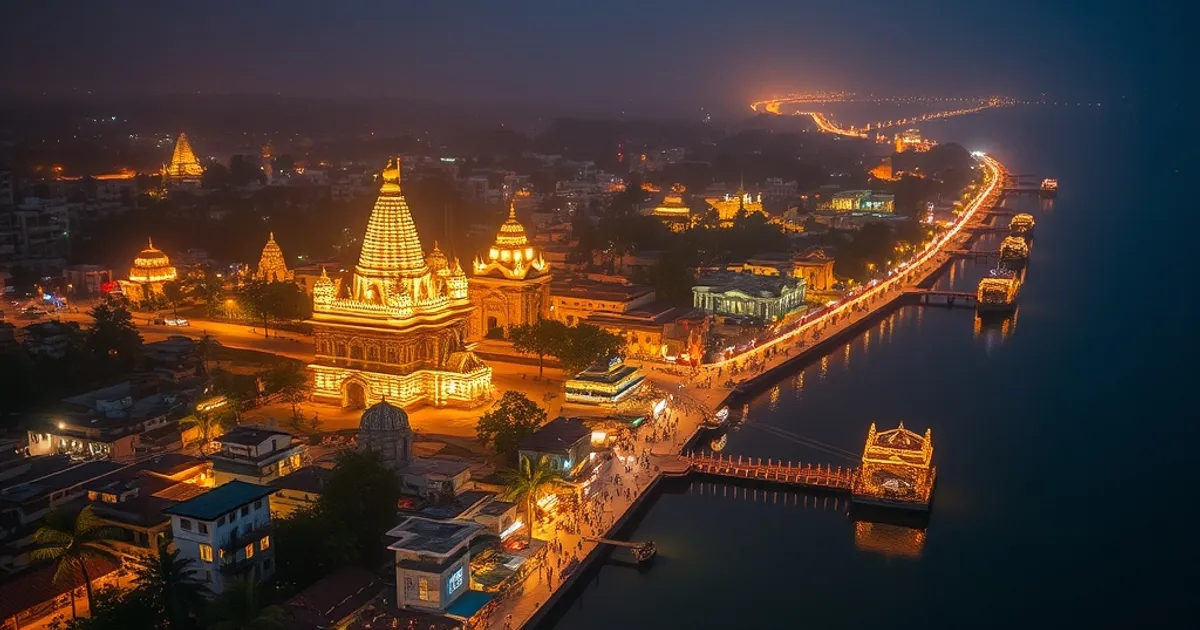
Vijayawada sits where the Krishna river cuts through the Eastern Ghats, and that geography shapes everything about how the city celebrates. When Janmashtami approaches — falling on August 14 this year — the entire city shifts into festive mode. Streets fill with music well before dusk. By midnight, when tradition holds that Lord Krishna was born, puja bells ring from hundreds of shrines simultaneously.
This city has always had a deeply layered religious calendar. The days leading into Janmashtami carry their own significance. Ekadashi on July 25 marks an important fast day that many households observe strictly. Pradosh Vrat falls on July 27, with Shiva devotees gathering at local temples for the twilight puja. Then Guru Purnima on July 29 — also the Purnima — brings teachers, students, and devotees together in gratitude. Sankashti Chaturthi on August 2 draws Ganesh devotees out before the final sprint toward Krishna's birthday. Each of these occasions adds to the cumulative festive energy that makes August a month unlike any other in Vijayawada.
Families begin preparations weeks in advance. Cradles are repaired and decorated. Butter and curd are set aside. Streets are strung with lights. By the time Janmashtami eve arrives, the entire city feels like a single extended household making ready for the birth of a beloved child.
Temples That Come Alive for Janmashtami 🛕
The Kanaka Durga Temple, perched on Indrakeeladri hill above the Krishna river, is Vijayawada's most recognizable spiritual landmark. During Janmashtami, this temple sees extended darshan hours, special alankaram (deity decoration), and a steady river of devotees who climb the hill by torchlight well past midnight.
Yet the city's quieter temples are where the most intimate Janmashtami moments unfold. Sri Ganapathi Temple at Vinayaka centre becomes a gathering point for families doing early morning abhishekams before the big day. The Sri Rama Temple at Bomma centre hosts a bhajan marathon that runs from sunset on Janmashtami eve straight through the midnight puja and into the following dawn. Devotees bring handmade cradles — small decorated swings — to receive the infant Krishna's symbolic blessing.
Vanugopalswami Temple draws pilgrims specifically because Gopalswami is a direct form of Krishna; the association makes this temple particularly active during Janmashtami. Offerings of butter and curd — echoing Krishna's legendary fondness for both — are arranged in elaborate displays. The Vinayaka Temple on main bazar, Ankamma Thalli Mandir, and Chenna Keshawara Temple each hold their own neighbourhood-level celebrations, with residential streets near each temple turning into open-air bhajan halls by nightfall.
The decorations across these temples share certain recurring motifs: peacock feathers, yellow marigold strings, pictures of infant Krishna reaching into butter pots, and the blue-skinned forms of Govinda as cowherd. Lamp-lit corridors and incense smoke give each temple a heightened atmosphere that persists well beyond the midnight puja.
Dahi Handi: Where the City Competes 🏺
Vijayawada's Janmashtami is incomplete without dahi handi. Earthen pots filled with curds, butter, and sometimes coins are suspended from high points across the city — balconies, poles, specially erected bamboo frames. Groups of young men, calling themselves govindas, form human pyramids to reach and break the pots.
The competitions draw organizing committees months in advance. Neighborhoods challenge each other. The height of the pot, the number of tiers in the human pyramid, the speed of the attempt — all are points of informal rivalry and genuine community pride. Crowds gather in circles, chanting "Govinda, Govinda" in rising waves as each attempt climbs higher. When the pot breaks and curd cascades down, the noise is extraordinary. Winners are celebrated through the following days.
The preparation itself is part of the festivities. Teams train in the weeks before Janmashtami. The strongest men form the base; the lightest and most agile climb. There is a choreography to it that comes from years of practice and community knowledge passed between generations of govinda teams.
Planning Your Janmashtami Visit
Vijayawada during August fills quickly. Pilgrims arrive from across Andhra Pradesh, and accommodation near the main temple areas books out well ahead of the festival. Those planning a visit for Janmashtami should consider arriving by Ekadashi (July 25) to experience the full devotional build-up — the fast day, the Pradosh Vrat, and Guru Purnima together create a spiritual arc that makes the eventual Janmashtami celebration more meaningful in context.
Getting around the city during peak festival days requires patience. Autorickshaws and city buses run but slow down near the temple corridors. Walking is often faster for short distances. Most importantly, keep hydration in mind — Vijayawada's August heat is significant even after dark.
Insider Tip: Arrive at Kanaka Durga Temple before 5 a.m. on Janmashtami day to avoid the longest queues. The early-morning atmosphere — just devotees, lamps, and river mist rising from the Krishna — is worth the early start. Many pilgrims combine a dip in the river at dawn with the temple darshan.
FAQ
When exactly is Janmashtami 2026? Janmashtami falls on August 14, 2026. The midnight puja — marking the precise moment of Krishna's birth — is the spiritual climax of the festival.
Which is the most important temple for Janmashtami in Vijayawada? Kanaka Durga Temple draws the largest crowds, but Vanugopalswami Temple is considered particularly significant for Krishna worship specifically.
Are dahi handi events ticketed? No. They are free, community-organized street events. Locations are announced locally in the days before Janmashtami.
Can out-of-town visitors join temple pujas? Yes. Most Vijayawada temples welcome all devotees for Janmashtami pujas without prior registration. Some special archana bookings may require advance arrangements at specific temples.
Is Sankashti Chaturthi on August 2 connected to Janmashtami preparations? Not directly, but many devout families observe a full cycle of festivals in sequence. Sankashti Chaturthi dedicated to Lord Ganesha is often seen as auspicious preparation for the larger Krishna celebration that follows.
What should I wear to temple visits during Janmashtami? Dress modestly for all temple visits. Many temples require men to remove shirts for inner sanctum entry. Wear easy slip-on sandals since footwear must be removed outside.
Bottom Line 🙏
Vijayawada's Janmashtami is one of Andhra Pradesh's most immersive festival experiences. From the midnight Krishna birth celebrations at Sri Rama Temple and Vanugopalswami Temple to the dahi handi competitions echoing across residential streets, the city delivers both spiritual depth and communal joy. The festive calendar from Ekadashi through Sankashti Chaturthi gives visitors multiple days of meaningful observance. For those who want to climb Indrakeeladri for Kanaka Durga Temple's darshan at dawn or watch a govinda team attempt a seven-tier human pyramid, Vijayawada in August remains one of Andhra Pradesh's great pilgrim destinations.