
Weekend Activities for Kids in Vijayawada
TL;DR
- 🙏 Guru Purnima 2026 (July 29) draws Vijayawada families to Krishna River ghats at dawn — children witness tradition meeting water in a way unique to this city
- 🐍 Nag Panchami 2026 (August 17) carries deep Shakti resonance here; serpent worship becomes both a visual feast and a storytelling event for young participants
- 🌊 Purnima evenings on the Krishna let children watch an entire city orient itself toward river and moonlight simultaneously
- 🎊 Sankashti Chaturthi fills Vijayawada's home kitchens with the smell of jaggery and cardamom — children are almost always in those kitchens making undrallu
- 🌙 Pradosh Vrat at dusk transforms the city's older lanes into lamp-lit walkways worth making the short walk for at least once a season
Vijayawada sits on a bend of the Krishna River in Andhra Pradesh, a city defined by water, commerce, and a devotional life that runs as deep as the river itself. Compact and confident, dense with temple culture and Telugu identity, it draws its civic character from centuries of being a critical node in the Andhra heartland. The Kanaka Durga Temple, visible from the river, anchors the city's spiritual geography in ways that shape daily life well beyond formal festival occasions.
For families raising children here, the question of what to do on weekends is largely answered by the calendar. The festival cycle — shared in broad strokes across south India but expressed through distinctly Telugu traditions and the particular spiritual character of the Krishna basin — provides a rhythm of weekends that is both structured and genuinely alive. July and August 2026 bring a particularly rich sequence.
The River and the Full Moon: Guru Purnima 2026
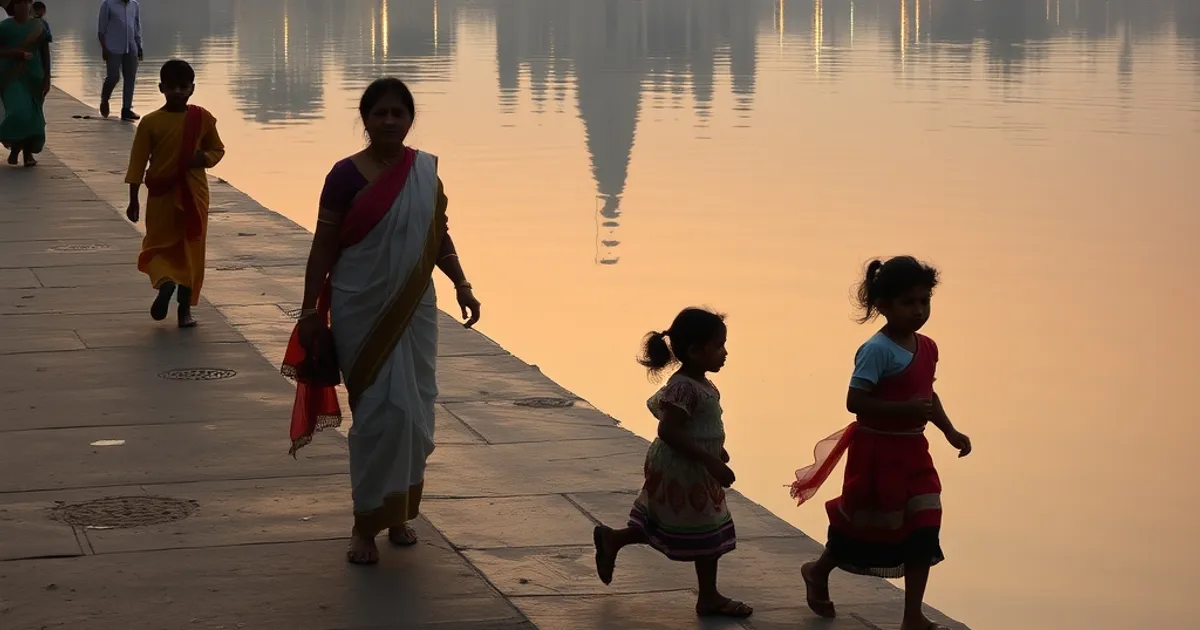
In Vijayawada, Guru Purnima 2026 (July 29) is not only a day for honoring teachers — it is also shaped by the river. The Krishna, which flows through and defines this city's relationship to its landscape, becomes a focal point on Purnima mornings. Families walk to the ghats before sunrise, children alongside, for rituals that connect learning and reverence to the larger natural world around them.
This river dimension gives the festival a character specific to Vijayawada. For children growing up here, the lesson is not only about the teacher-student bond but about the idea that learning is embedded in a place, a season, and a body of water that has sustained human life in this valley for thousands of years.
The Purnima full moon (July 29) illuminates the Krishna's surface in a way that families describe as one of the year's unmissable evenings. Walking along the riverbank as the moon rises, watching light shift across the water, hearing evening arati at riverside shrines — this is experience that children carry into adulthood without needing to be told why it matters. The river does the teaching.
Nag Panchami 2026 and the Shakti Tradition
Nag Panchami 2026 (August 17) holds particular significance in Vijayawada. Kanaka Durga — the city's presiding deity — is a Shakti figure, and the naga (serpent) features prominently in the Shakti tradition as a symbol of protection and transformation. In a city whose patron deity carries serpentine power, Nag Panchami is not simply a pan-Hindu observance: it has local weight and a local story.
On the festival morning, families draw rangoli with snake motifs, milk and flowers are offered at neighborhood shrines, and children help prepare ritual sweets. The storytelling around Nag Panchami in the Telugu tradition draws on the mythology of the Krishna River directly — the nagas of the river's depths, serpents as guardians of the agricultural season, the monsoon rains they are said to call. Children who grow up with these stories carry a sense of their own geography that no map provides.
Insider Tip: In Vijayawada, the most evocative Nag Panchami activity happens before 6 AM, when neighborhood shrines are quiet and families move through streets in pre-dawn light. If children can manage an early start, this is the hour when the festival feels most distinctly itself — purposeful, atmospheric, uncrowded.
Monthly Observances That Ground the Year
Major festivals anchor the season, but Vijayawada's weekend calendar runs on a monthly rhythm of smaller observances that many families find equally valuable for children — because consistency is how culture becomes identity rather than event.
Sankashti Chaturthi (August 2) is the monthly Ganesha festival and among the most kitchen-centered observances in the Telugu home. The offering is undrallu — steamed rice dumplings with jaggery, sesame, or coconut depending on family tradition — and children are involved from the moment rice is measured. Grinding, shaping, steaming, arranging: the physical process is itself an education in patience and in the flavors that mark a particular day as different from every other. Sankashti Chaturthi teaches through the hands.
Pradosh Vrat (July 27) falls at dusk, and the older neighborhoods of Vijayawada take on a distinctive quality at pradosh hour. Oil lamps appear in doorways, incense moves through lanes that are otherwise unremarkable, families make their way to temples as the evening cools. For children old enough to walk the older city, a Pradosh Vrat evening is among the most immersive cultural outings available here — not staged for visitors, simply how the neighborhood observes the day.
Ekadashi (August 9) introduces children to ritual abstention in a manageable, explainable form. The special Ekadashi foods of Andhra homes — sabudana preparations, specific fruits, dairy dishes that replace the everyday rice and dal — become a practical conversation about why what you eat on a particular day can carry meaning beyond nutrition.
Amavasya (August 12) is observed with tarpanam at the riverbank. The Krishna ghats see families in the early morning for ancestral remembrance, the atmosphere quiet and deliberate, the river moving through mist. For older children, this is an introduction to the idea that the family extends backward through time — a lineage honored through practice, not just acknowledged in words.
FAQ
How do Vijayawada's festival observances differ from those in Madurai or Chennai? The festivals are often shared in name and date, but the language of prayer, the specific ritual foods, the local stories, and the cultural texture differ significantly. Vijayawada's Telugu traditions and the presence of the Krishna River give every shared observance a local character that is its own.
Is the Krishna River accessible for families during festival days? Yes. The ghats are a regular gathering point, particularly during Purnima and Amavasya. Early morning visits — before 7 AM on major festival days — offer the most atmospheric experience and the least crowded access.
Are there classical arts programs for children in Vijayawada? Yes. Kuchipudi dance and Carnatic music have deep roots here. Guru Purnima 2026 is a meaningful time to consider enrollment, as the festival directly honors the teacher-student relationship these arts are built on.
Which festival weekends work best for children under five? Sankashti Chaturthi and Pradosh Vrat are the most manageable for young children. The undrallu preparation at Sankashti is particularly well-suited to toddlers, and the Pradosh Vrat evening walk is short and sensory-rich without requiring stamina.
How do we explain Amavasya to children who notice the mood is different? A frame that resonates for most children: this is the day we remember family members who are no longer with us. That the new moon — the darkest night — falls on this day is part of the meaning. Most children receive this with more depth than adults expect.
Bottom Line
Vijayawada's weekend calendar in July and August 2026 is built on observances that have shaped Telugu family life for centuries, expressed through the geography of a river city with a Shakti tradition at its center. Guru Purnima 2026, Nag Panchami 2026, Sankashti Chaturthi, Pradosh Vrat, Ekadashi, and Amavasya connect children to the Krishna River, to the temple, to the home kitchen, and to a Telugu identity fully specific to this place. The calendar is the curriculum — and Vijayawada delivers it with authority.