
Janmashtami 2026 in Visakhapatnam: Events, Puja & Where to Celebrate
TL;DR 🎉
- Krishna Janmashtami 2026 in Visakhapatnam falls on September 4 — the midnight puja is the focal point of the entire day
- Local temples stay open through the night, drawing large crowds for the abhishekam 🪔
- Sampath Vinayaka Temple and Sri Sampath Vinayagar Temple are among the city's active mandirs through the festive season
- The surrounding calendar is equally full: Nag Panchami (Aug 17), Raksha Bandhan (Aug 28), and Ganesh Chaturthi (Sep 14) all fall within a few weeks
- Dahi handi setups appear across residential colonies on September 4 — a street-level celebration not to miss 🎊
The Date and What Janmashtami Means
Krishna Janmashtami marks the birth of Lord Krishna, the eighth avatar of Vishnu, born at the stroke of midnight on the Ashtami tithi of the Krishna Paksha in the month of Bhadrapada. In 2026, that date corresponds to September 4 for Visakhapatnam. The midnight timing is not incidental — the birth is believed to have occurred at the darkest hour of night, and the entire day's fasting, chanting, and preparation builds toward that singular moment.
Visakhapatnam holds a deep relationship with Vaishnava traditions. The city's cultural organisations, residential welfare associations, and temple committees begin planning Janmashtami activities weeks in advance. The result is a celebration that unfolds simultaneously at temples, public grounds, and inside homes across every neighbourhood — a collective observance that makes this one of the city's most visually striking festival nights.
Alongside the devotional programme, Janmashtami carries a folk element: the dahi handi. Youth groups form human pyramids to break clay pots of curd suspended at height, re-enacting young Krishna's fondness for butter and mischief. These competitions happen across apartment complexes and colony grounds, drawing onlookers and participants through the afternoon and into the evening of September 4.
Your Visakhapatnam Festival Calendar: August–September 2026
The weeks around Janmashtami are among the densest in the Hindu calendar. Here is the full panchang schedule for Visakhapatnam:
August 2026:
- Aug 9: Ekadashi — the fortnightly lunar fast observed by Vaishnava households
- Aug 12: Amavasya — new moon day, associated with ancestor offerings and ritual baths
- Aug 17: Nag Panchami 2026 — offerings of milk to serpent deities; particularly observed at older neighbourhood shrines across the city
- Aug 23: Ekadashi — the second lunar fast of the month
- Aug 26: Pradosh Vrat — Shiva-focused observance, with evening abhishekam at Shiva temples
- Aug 28: Raksha Bandhan 2026 and Purnima — the full moon day coincides with the sibling-bonding festival, making this a double celebration
September 2026:
- Sep 1: Sankashti Chaturthi — monthly Ganesh fast with a moonrise darshan as the concluding ritual
- Sep 4: Krishna Janmashtami 2026 — the main event
- Sep 7: Ekadashi — the fast following the Janmashtami fortnight
- Sep 9: Pradosh Vrat
- Sep 11: Amavasya
- Sep 14: Ganesh Chaturthi 2026 — the ten-day Vinayaka festival begins, carrying the festive energy well into autumn
For families who observe multiple festivals, the stretch from mid-August through mid-September is a period of continuous religious engagement. Janmashtami sits at the centre of this run, but every date before and after carries its own significance.
Temples to Visit in Visakhapatnam This Season
Two temples with an established presence in Visakhapatnam's festive circuit are Sampath Vinayaka Temple and Sri Sampath Vinayagar Temple. Both draw consistent devotee footfall through the Bhadrapada season and remain active through the long stretch running from Nag Panchami to Ganesh Chaturthi.
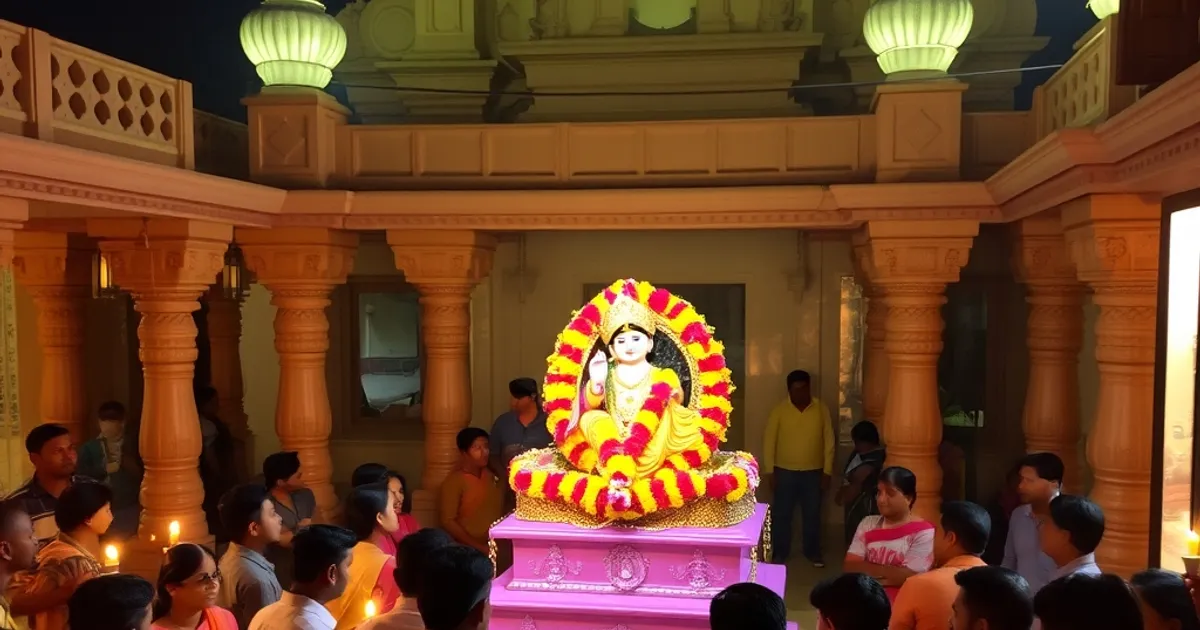
For Janmashtami specifically, Krishna temples and Vaishnava mandirs across the city organise elaborate jhankis — decorative tableaux depicting scenes from Krishna's life, often built days in advance and displayed through the night. Bhajan marathons that begin at sunset and carry past midnight are a staple at major temples. Recitations from the Bhagavata Purana, particularly the passages narrating the Mathura birth story, fill the hours of waiting as devotees queue for the midnight abhishekam.
The days around Ekadashi and Pradosh Vrat also see heightened activity at temples across Visakhapatnam. If you are planning a broader temple circuit through August and September, the Ekadashi fasts on Aug 9 and Aug 23 are worth noting alongside Janmashtami.
Insider Tip: Reach your chosen temple no later than 10:30 PM on September 4. The midnight abhishekam is the spiritual high point of Janmashtami, and queues at major mandirs build significantly after 11 PM. Many temples distribute prasad only until supplies last — arriving early gives you the best chance of a clear darshan and a share of the midnight offering.
How Vizag Celebrates: Home Rituals and the Midnight Puja
At home, Janmashtami preparations begin the morning of September 4. The fast — held from sunrise — is maintained on fruits, milk, and sabudana-based dishes by most households, though some devotees observe a stricter nirjala fast with no water at all.
The home puja centrepiece is a small cradle, or palna, decorated with flowers and holding a Krishna idol or image. Tulsi leaves are essential; they appear in virtually every Janmashtami puja arrangement across Visakhapatnam. The ritual involves a recitation of passages from the Bhagavata Purana describing Krishna's birth, followed by an abhishekam with panchamrit — a mixture of milk, curd, honey, ghee, and sugar water poured over the idol.
At midnight, after the birth moment passes, families break the fast together. The meal almost always features makhan — fresh white butter — and sweets. Sharing butter is a direct reference to young Krishna's legendary habit of raiding the neighbourhood's curd pots, and no Janmashtami table in Vizag feels complete without it.
Cultural programmes — classical dance recitals, raas leela performances, and bhajan concerts — fill the evening at community halls and residential complexes. Telugu devotional music, including compositions in the kirtana tradition, runs alongside the more widely known Hare Krishna chants, giving Visakhapatnam's Janmashtami a distinctly local flavour.
FAQ
What date is Janmashtami 2026 in Visakhapatnam? Krishna Janmashtami 2026 falls on September 4, 2026.
Is Janmashtami a public holiday in Andhra Pradesh? It is a gazetted restricted holiday. Most government employees can take it as an optional holiday; private employers vary. Confirm in advance.
Can visitors attend the midnight puja at temples? Yes. Most temples in Visakhapatnam welcome all devotees for the midnight abhishekam. Dress modestly and arrive well before midnight to secure a good position.
What are the major festivals close to Janmashtami this year? Nag Panchami 2026 falls on August 17, Raksha Bandhan 2026 on August 28, and Ganesh Chaturthi 2026 begins September 14 — all within a few weeks of Janmashtami.
Is fasting required to participate in temple celebrations? No. Fasting is a personal spiritual observance. Temple celebrations are open to all regardless of whether you fast.
What is dahi handi and where can I see it? Dahi handi is a tradition where youth groups form human pyramids to break a clay pot of curd suspended at height, re-enacting Krishna's childhood mischief. It takes place in public spaces, colony grounds, and apartment complexes across Visakhapatnam on September 4.
Bottom Line
Janmashtami 2026 arrives in Visakhapatnam on September 4, sitting at the centre of a festive run that stretches from Nag Panchami in mid-August to Ganesh Chaturthi in mid-September. Sampath Vinayaka Temple and Sri Sampath Vinayagar Temple are worth including on your seasonal temple circuit, and the midnight puja at any major mandir is the experience that defines the festival. From the dahi handi in the afternoon to the abhishekam at midnight and the breaking of the fast in the early hours, September 4 is a day that calls for stepping away from routine and meeting it fully.