
Washington DC South Asian Community: Sikh Student Bias, Indian Museum Plans, and US-India Air Force Diplomacy
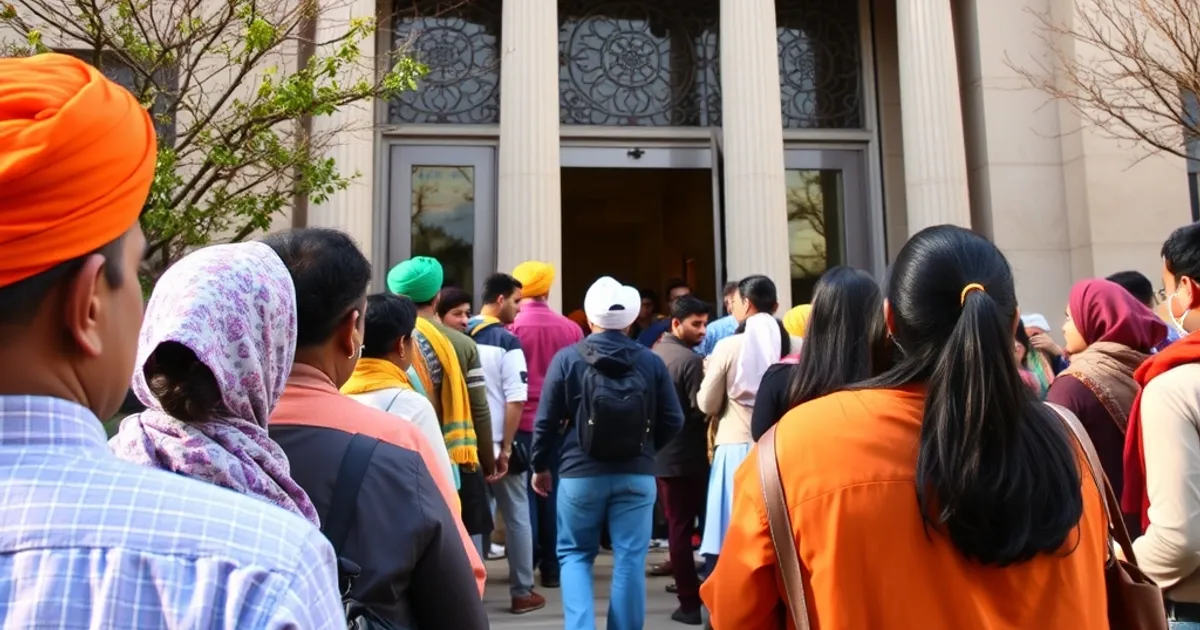
Washington DC's South Asian community is navigating a range of significant developments, from a discrimination controversy involving a Sikh student in a national civics competition to ambitious plans for a new Indian heritage museum. The Washington Post reported that a Sikh student was denied competition points under disputed circumstances tied to religious identity, sparking community concern. An Indian diaspora group also announced museum plans centered on Vedic heritage, and the US and Indian air forces held high-level meetings in Washington reflecting strong bilateral defense ties.
🗳️ Sikh Student Allegedly Denied Points in National Civics Contest
The Washington Post reported on a troubling incident in which judges at a national civics competition allegedly denied a Sikh student points, with critics attributing the decision to bias against the student's Sikh identity or religious appearance. The story generated significant concern within Washington's Sikh and broader South Asian community, reigniting long-standing conversations about religious discrimination in academic and competitive settings where merit is assumed to be the sole criterion. Sikh Americans, who are identifiable by religious articles of faith including the turban and other practices, have documented a history of bias and discrimination in the United States, particularly following the September 11, 2001 attacks that led to widespread misidentification and profiling. A national civics competition, an arena meant to celebrate civic knowledge and democratic participation, represents an especially pointed setting for such discrimination to occur, as the values of equality and fair treatment are foundational to the subject matter itself. Community advocates and observers have called for a thorough review of the judging process and criteria used in the competition, as well as broader systemic changes to address unconscious or overt bias in educational events. The incident has resonated not only with Sikh Americans but with South Asian communities broadly, who recognize the vulnerability of visibly religious or ethnic minority participants in spaces where their presence may not yet be fully normalized or welcomed. The episode serves as a reminder that structural barriers can persist even in spaces explicitly designed to celebrate civic ideals. [1]
🪔 Indian Diaspora Group Plans Vedic Heritage Museum in DC
An Indian diaspora organization has announced plans to establish a museum in Washington DC dedicated to showcasing the Vedic Foundation and highlighting what organizers describe as India's spiritual prowess, according to BusinessLine, the business publication of The Hindu Group. The proposed institution would join a growing number of cultural organizations in the US capital that serve the South Asian community, which includes diplomats, government employees, technology professionals, academics, and long-established immigrant families. The Vedic tradition encompasses one of humanity's oldest bodies of knowledge, including the ancient Sanskrit texts, philosophical systems, mathematics, astronomy, and spiritual practices that originated on the Indian subcontinent thousands of years ago. Establishing a museum dedicated to this heritage in Washington DC, home to some of the world's most prestigious cultural institutions including the Smithsonian complex, would position Indian civilization alongside other great world cultures represented in the capital's public memory. The project reflects a broader ambition among the Indian diaspora to move beyond private cultural preservation and claim space in the country's shared cultural landscape. Washington DC's significance as a seat of political and diplomatic power amplifies the symbolic weight of such an institution, potentially serving as a resource for policymakers, educators, scholars, and tourists seeking to understand India's contributions to global civilization and thought. The museum initiative signals the Indian-American community's growing confidence in shaping how their heritage is remembered and presented in the American public sphere. [4]
🗳️ US and Indian Air Force Chiefs Meet at the Pentagon
The US Secretary of the Air Force and the Chief of Staff of the Air Force welcomed the Indian Air Force Chief of the Air Staff to Washington DC for meetings that underscored the deepening strategic partnership between the United States and India in the defense domain. The meeting, covered by the US Air Force's official media, reflects the broader trajectory of US-India relations, which have grown considerably closer over the past two decades as both countries identify shared interests in regional security, counterterrorism, and the Indo-Pacific strategic environment. For the Indian-American community in the Washington DC metropolitan area, one of the country's most concentrated populations of South Asian professionals, many of whom work in government, defense contracting, policy, and technology, bilateral India-US relations carry both personal and professional significance. Defense and security cooperation between the two nations has expanded to include joint exercises, technology sharing, intelligence collaboration, and the sale of advanced American military platforms to India. High-level visits like the Air Force Chief's meetings in Washington signal the seriousness with which both governments view the partnership and help build the institutional relationships that sustain it over time. These connections also matter symbolically to Indian Americans who see strong US-India ties as reflecting recognition of their homeland's strategic importance and the community's own standing in American civic life. The visit exemplifies the kind of sustained, senior-level engagement that defines the modern US-India strategic relationship. [5]
Sources: [1] The Washington Post · [4] BusinessLine · [5] af.mil