
Weekend Activities for Desi Kids in Baltimore
TL;DR
- 🗓️ Baltimore's Desi calendar runs rich from late July through mid-August — enough to anchor a weekend routine the whole family feels
- 🙏 Guru Purnima 2026 on July 29 is one of the most meaningful dates to mark with children: it honors teachers, grandparents, and anyone who has shaped your life
- 🐍 Nag Panchami 2026 on August 17 brings folklore and serpent mythology that kids genuinely find gripping
- 🎉 Sankashti Chaturthi, Ekadashi, and Pradosh Vrat recur monthly — they make low-effort, high-meaning weekend anchors once you know what they are
- 🌕 Purnima evenings are tailor-made for moongazing walks and bedtime storytelling with young children
Planning weekends around the South Asian calendar is one of the quieter gifts Desi families in a diaspora city like Baltimore can give their kids. The challenge is that without extended family nearby, without street processions and neighborhood dhols, these dates can slip past unnoticed. The good news is that the summer calendar this year is unusually dense — dense enough that even celebrating half of it creates a rhythm children will remember.
Between late July and the third week of August, there are close to a dozen named observances on the Hindu calendar. Some are weekly recurring dates; others arrive once a year. All of them, handled with even a little intention, become the kind of cultural touchstones that stick.
The Back-to-Back Opening: Pradosh Vrat and Guru Purnima 2026
The stretch opens on July 26 and 27 with Pradosh Vrat falling on consecutive days. Pradosh Vrat occurs on the thirteenth lunar day of each fortnight and is traditionally dedicated to Lord Shiva. Having it land on a Saturday and Sunday is unusual and useful — it effectively hands families a built-in two-day window for a longer observance. Many households mark Pradosh Vrat with an evening prayer, a simplified meal, and the telling of Shiva-related stories. For kids, the mythology is vivid: Shiva as the ascetic meditator, the blue-throated god, the dancer Nataraja. Illustrated books on the subject are worth pulling off the shelf for these evenings.
Then comes July 29: Guru Purnima 2026. This is a full moon day dedicated to honoring teachers — spiritual teachers first, but in practice extended by most families to include school teachers, parents, grandparents, and anyone who has played a formative role. In a diaspora household in Baltimore, Guru Purnima takes on a particular texture. It is often the occasion for a video call to grandparents back in India or in another American city. It is a chance to have the kind of conversation with children that gets crowded out by homework and sports schedules: who taught you something important? Who do you want to thank?
The Purnima moon on the evening of July 29 makes the date doubly suited to outdoor time. A walk after dinner, a moment of looking up at a full summer moon — these are simple things that, paired with even a brief explanation of what Guru Purnima is, land with children in ways that more elaborate celebrations sometimes do not.
August: From Sankashti to Nag Panchami 2026
August opens with Sankashti Chaturthi on the 2nd. This is a monthly observance dedicated to Ganesha, the most accessible deity in the Hindu pantheon for young children — the elephant-headed god of new beginnings, the remover of obstacles. Sankashti Chaturthi is traditionally marked with a fast until moonrise and an evening prayer. For families with young children, the preparation of modak sweets (Ganesha's traditional favorite) is the most natural entry point. Cooking together, telling the story of why Ganesha has an elephant head, talking about what obstacles the family wants to clear in the month ahead — this is enough.
Ekadashi on August 8 follows. The eleventh lunar day is observed across both fortnights each month, and it carries a strong tradition of fasting in Hindu households. For teenagers, Ekadashi can open a real conversation about why fasting has been practiced across South Asian traditions — Hindu, Jain, and others — and what it means to reset through restraint. For younger children, even a simplified meal on Ekadashi, paired with an explanation of what the day means, is meaningful.
Pradosh Vrat returns on August 10, and Amavasya falls on August 12. Amavasya — the new moon — is traditionally associated with remembering and honoring ancestors. In many households, a small lamp is lit, a brief prayer offered. For children, the concept of ancestor veneration is one of the richest threads in South Asian culture, and Amavasya evenings are a natural time to share family history: who came before us, where they lived, what they did.
Then there is Nag Panchami 2026 on August 17. This is the one that kids tend to love most once they hear what it is about. Nag Panchami is the festival of serpents, rooted in ancient Indian agricultural traditions when farmers prayed for protection during the monsoon season — the time of year when snakes moved most actively through fields and homes. The mythology around it is dramatic: Vasuki, the serpent king; Ananta Shesha, the cosmic serpent on whom Vishnu rests; Kaliya, the many-headed serpent defeated by Krishna in the Yamuna River.
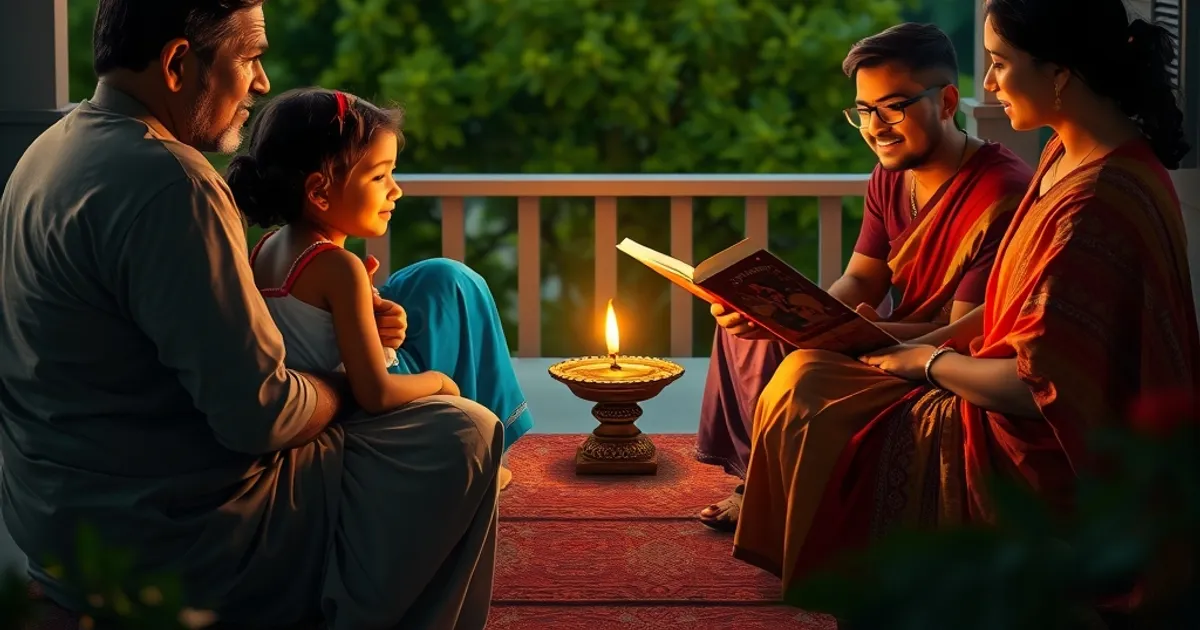
Insider Tip: Nag Panchami is an excellent occasion to find an illustrated Indian mythology book at the library or a Desi bookstore and read it aloud together. The serpent characters in Hindu mythology — Vasuki, Ananta Shesha, Kaliya — are genuinely compelling for children ages six and up, and the stories open conversations about nature, fear, protection, and gratitude that tend to outlast the evening.
Making It Work Without the Infrastructure
One thing Baltimore's Desi families consistently name as a challenge is celebrating without the surrounding infrastructure that makes celebrations feel natural back home. There are no neighborhood processions, no temple fairs on every block, no critical mass of households all observing the same date simultaneously. The solution that works for most families is deliberate small-scale ritual.
That can look like:
- Setting a calendar reminder for each festival now, rather than noticing it has passed
- Assigning an older child the job of researching the story behind a festival like Nag Panchami 2026 and presenting it at dinner — ownership over the research tends to make the content stick
- Using Purnima evenings for outdoor walks with a brief explanation of why the full moon is significant across Hindu, Buddhist, and Jain traditions
- Reaching out to other Desi families in Baltimore to share these dates and co-celebrate — a potluck on Guru Purnima 2026 is simple to organize and warm to attend
The goal is not perfection and not exhaustive observance. A five-minute lamp-lighting and a story about Pradosh Vrat is worth more than an elaborate event that happens once and gets dropped. Consistency across small moments is what roots children in a cultural identity that holds when they grow up and move away.
FAQ
What is Guru Purnima 2026 and why does it matter for children? Guru Purnima is a full moon day dedicated to honoring teachers and spiritual guides. It falls this year on July 29 and is observed across Hindu, Buddhist, and Jain traditions. For children, it is a direct and accessible occasion to reflect on gratitude — for school teachers, parents, grandparents, and mentors. In diaspora households, it is also a natural prompt for connecting with family abroad.
What is Nag Panchami and when does it fall this year? Nag Panchami 2026 falls on August 17. It is a Hindu festival honoring serpents, rooted in agricultural traditions from India's monsoon season. Families observe it with prayers, storytelling, and in some regional traditions, milk offerings. For diaspora families, it is primarily a cultural and mythology occasion — one of the more distinctive and story-rich dates on the summer calendar.
How do we observe Sankashti Chaturthi with young kids? Sankashti Chaturthi is a monthly Ganesha observance. The traditional form involves fasting until moonrise and offering prayers. With young children, the most accessible entry point is preparing modak sweets and telling the stories of Ganesha. The observance scales down gracefully — even a brief evening prayer and a story together counts.
Are there organized Baltimore community events for these dates? That varies year to year. Local temples and South Asian cultural organizations occasionally hold observances around major dates like Guru Purnima 2026. Checking directly with Baltimore-area Hindu temples and Desi community groups in the weeks before each date is the most reliable approach.
Bottom Line
Baltimore's Desi families have a genuinely rich August ahead. Guru Purnima 2026, Nag Panchami 2026, Sankashti Chaturthi, and the recurring Pradosh Vrat and Purnima dates give families multiple natural anchors across the next several weekends. Put the dates on the calendar now. Decide, even informally, how you will mark each one. The children who grow up with these moments — even quiet, low-key versions of them — tend to carry them forward.