
Chennai's Food Scene: Taamara Restaurant South Indian Artisan Kitchen
Chennai's Food Scene: Taamara Restaurant South Indian Artisan Kitchen
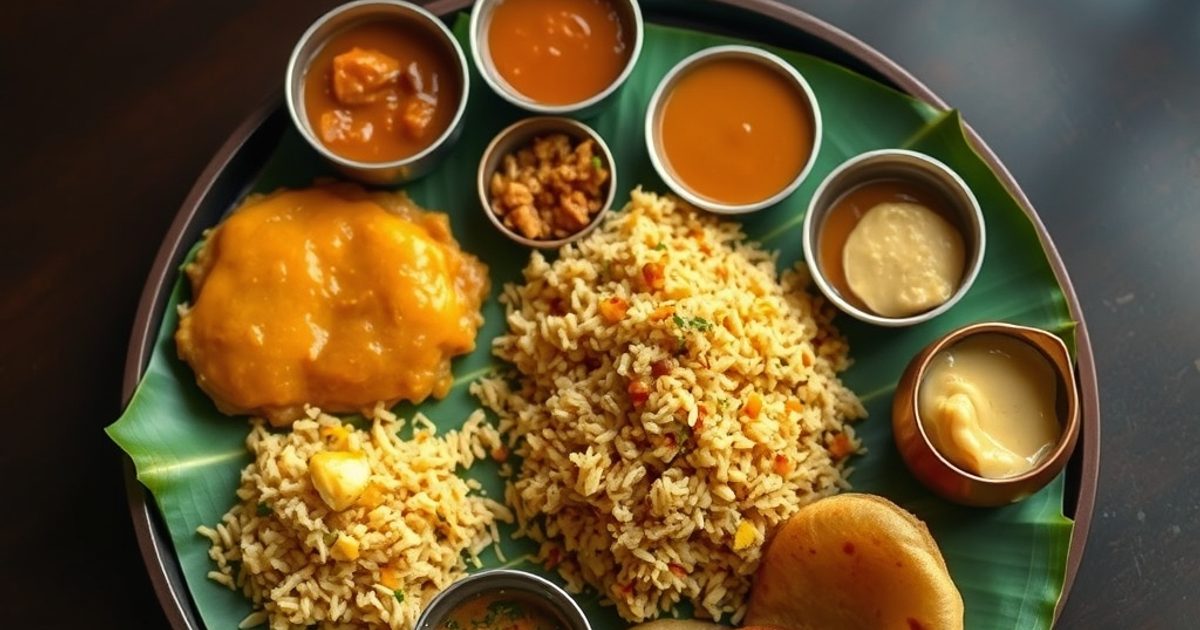
Chennai has always known how to eat well — but a quieter revolution has been brewing in its kitchens, one that looks inward rather than outward. When a restaurant roots itself in the artisan traditions of South India, it becomes more than a meal; it becomes a conversation with everything that has shaped this city's palate for generations.
TL;DR
- 🍛 Taamara represents a growing movement of artisan South Indian kitchens reclaiming heirloom techniques and forgotten regional flavours.
- 🌿 The "artisan kitchen" approach prioritises small-batch, heritage-ingredient cooking over standardised, assembly-line food.
- 📍 Chennai already has brilliant anchors — from Kappa Chakka Kandhari on Haddows Road to the legendary Dindigul Thalappakatti in Anna Nagar — that prove regional specificity is what diners are hungry for.
- 🕐 Timing and table strategy matter enormously in Chennai's busiest kitchens; planning ahead always pays off.
- 💬 This is a dining culture worth exploring slowly — neighbourhood by neighbourhood, dish by dish.
What Does "Artisan South Indian" Actually Mean?
The phrase gets used loosely, so it is worth pinning down. An artisan South Indian kitchen is one that traces its dishes back to their source — a specific community, a particular district, a grandmother's method rather than a catering college manual. It privileges stone-ground batters over machine-mixed ones, hand-pounded masalas over ready powders, and cultivars of rice or lentil that most supermarkets stopped stocking decades ago.
This is not nostalgia for its own sake. It is a culinary argument: that the best flavour is already here, already ours, and it simply needs patience and respect to come back to the table. Taamara's positioning as a South Indian artisan kitchen sits squarely in this conversation, and Chennai — a city that has always been quietly confident about its food identity — is the perfect home for it.
The Landscape Taamara Steps Into
To appreciate what an artisan kitchen offers, it helps to understand the rich, competitive terrain it inhabits. Chennai's restaurant scene is genuinely one of the most layered in the country, ranging from decades-old institutions to sharp new concepts.
At one end of the spectrum sits Dindigul Thalappakatti, with its Anna Nagar outpost on 4th Avenue, Shanthi Colony. The Dindigul biryani style — shorter-grain seeraga samba rice, a drier dum, a specific spice ratio — is itself an argument for regional specificity. Their website is thalappakatti.com if you want to check branch details before heading out.
On the Kerala side of the Southern canon, Kappa Chakka Kandhari at 10 Haddows Road makes an equally passionate case. The very name — cassava, jackfruit, bird's eye chilli — is a manifesto in three words. Their phone number is (044) 28281010 and you can find more at kappachakkakandhari.com. This is the kind of place that reminds you how distinct Kerala's culinary vocabulary is from Tamil Nadu's, even though both share a coastline and a love of coconut.
For those drawn to the Chettinad tradition — arguably the most complex and internationally celebrated regional cuisine in the South — Sri Magesh Chettinadu Restaurant on MTH Road in Villivakkam is a reliable address, open every day from 11 AM to 11:30 PM. Their number is +91 7338 802151. The Chettinad kitchen is itself an artisan tradition: kalpasi, marathi mokku, and star anise used in combinations that took centuries to calibrate.
Then there is the Kerala home-food register represented by Ente Keralam in Poes Garden — No. 1 First Street, Kasturi Estate — open Monday to Saturday for lunch and dinner. Their number is +91 63749 99504. The cooking here leans domestic and unfussy, which is precisely what makes it valuable.
💡 Desi Insider Tip: If you are eating at any of Chennai's more serious regional kitchens, arrive for the first lunch sitting rather than the tail end. The gravies are freshest, the rice is just right, and the staff have energy to guide you through the menu. Post-2 PM, even the best kitchens can feel a little depleted.
Why Heritage Ingredients Are the Real Story
The artisan label only means something if it is backed by sourcing decisions. In the South Indian context, this usually means a few things: seeraga samba or mappillai samba rice instead of generic parboiled; cold-pressed gingelly oil rather than refined vegetable oil; freshly cracked coconut rather than dessicated; and spices that are whole until the moment they are needed.
These choices are not just romantic — they produce measurably different food. Seeraga samba, for instance, is a short, aromatic grain grown primarily in the Dindigul and Madurai belts. It absorbs masala differently, holds its structure under dum, and has a faint natural fragrance that no amount of added flavouring can replicate. When a kitchen commits to using it, you taste the commitment.
Similarly, a sambar made from freshly stone-ground paste of tomato, tamarind, and coriander has a brightness and body that the shortcut versions simply cannot achieve. The artisan kitchen's job is to protect these differences and explain them to diners who may not have grown up eating them.
The Tiffin Tradition and Its Modern Revival
Any conversation about South Indian artisan cooking must honour the tiffin culture that underpins it. Idli, dosa, pongal, upma — these are not "starters" or "snacks" in the Western sense. They are a complete morning philosophy, demanding fermented batters, calibrated griddle temperatures, and chutneys that are made fresh and eaten immediately.
Paati Veedu, reachable at paativeedu.com, captures this spirit in its name alone — "grandmother's house." The premise is the same one that artisan kitchens are built on: that the most nourishing food is made slowly, by someone who cares, using methods that have been earned over time.
For a more casual, neighbourhood experience, Native Tiffins at 28/9 North Mada Street brings a similar sensibility to the street-level tiffin format. These spots are important because they demonstrate that artisan cooking does not have to mean expensive or formal — it just has to mean intentional.
Sweets, Savouries, and the Full Spread
No meal in Chennai is truly complete without something sweet to close it, and the city's mithai and snack culture is its own art form. Adyar Ananda Bhavan at 748 Thiruvottriyur High Road — phone +91 44 23453039, website aabsweets.com — has been part of the city's sweet memory for decades. Halwa, murukku, mixture, mysore pak: these are not afterthoughts but anchors of the culinary identity.
Sree Gupta Bhavan, findable at sreeguptabhavan.com, covers the chaat-and-sweets register with a similar commitment to the genre. For a city obsessed with both savoury crunch and sweet finish, these institutions are as essential as any fine-dining address.
How to Build Your Own Artisan Food Tour of Chennai
The beauty of Chennai's food geography is that it rewards wandering with intention. A practical approach:
Start with a morning tiffin — either a neighbourhood hotel or somewhere like Native Tiffins on North Mada Street, where the batter and chutney are made in-house. Follow it, on a separate occasion, with a Chettinad lunch at Sri Magesh on MTH Road, where the spice complexity of that regional kitchen asks you to slow down and pay attention. Round off a week of exploration with an evening meal at Kappa Chakka Kandhari on Haddows Road, where Kerala's coconut-and-chilli grammar offers a vivid contrast to the Tamil kitchen you have been tasting.
Along the way, stop at Adyar Ananda Bhavan for murukku and halwa. Pick up biryani from Dindigul Thalappakatti in Anna Nagar on a weekend afternoon. Let the city teach you at its own pace.
FAQ
What makes Taamara's artisan kitchen approach different from a regular restaurant? An artisan kitchen prioritises handcrafted techniques, heritage ingredients, and regional specificity over standardised, high-volume production. The focus is on taste that is traceable to a source — a community, a district, a traditional method.
Is South Indian artisan food only vegetarian? Not at all. While the vegetarian traditions are deep and celebrated, regional non-vegetarian cooking — from Chettinad chicken to Kerala fish curry to Dindigul biryani — is equally central to the artisan canon. The defining quality is technique and ingredient sourcing, not protein choice.
Which part of Chennai has the highest concentration of serious regional kitchens? There is no single neighbourhood that monopolises the scene. Anna Nagar, Poes Garden, Haddows Road, and Villivakkam all have strong representations. Exploring across the city tends to reward you more than staying in one zone.
Is it worth visiting these places on weekday afternoons versus weekends? Weekdays for lunch are generally calmer and the food is often at its freshest. Weekend evenings can be lively but sometimes mean longer waits and slightly stretched kitchen capacity at popular spots.
How do I find out more about Chennai's food scene through Desi.Net? Desi.Net covers the local food landscape continuously — new openings, neighbourhood guides, seasonal specials, and community recommendations all live there. It is the most practical starting point for staying current.
The Bottom Line
Chennai's artisan food movement is not a trend imported from elsewhere — it is the city recognising and reclaiming what it has always been good at. From the biryani precision of Dindigul Thalappakatti to the Kerala soul food at Kappa Chakka Kandhari, from the Chettinad mastery at Sri Magesh to the tiffin warmth of Paati Veedu, the ingredients for a world-class food culture are already here. Taamara's artisan kitchen framing simply makes the philosophy explicit.
Eat widely, eat locally, and eat with curiosity. And when you want to know what else is worth trying in this city, Desi.Net is where the conversation continues.