
Weekend Activities for Desi Kids in Eden Prairie
Weekend Activities for Desi Kids in Eden Prairie
TL;DR 🎒
- 🌸 Eden Prairie's thriving South Asian tech community means plenty of company for Desi parents raising culturally grounded kids in suburban Minnesota
- 📅 The Hindu panchang gives families ready-made occasions all summer: Guru Purnima 2026, Nag Panchami 2026, Ekadashi, Sankashti Chaturthi, and more
- 🎨 Classical dance, music lessons, and Indian language classes are available through the Twin Cities Indian community and give kids skills they carry for life
- 🌙 Panchang festivals are natural hooks for teaching children Hindu astronomy, mythology, and the rhythm of the traditional calendar
- 👨👩👧 Community gatherings organized through South Asian networks in Eden Prairie connect Desi kids with peers who share their cultural background
Why Cultural Weekends Are a Real Parenting Strategy
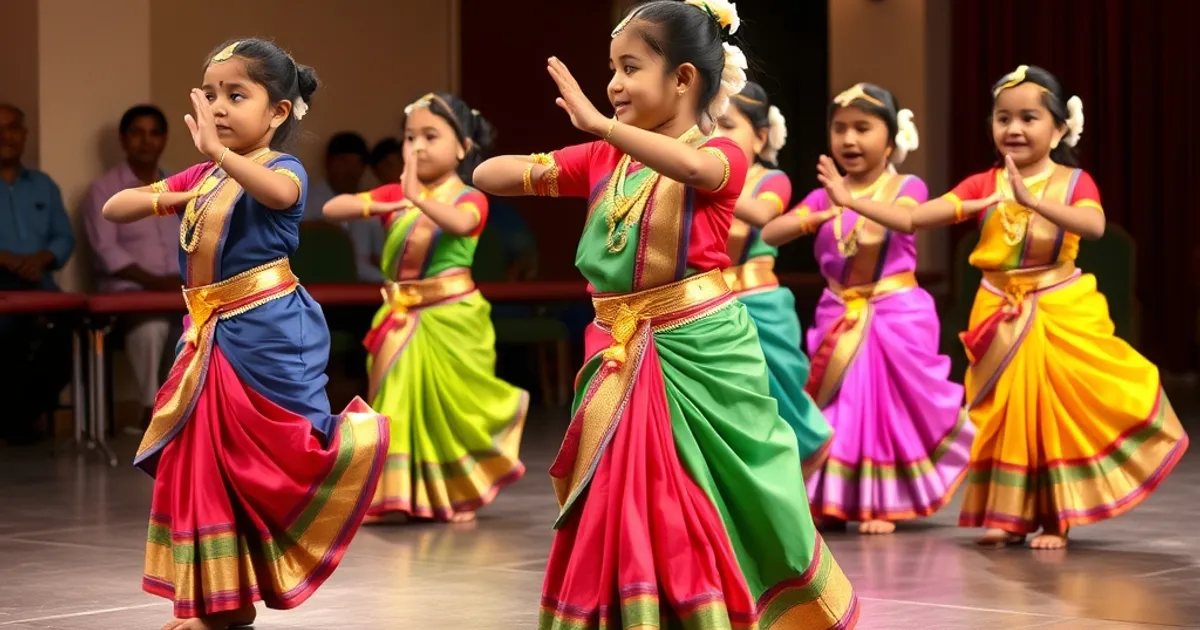
Eden Prairie is among the most sought-after suburbs in the Twin Cities, and its South Asian population — concentrated heavily among technology workers and their families — has grown substantially over the past two decades. Drive through any neighborhood on a Saturday afternoon and you will hear Carnatic violin through an open window, or find a group of kids in Bharatanatyam practice clothes tumbling out of a minivan.
For Desi parents raising second-generation children in Eden Prairie, the weekend carries a specific kind of pressure and purpose. Monday through Friday looks like suburban Minnesota — school buses, soccer practice, homework. Saturday and Sunday are when many families make deliberate choices about cultural transmission: what language will the kids speak with grandparents? What dance form will they learn? Which festivals will they actually understand, not just observe?
The good news is that Eden Prairie gives parents real infrastructure for this. The Indian community here is dense enough to sustain cultural institutions, consistent enough to staff weekend classes, and connected enough that word-of-mouth quickly surfaces the best teachers and programs. And the Hindu panchang — the traditional lunar calendar — does a remarkable amount of the scheduling work for families who know how to use it.
The Panchang as a Parenting Tool
The panchang is not just a religious calendar. For Desi parents in Eden Prairie, it is a curriculum — a ready-made sequence of occasions that let families teach children about mythology, astronomy, family history, and devotion without manufacturing the moment from scratch.
Guru Purnima 2026 falls on July 29, on the Purnima of Ashadh month. This is one of the most teachable occasions in the Indian calendar. Guru Purnima honors teachers and spiritual guides — and for children, this translates directly: who taught you to read? Who taught you to play the veena? Who is the person you go to when you are confused about something important? Many Indian families in Eden Prairie use Guru Purnima to call grandparents and teachers in India, to express gratitude in person or over video, and to explain to children why honoring knowledge and the people who carry it is a value worth practicing.
Sankashti Chaturthi arrives on August 2. Ganesha — the elephant-headed son of Shiva and Parvati, the remover of obstacles, the patron of new beginnings — is among the most accessible deities for young children. The stories are vivid: Ganesha racing his brother Murugan around the universe by walking around his parents instead, Ganesha receiving a mango from Sage Narada, Ganesha writing the Mahabharata as Vyasa dictated. Sankashti Chaturthi is a monthly opportunity to tell a Ganesha story, set up the puja together with the children, and make modaks or laddoos as an activity.
Ekadashi falls on August 8, the eleventh lunar day of Shravan's bright fortnight. For school-age children, Ekadashi can be introduced as a day of lightness — simpler food, less screen time, more quiet activity. For teenagers, the conversation can go deeper: what is fasting, and why do traditions across cultures and religions value some form of it? The Vishnu connection gives parents the opening for stories from the Bhagavata Purana — the tales of Dhruva, Prahlada, and the ten avatars.
Pradosh Vrat falls multiple times across the July-August season. Shiva mythology is some of the most dramatic in the Hindu tradition — Neelakantha swallowing the ocean's poison to protect all beings, Nataraja dancing at the edge of time, the Ganga flowing from Shiva's matted hair. Pradosh evenings, when many families light lamps and play Shiva bhajans, are natural storytelling moments. Parents with even basic knowledge of these stories find that children at ages seven through twelve absorb them with genuine enthusiasm.
Amavasya falls on August 12. This new moon day is the occasion in the Hindu calendar specifically dedicated to remembering ancestors. For Desi kids in Eden Prairie, Amavasya is a good prompt for a conversation most families mean to have but keep postponing: showing the children photographs of great-grandparents, explaining where the family comes from in India, what food they grew up eating, what language they spoke at home before English entered the picture. These conversations, anchored to the occasion rather than happening out of nowhere, land differently.
Nag Panchami 2026 falls on August 17, the fifth day of Shravan's bright fortnight. The serpent mythology associated with this day — Ananta Shesha carrying Vishnu across the cosmic waters, Vasuki used as the churning rope in the Samudra Manthan, Nagendra as a symbol of regeneration and time — gives parents excellent storytelling material. It is also an occasion to discuss Indian ecological traditions and the idea that ancient cultures built reverence for all living creatures into the calendar itself.
Purnima, the full moon, recurs throughout the season. Explaining the lunar calendar to children — why Hindu festival dates shift every year on the English calendar, why the moon's cycle is central to Indian timekeeping, what the difference looks like between a Purnima sky and an Amavasya sky — turns an observation from a backyard or balcony into a cultural lesson. Many Eden Prairie families build a small tradition of stepping outside together on Purnima nights to look at the moon.
What Families Actually Do on Weekends
Beyond the panchang, Eden Prairie's Indian community supports a range of organized weekend activities for children.
Classical arts: Bharatanatyam, Kuchipudi, Mohiniyattam, and Bollywood dance; Carnatic vocal and instrumental (violin, veena, flute, mridangam); Hindustani music (sitar, tabla, voice). Teachers for all of these disciplines exist within the Twin Cities Indian community network, with many based in or near Eden Prairie, Minnetonka, Chanhassen, and Plymouth. Enrollment in one classical art form is a common commitment among Desi families in the area, and children who stick with it through their teen years often find it becomes a genuine part of their identity.
Indian language classes: Hindi, Telugu, Tamil, Kannada, and Malayalam classes are organized through cultural associations and community networks in the greater Minneapolis area. Some are structured weekend school programs; others are smaller group settings arranged through community connections. For children growing up in an English-dominant environment, the ability to speak with grandparents in their mother tongue is not guaranteed — it requires sustained effort, and language class is a significant part of that.
Cultural festivals and performances: Indian community associations in the Twin Cities organize Diwali celebrations, Ugadi events, Holi gatherings, Onam programs, and more throughout the year. Children participate as performers, audience members, and volunteers — giving them exposure to a range of Indian cultural traditions, not just their own regional background.
Cooking as education: Many Eden Prairie Indian parents introduce children to the kitchen as a cultural space — teaching them to make dosas, idli batter, chapati, dal, or regional sweets tied to specific festivals. Cooking together before Sankashti Chaturthi or Nag Panchami 2026 makes the festival tangible rather than abstract.
Insider Tip: Panchang festivals like Nag Panchami 2026 and Guru Purnima 2026 are ideal moments to set up a family video call with grandparents in India. When the puja happens simultaneously in Eden Prairie and in Pune or Chennai — the same lamp lit, the same prayer said — children experience the festival as genuinely transnational, not just local. The twelve-hour time difference actually helps: a Purnima morning in Minnesota lines up with a Purnima evening in India.
Building a Routine That Holds
The families in Eden Prairie whose children grow up genuinely connected to Indian culture tend to share one characteristic: they built routines, not just events. A single Diwali party every October is an event. A home where Sankashti Chaturthi is observed monthly, where language class is a non-negotiable Sunday morning, where Guru Purnima means calling the music teacher and saying thank you — that is a routine, and it accumulates.
The panchang makes this easier because it distributes cultural occasions throughout the year rather than clustering them. From the Purnima of late July through Guru Purnima 2026, Sankashti Chaturthi, Ekadashi, Amavasya, Pradosh Vrat, and Nag Panchami 2026 — each month of the festive calendar gives Eden Prairie families multiple small moments of cultural intentionality, not just a handful of big annual events.
FAQ
What age is appropriate to start explaining panchang festivals to children? Even toddlers can participate in a simple puja with flowers and a lamp. Storytelling appropriate for each age — Ganesha tales at ages three and four, the Samudra Manthan for ages seven through ten, deeper philosophical concepts for teenagers — makes the festivals engaging at every stage.
Are there Indian cultural classes specifically in Eden Prairie or nearby? The South Asian community in Eden Prairie and surrounding suburbs (Minnetonka, Chanhassen, Plymouth, Bloomington) maintains teachers for classical dance, Carnatic and Hindustani music, and Indian languages. Connecting through local Indian community associations, Facebook groups, or word-of-mouth from other Desi parents is the most reliable way to find current offerings.
How do I explain fasting observances like Ekadashi to kids who are not fasting? Frame it as a day of mindfulness and lighter habits. Children who understand the concept of choosing to do less — eating simply, spending less time on screens — as a spiritual practice often engage with it more readily than adults expect. The explanation does not need to be complex.
What is Guru Purnima 2026 and how can it involve children? Guru Purnima 2026 falls on July 29 and honors teachers and spiritual guides. Children can be involved by helping prepare a small flower offering for the home puja, and by making or writing a thank-you card for a teacher — whether a school teacher, a dance teacher, or a music guru. It turns a religious concept into an embodied action.
Is Nag Panchami 2026 observed differently in the diaspora than in India? The core home ritual — offering milk and flowers to a serpent deity image or symbol — is the same. The surrounding cultural context differs: in India, Nag Panchami might involve a local temple fair or community observance. In Eden Prairie, it tends to be a home practice, often accompanied by storytelling and, for families that have maintained the tradition, fasting.
Bottom Line 🌸
Eden Prairie gives Desi families excellent raw material — a dense Indian community, access to classical arts teachers, language programs, and cultural associations across the Twin Cities. The panchang does the rest: from Guru Purnima 2026 on July 29 through Sankashti Chaturthi, Ekadashi, Amavasya, Nag Panchami 2026, and the recurring rhythm of Purnima and Pradosh Vrat — July and August alone offer Indian families a rich sequence of culturally meaningful weekends. Children raised with these rhythms do not learn their Indian identity as an abstraction. They learn it in the kitchen, in dance class, in the story told on a Nag Panchami evening, and in the Purnima sky they stepped outside to see.