
Janmashtami 2026 in Houston: Events, Puja & Where to Celebrate
TL;DR
- 🙏 Houston's Hindu calendar from Guru Purnima 2026 through Raksha Bandhan 2026 spans one of the richest festival arcs of the year
- 🎵 A Sitar Recital by Pt. Partha Bose with Indranil Mallick on Tabla at Cullen Hall, University of St. Thomas on August 1 anchors the cultural calendar
- 🛕 Sri Govindaji Gaudiya Matha Temple, Sri Meenakshi, and Jalaram Saibaba Temple are among the primary venues for Janmashtami puja in Houston
- 🌕 Kamika Ekadasi, Vara Mahalakshmi, and Upakarma each mark distinct regional traditions within Houston's diverse Indian community
- 🏙️ The Sugar Land, Pearland, Katy, and Richmond corridor is home to one of the densest concentrations of Desi families anywhere in the United States
Houston's Indian Community and the Janmashtami Season
Houston's South Asian population is among the largest and most geographically concentrated in the United States. The southwest suburban corridor — Sugar Land, Pearland, Katy, and Richmond — has developed over several decades into a landscape of Indian grocery stores, temples, cultural organizations, and restaurants that rivals comparable clusters in New Jersey or the San Francisco Bay Area. For many families here, the Hindu festival calendar is not a peripheral tradition but a central organizing structure of community life across generations.
The arc from late July through late August 2026 is one of the most event-heavy stretches in the Hindu year. It begins with Guru Purnima 2026 on July 29 — the full moon dedicated to honoring teachers and the lineage through which wisdom is transmitted — and runs through Raksha Bandhan 2026 on August 27. Between those two anchor dates fall Janmashtami, Nag Panchami, Vara Mahalakshmi, Upakarma, and multiple Ekadashi observances, a sequence that spans Vaishnava, Shaiva, Shakta, and regional South Indian traditions simultaneously. For Houston's Indian community, this is the season that keeps the cultural calendar fully active.
Key Temples and Their Traditions
Houston's temple landscape is genuinely diverse. With more than twenty temples serving the metropolitan area, families can generally find a space aligned with their specific regional or sectarian tradition — something that is not possible in smaller diaspora cities.
Sri Govindaji Gaudiya Matha Temple at 16628 Kieth Harrow Boulevard is rooted in the Gaudiya Vaishnava tradition, the same devotional school that produced ISKCON. For this community, Janmashtami is the most important celebration of the year. Programs typically begin in the late afternoon and run until midnight, when the moment of Krishna's birth is marked with abhishekam, the ringing of bells, and the distribution of prasad. The atmosphere at Gaudiya Matha temples on Janmashtami night — the anticipation building through hours of kirtan and storytelling, and then the midnight moment — is one of the more immersive experiences in the Indian diaspora calendar.
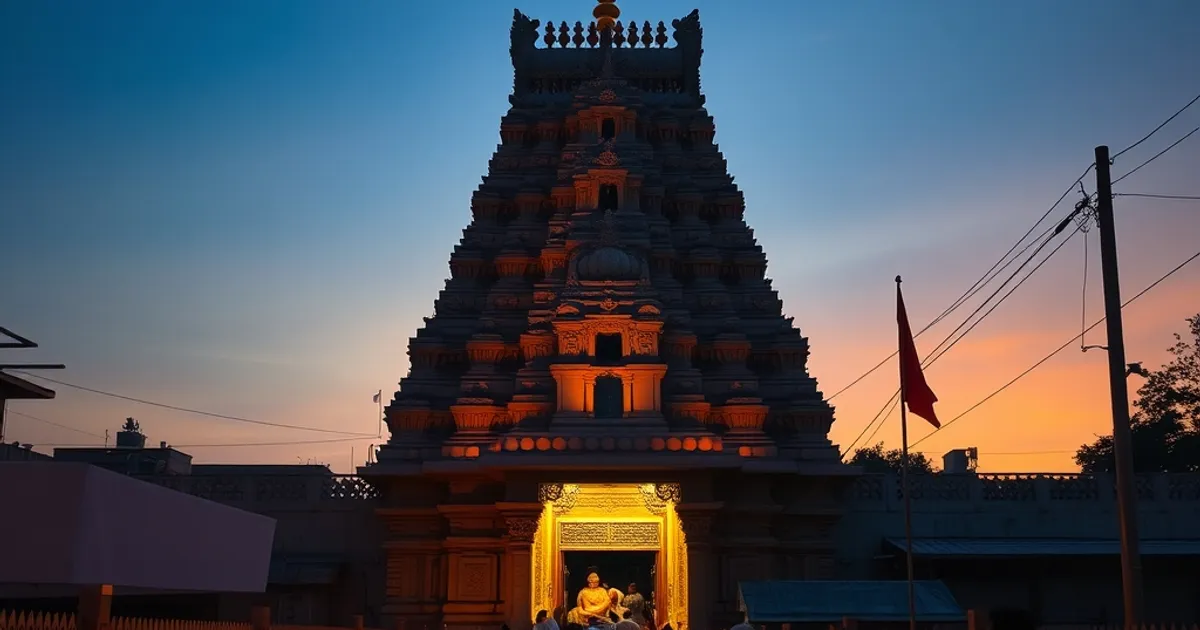
Sri Meenakshi at 17130 McLean Road is one of the largest South Indian temples in the United States, built in the Dravidian style with carved gopurams rising above the Richmond landscape. It serves Houston's Telugu and Tamil communities and follows the agamic tradition of ritual worship. For Tamil families, the Aadi month that coincides with this season is a period of intense Devi worship, with multiple utsavams conducted at the temple. For Telugu households, Vara Mahalakshmi on August 21 is one of the year's most significant observances — women worship Goddess Mahalakshmi for household prosperity, and Sri Meenakshi typically organizes a full puja program on this day.
Jalaram Saibaba Temple at 5645 Hillcroft Avenue sits on Houston's Hillcroft Avenue corridor, which has been the traditional commercial hub of the city's Indian community for decades. Sai Baba devotees form a significant community within Houston's Gujarati and broader Hindu population, and Jalaram Saibaba Temple functions as both spiritual center and social anchor. This temple is particularly active during Upakarma on August 26 — the annual Vedic ceremony in which Brahmin men renew their sacred thread and recite specific Vedic hymns marking the seasonal transition.
Sri Sharadamba Temple at 10315 Clodine Road serves a distinct corner of the community — Sharadamba being an aspect of Saraswati, the goddess of knowledge and the arts, worshipped particularly in Karnataka. This temple draws families with roots in Karnataka alongside broader devotees of Sharaswati.
Gurdwara Nanaksar at 6834 Satsuma Drive serves Houston's Sikh community. Guru Purnima 2026 carries significance here as well — while Guru Purnima is primarily a Hindu and Buddhist observance, the honoring of the Guru as spiritual guide resonates across Sikh devotional life, and gurdwaras are active on the full moon day.
The Sitar Recital at Cullen Hall, University of St. Thomas
On August 1, Cullen Hall at the University of St. Thomas hosts a Sitar Recital by Pt. Partha Bose with Indranil Mallick on Tabla. This is a classical Indian music event of genuine stature. Hindustani sitar recitals follow a deep structural logic — the opening alap explores the raga's emotional landscape without any rhythmic accompaniment, note by note, phrase by phrase, for twenty minutes or more. Then the jod and jhala phases introduce rhythmic pulse. Finally the gat section brings in the tabla for a full improvised conversation between the two instruments within the raga's framework.
Pt. Partha Bose and Indranil Mallick are accomplished practitioners in this tradition, and Cullen Hall at the University of St. Thomas is an intimate venue well-suited to the subtlety of classical music performance. The University of St. Thomas has maintained a relationship with Houston's cultural communities over many years, and events like this reflect how deeply Houston's Indian diaspora has embedded itself in the city's broader arts infrastructure. For Desi families who have not attended a live Hindustani classical concert, this is an opportunity that does not arise frequently even in major diaspora cities.
The Hindu Calendar Arc: Ekadashi to Raksha Bandhan
For those following the observance calendar through this period, the sequence repays attention. Sayana Ekadasi on July 24 marks the beginning of Chaturmas — the four-month period during which Vishnu is said to rest. This initiates a season of heightened austerity and pilgrimage for Vaishnava devotees. Pradosh Vrat on July 26 is the bi-monthly twilight observance dedicated to Shiva, followed by Guru Purnima 2026 on July 29.
Sankashti Chaturthi on August 2 is the monthly Ganesha fasting day, observed with a fast through moonrise and puja to Lord Ganesha. Kamika Ekadasi on August 8 falls during the rainy season and is considered particularly meritorious in Vaishnava texts for fasting, Vishnu worship, and charitable giving. Pradosh Vrat returns on August 10 and August 25 — Shiva devotees observe these twilight fasting periods twice monthly without exception.
Amavasya on August 12 is the new moon, observed for ancestral rites across many Hindu traditions. Nag Panchami on August 16 is the serpent deity festival, marked especially in Maharashtra and Andhra Pradesh with offerings of milk to snake images and prayers for protection from snakebite. Vara Mahalakshmi on August 21 serves Telugu and Kannada households specifically. Upakarma-Rugveda and Yajurveda on August 26 marks the seasonal Vedic renewal. And Raksha Bandhan 2026 on August 27 closes the arc — the celebration of the sibling bond, with sisters tying rakhi threads on brothers' wrists and brothers pledging protection.
In Houston's diaspora communities, Raksha Bandhan 2026 is often organized as a community event alongside individual family observations, with temples and cultural organizations hosting rakhi-tying ceremonies in the days around August 27.
Insider Tip: For Janmashtami at Sri Govindaji Gaudiya Matha Temple, plan to arrive well before the evening program begins. Houston traffic on festival nights can delay even short drives across the southwest suburbs, and parking near the temple fills up early. Many families also observe a midnight fast and personal puja at home — if you are doing both, decorating your home altar before leaving for the temple lets you complete the home puja immediately upon returning at or after midnight.
FAQ
When is Janmashtami 2026 in Houston? Janmashtami 2026 falls in mid-August. Confirm the exact date with your local temple, as North Indian and South Indian communities sometimes observe it on different days based on the calendar system used.
Which temple is best for Janmashtami in Houston? Sri Govindaji Gaudiya Matha Temple is the most Vaishnava-focused option. Sri Meenakshi at 17130 McLean Road serves South Indian families. Jalaram Saibaba Temple on Hillcroft Avenue draws a broad Hindu community. ISKCON Houston holds major Janmashtami programs as well.
What is the Sitar Recital at Cullen Hall about? The Sitar Recital by Pt. Partha Bose with Indranil Mallick on Tabla at Cullen Hall, University of St. Thomas on August 1 is a live Hindustani classical music performance. Contact the University of St. Thomas directly for ticketing and registration details.
What is Vara Mahalakshmi? Vara Mahalakshmi is a festival observed primarily by Telugu and Kannada communities on the Friday before the full moon in the Shravana month. Women worship Goddess Mahalakshmi for the prosperity and wellbeing of their households, tying a sacred thread to a kalasha pot representing the goddess.
What is Upakarma? Upakarma is the annual Vedic ritual in which Brahmin men renew their sacred thread and recite specific Vedic hymns, marking a seasonal transition and the beginning of a new cycle of Vedic study. Sri Meenakshi and Jalaram Saibaba Temple are among the venues where this is typically observed in Houston.
Bottom Line
Houston's Indian community runs one of the most active and regionally diverse festival calendars in the United States. The late July to late August 2026 window — from Guru Purnima 2026 through Raksha Bandhan 2026 — covers Janmashtami, Kamika Ekadasi, Vara Mahalakshmi, Upakarma, Nag Panchami, and multiple Pradosh and Ekadashi observances. Major temples including Sri Govindaji Gaudiya Matha Temple, Sri Meenakshi, Jalaram Saibaba Temple, Sri Sharadamba Temple, and Gurdwara Nanaksar serve distinct communities across the metropolitan area. The Sitar Recital by Pt. Partha Bose at Cullen Hall, University of St. Thomas on August 1 is a reminder that Houston's Desi community has built something rare: a full cultural infrastructure with arts programming, temple life, and community depth that makes it one of the most vibrant Indian diaspora cities anywhere in the world.