
Janmashtami 2026 in Islamabad: Events, Puja & Where to Celebrate
Janmashtami 2026 in Islamabad: Events, Puja & Where to Celebrate
Janmashtami is one of the most joyful nights on the Hindu calendar — a celebration of Lord Krishna's birth that turns homes, temples, and community halls into spaces filled with devotional songs, midnight prayers, and the scent of fresh flowers. In Islamabad, this occasion holds a quiet but meaningful place for the city's Hindu community, and knowing the dates, rituals, and local gathering spots can make all the difference between a hurried observance and a truly memorable one.
TL;DR
- 🗓️ Krishna Janmashtami 2026 falls on Friday, 4 September 2026 — mark your calendar now.
- 🛕 The ہندو مندر on Street 3, Islamabad is the go-to local venue for community puja.
- 🌙 The main puja and abhishek typically happen at or after midnight — plan your evening accordingly.
- 🍚 Traditional fasting foods like sabudana khichdi, makhana, and fruits are widely available at local markets.
- 📅 Raksha Bandhan (28 August) falls just a week before — a lovely warm-up to the festive season.
Why Janmashtami Matters This Year
The 2026 festive season arrives in a particularly beautiful cluster. Looking at the community calendar, you can see that August and September are packed with observances — Nag Panchami on 17 August, Raksha Bandhan on 28 August, then Janmashtami on 4 September, and Ganesh Chaturthi hot on its heels on 14 September. This stretch of roughly four weeks is essentially the heart of the Hindu festive year, and celebrating even one of these occasions with intention can anchor you to your roots in a way that feels grounding rather than performative.
For families in Islamabad who may not have large extended networks around them, Janmashtami is especially meaningful — it is the kind of festival that scales beautifully, from a single diya and a home puja to a full community gathering at the mandir.
📅 The Full Lead-Up: Key Dates to Know
Janmashtami does not arrive in isolation. The lunar calendar builds toward it with several observances worth noting:
Ekadashi — 9 August 2026: Many devotees observe a partial or full fast on Ekadashi days. This one falls about three weeks before Janmashtami and is a good moment to deepen your regular practice.
Nag Panchami — 17 August 2026: A traditional day to honour serpent deities, often marked with milk offerings and visits to the temple.
Raksha Bandhan — 28 August 2026: This coincides with Purnima (the full moon), making it a doubly auspicious day. The bond between siblings is celebrated, and it sets a warm, familial tone for the fortnight leading into Janmashtami.
Sankashti Chaturthi — 1 September 2026: A fast dedicated to Lord Ganesha, observed on the fourth day of the dark lunar fortnight. A quiet, personal observance that sits just three days before Janmashtami.
Krishna Janmashtami — 4 September 2026: The main event. Lord Krishna is believed to have been born at midnight, so the most significant rituals — the abhishek (ritual bathing of the deity's idol), the aarti, and the breaking of the fast — all happen after the clock strikes twelve.
Ganesh Chaturthi — 14 September 2026: Just ten days after Janmashtami, the festive energy continues with the celebration of Lord Ganesha's birth.
🛕 Where to Celebrate in Islamabad
For those seeking a communal experience, the ہندو مندر on Street 3 in Islamabad is the city's known Hindu temple and the natural focal point for community worship during festivals like Janmashtami. Temples on this occasion are transformed — floors freshly cleaned, idols of Lord Krishna and Radha draped in new clothes, and the air thick with incense and devotional music.
If you have not visited the mandir before, Janmashtami night is an ideal first visit. The atmosphere is welcoming, the rituals are participatory rather than passive, and the sense of shared celebration with fellow community members is something you simply cannot replicate at home alone.
It is always worth reaching out to the temple or fellow community members in advance to confirm the schedule for the evening's programme — timings can shift depending on the organizing committee and the lunar calendar's precise midnight calculation for that year.
💡 Desi Insider Tip: Arrive at the mandir at least an hour before midnight if you want a good spot for the abhishek. The actual ceremony is brief but deeply moving, and the prasad distributed afterward — usually panchamrit and mishri — tastes incomparably better when you have waited through the anticipation of the whole evening to receive it.
How to Observe Janmashtami at Home
Not everyone can make it to the temple, and a home puja is an entirely valid and beautiful way to observe the night. Here is a simple, practical guide:
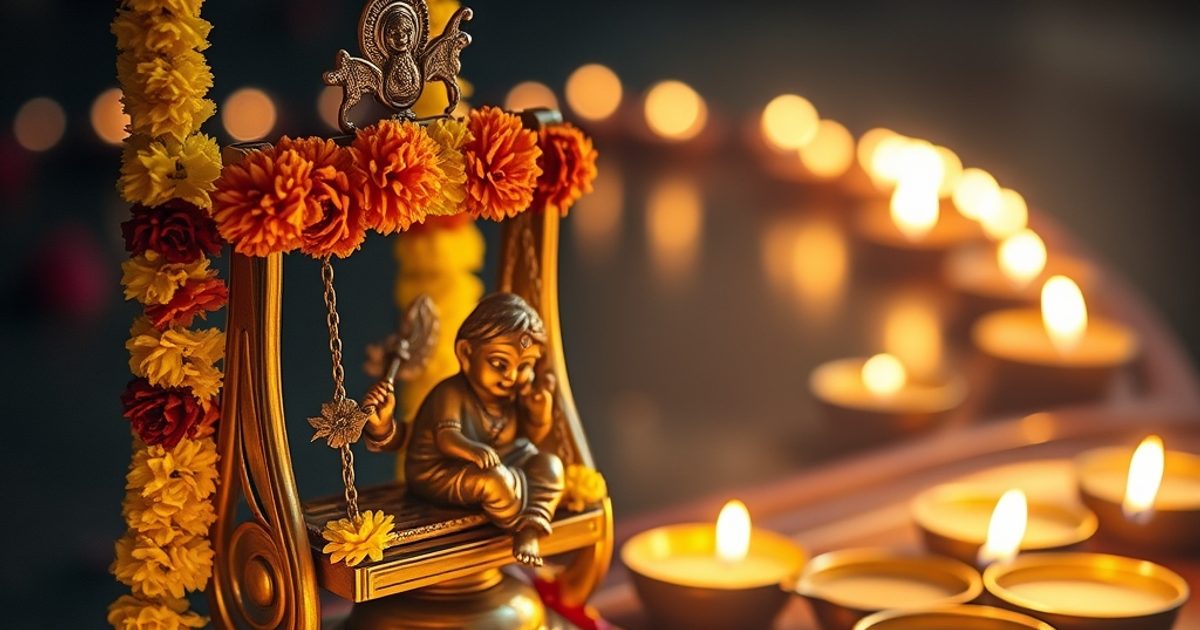
Set up a small jhulna (swing): A tiny cradle or swing for a Krishna idol or image is traditional. Even a simple decoration with a small murti works perfectly.
Fast through the day: Devotees typically abstain from grains and some vegetables. Permitted foods include dairy, fruits, nuts, and dishes made from water chestnut flour (singhare ka atta) or tapioca (sabudana). Local markets in Islamabad stock most of these items.
Offer panchamrit: A mixture of milk, curd, honey, sugar, and ghee is used to bathe the idol at midnight. All five ingredients are easily sourced locally.
Sing or play bhajans: Even a playlist of classic Krishna bhajans — Govind Bolo, Hare Krishna, or any Meera bhajan — creates the right devotional atmosphere at home.
Break your fast after midnight: The fast ends only after the midnight puja is complete. Common post-fast foods include panjiri, makhane ki kheer, and fresh fruit.
What to Cook and Where to Find Ingredients
Janmashtami has a particularly lovely food culture around it. Since devotees fast during the day, the festive spread that follows midnight puja is eagerly anticipated.
Look for these items at your local grocery stores and markets in the days leading up to 4 September:
- Sabudana (tapioca pearls): For sabudana khichdi or kheer, a staple of Vrat fasting food.
- Makhana (fox nuts / lotus seeds): Roasted makhana or makhane ki kheer are beloved Janmashtami treats.
- Singhare ka atta (water chestnut flour): Used for fasting rotis and halwa.
- Panchamrit ingredients: Whole milk, fresh dahi, pure honey, sugar, and good-quality ghee.
- Fresh fruits: Bananas, apples, and pomegranates are all traditional offerings.
The fruit and dry goods sections of larger supermarkets in Islamabad typically carry all of the above, and local sweet shops often prepare ready-made Vrat-friendly items around festival time.
FAQ
Q: What date is Janmashtami in 2026? Krishna Janmashtami 2026 falls on Friday, 4 September 2026.
Q: At what time does the main puja happen? The abhishek and key rituals are traditionally performed at midnight, as Lord Krishna is believed to have been born at the stroke of twelve. Celebrations at the temple and at home build through the evening toward that moment.
Q: Can I observe the fast even if I am not fully Hindu or only partially religious? Absolutely. Many people observe a light fast on Janmashtami as a mark of respect and cultural connection rather than strict religious observance. You can adapt the traditions to whatever feels meaningful to you.
Q: Are there any events before Janmashtami that are worth attending? Raksha Bandhan on 28 August and Nag Panchami on 17 August are both community observances that may draw gatherings at the local mandir. They are good occasions to connect with the community ahead of the main Janmashtami celebration.
Q: What should I bring to the temple on Janmashtami night? Traditionally, fresh flowers, a small offering of fruits or mishri (rock sugar), and panchamrit ingredients if you wish to contribute to the collective abhishek. Wear clean, modest clothing — kurta or salwar kameez is always appropriate.
The Bottom Line
Janmashtami 2026 on 4 September lands in the middle of a rich festive stretch that runs from mid-August all the way through Ganesh Chaturthi in mid-September. Whether you plan to spend the night at the ہندو مندر on Street 3 joining your community for the midnight abhishek, or you set up a quiet home puja with the scent of incense and a playlist of bhajans, the most important thing is simply to mark the occasion with intention.
Islamabad's community is close-knit, and festivals like this are the threads that keep that fabric tight. Show up, connect, and let the celebration be what it has always been — a moment of joy shared.
For more community events, local guides, and cultural coverage, keep exploring Desi.Net — your home for everything happening in Islamabad.