
Islamabad in Focus: Diplomacy, Tech Milestone, Civic Reform, and Healthcare Alarm
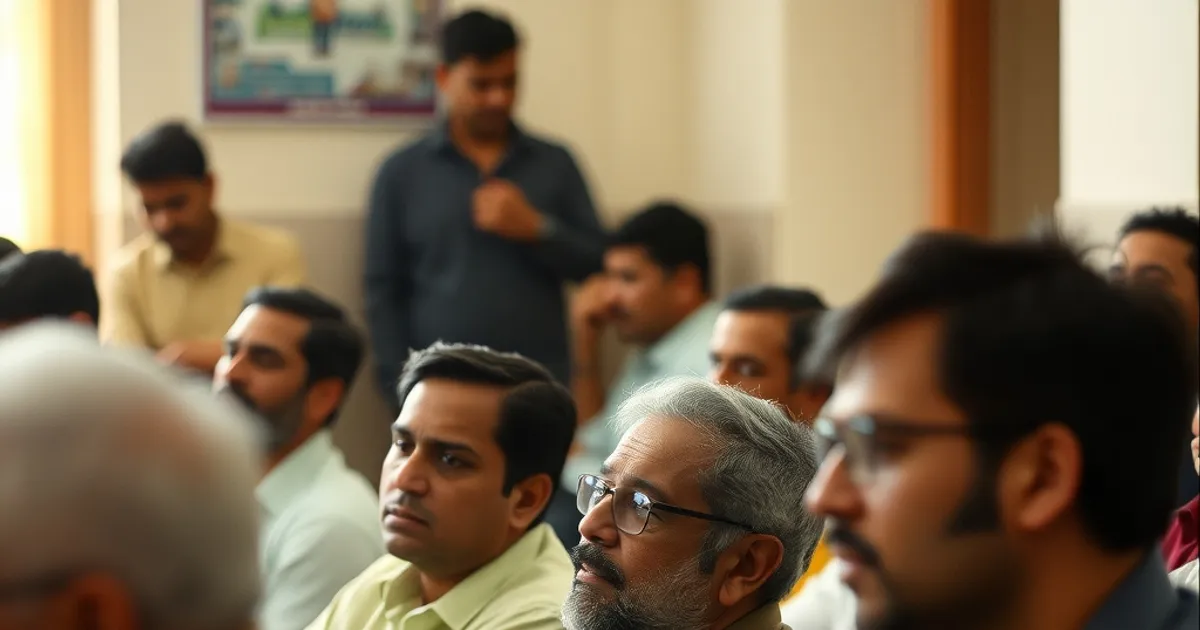
Islamabad emerged this week as the pivot of regional diplomacy when Deputy Prime Minister Ishaq Dar pressed Iran and the United States to honour the landmark Islamabad MoU. Simultaneously, the capital celebrated a major technology milestone with the inauguration of Pakistan's largest AI-powered data centre, took formal steps toward restoring elected local government through a new delimitation exercise, and confronted a troubling shortage of ventilators in its public hospitals.
🗳️ Pakistan Champions Islamabad MoU at SCO Sidelines
Deputy Prime Minister and Foreign Minister Ishaq Dar placed Pakistan firmly at the centre of Middle Eastern diplomacy this week, meeting Iranian Foreign Minister Seyyed Abbas Araghchi on the sidelines of the Shanghai Cooperation Organisation's Council of Foreign Ministers gathering in Cholpon-Ata, Kyrgyzstan. Dar expressed deep concern over escalating regional tensions and called on all parties to prioritise dialogue, restraint, and sustained diplomatic engagement. He specifically urged both the United States and Iran to return to the framework established by the Islamabad Memorandum of Understanding signed in June 2026 — a document Pakistan considers among its most significant recent diplomatic achievements. The June MoU, which Washington and Tehran concluded under Islamabad's facilitation, represented a rare instance of Pakistani statecraft producing a concrete agreement between two powerful adversaries. Araghchi thanked Pakistan for its constructive mediation, highlighting the safe return of Iranian fishermen and crew members — including those aboard vessels interdicted by US forces — facilitated through careful Pakistani coordination with Iranian, American, and other relevant authorities to ensure safe transit through Pakistani territory back to Iran. In a separate meeting on the same SCO sidelines, Dar also held a warm bilateral session with Chinese Foreign Minister Wang Yi. The two reviewed bilateral ties, regional developments, and multilateral cooperation, with Yi publicly acknowledging Pakistan's peacemaking efforts. The week's diplomatic activity underscores Islamabad's increasingly assertive role as a bridge-builder in a volatile neighbourhood, leveraging its geographic and political position to maintain communication channels between adversarial global powers. [2]
🏢 Sky47 Data Centre: Pakistan's Largest AI Cloud Opens in Islamabad
In a milestone for Pakistan's technology ambitions, Prime Minister Shehbaz Sharif and Chief of Army Staff Field Marshal Asim Munir jointly inaugurated the Sky47 Karakorum-01 Data Centre in Islamabad on July 24, 2026. Billed as the country's largest data centre and AI cloud facility, the Sky47 project marks a significant leap forward in domestic digital infrastructure. The high-profile joint civilian-military inauguration underscores the strategic importance Pakistan's leadership places on technology sovereignty and domestic cloud computing capacity. The launch comes at a moment when global demand for data centre infrastructure has surged alongside the rapid expansion of artificial intelligence workloads, and Pakistan has been eager to position itself competitively in the regional digital economy. By establishing robust domestic high-performance computing resources under the Sky47 brand, Pakistani businesses and government agencies gain access to local cloud services that can reduce dependence on foreign providers and improve data security. The facility is expected to catalyse further investment in Islamabad's technology corridor and create employment opportunities for Pakistan's growing pool of IT professionals, software engineers, and data specialists. Analysts note that domestic data centre capacity is critical not merely for economic competitiveness but for national security — ensuring that sensitive government and citizen data is processed and stored within sovereign jurisdiction. PM Shehbaz described the inauguration as a defining step in Pakistan's digital transformation journey, signalling an ambition to become a serious regional player in the AI and cloud computing space over the coming decade. [5]
🗳️ Islamabad LG Delimitation Begins, Elections on the Horizon
Islamabad took a formal step toward restoring elected local government when the District and Regional Election Commissioners of Rawalpindi commenced the delimitation process for the federal capital's constituencies. The exercise is essential groundwork for holding long-delayed local government elections in Islamabad, which has been governed without a properly elected municipal tier for an extended period. Under the revised plan, the number of union councils in the capital has increased from 125 to 130, while general wards have grown correspondingly from 1,125 to 1,170 — a recognition of the city's expanding population and rapid urbanisation across new residential and commercial zones. The Rawalpindi Regional Election Commissioner has already initiated operations, with the new delimitation slated for completion and publication by July 31. A formal objection window will be open from August 27 through September 16, giving residents, community groups, and political parties an opportunity to contest specific boundary decisions before the lists are finalised. The comprehensive final list of union councils and wards is scheduled for issuance on October 13, after which the process toward holding actual LG elections in the federal capital will accelerate. Political parties and civic organisations have watched this delimitation process closely, as local government bodies are the most direct point of contact between ordinary citizens and the state — responsible for basic municipal services, neighbourhood planning, sanitation, and community development. The increase in union councils directly reflects Islamabad's accelerating growth and the need for more granular governance structures. [8]
Ventilator Crisis Puts Critical Patients at Risk Across Islamabad Hospitals
A Dawn investigation published July 26 raised urgent alarms about a critical shortage of mechanical ventilators in hospitals across Islamabad and the wider capital region. Ventilators are indispensable life-saving devices for intensive care patients — including those suffering severe respiratory illnesses, major trauma injuries, cardiac events, and complications arising from surgical procedures. Their absence or unavailability at the moment of crisis can mean the difference between recovery and death. The shortage means that critically ill patients face elevated, preventable risk because hospitals cannot guarantee mechanical breathing support when it is most urgently needed. Health officials and frontline medical workers have reportedly flagged the issue to hospital administrators and health authorities, pointing to gaps in procurement timelines, equipment maintenance failures, and inadequate allocation of available units across public and private facilities in the capital. The problem is compounded by the growing patient load on Islamabad's hospitals as the city's population expands and seasonal respiratory illnesses intensify during summer months. Public health advocates have called for emergency procurement measures and a systematic audit of critical care equipment across all hospitals in the federal capital and surrounding districts. The ventilator shortage also points to persistent underfunding in Pakistan's healthcare infrastructure, where capital investment in medical technology often lags behind population growth and disease burden. Islamabad, as the seat of the federal government, has a particular responsibility to model strong healthcare delivery standards, making the crisis both a public health emergency and a governance accountability issue demanding urgent action from health ministry officials and hospital management. [9]
Sources: [2] The Express Tribune · [5] Dawn · [8] The Express Tribune · [9] Dawn