
Janmashtami 2026 in Palo Alto: Events, Puja & Where to Celebrate
TL;DR 🌟
- 📅 Krishna Janmashtami 2026 falls on September 4 in Palo Alto — mark your Bay Area calendar now
- The Desi community countdown runs from Guru Purnima 2026 (July 28) through Ganesh Chaturthi 2026 (September 14)
- 🏠 Home celebrations are the norm across the South Bay — puja setup, fasting, midnight vigil, and prasad are all fully achievable in a Palo Alto apartment
- 🌸 Nag Panchami 2026 (August 16) and Raksha Bandhan 2026 (August 27) are warm-up milestones that keep the devotional momentum alive
- 🛒 Stock up at Fremont or Sunnyvale Indian grocers for puja supplies at least a week before the rush
What Janmashtami Means for the Bay Area Desi Community
Krishna Janmashtami marks the birth of Lord Krishna, believed to have occurred at midnight in Mathura — which is precisely why the most important moment of the celebration happens after dark. For the Indian and Desi community spread across Palo Alto, Mountain View, Santa Clara, and the broader South Bay, Janmashtami is one of those festivals that requires planning but delivers a night full of meaning, devotion, and family memory.
The Bay Area is home to one of the largest South Asian populations in the United States. Even without a dedicated temple in every neighborhood, families here find ways to come together — at community centers, in living rooms, over WhatsApp group calls with relatives back home — to mark the occasion with sincerity and joy. If you grew up in a city where Janmashtami processions filled the streets and temple halls echoed with bhajans for hours, this guide will help you recreate that spirit in Palo Alto, one room at a time.
The spirit of Janmashtami travels well. The jhula, the panchamrit, the midnight aarti, the fasting, the sweets — none of it requires more than a well-prepared home and a willing community of friends and family. What it does require is knowing the calendar and getting ready in time.
The Countdown: From Guru Purnima 2026 to Janmashtami
The Indian devotional calendar builds momentum across the season, and 2026 is no different. The season begins with Guru Purnima 2026 on July 28 — a full-moon day dedicated to honoring teachers and spiritual guides. Many Bay Area Desi families observe it with a short puja and a moment of gratitude before the busier festival season unfolds.
On August 2, Sankashti Chaturthi invites a fast and prayers to Lord Ganesha, clearing obstacles in preparation for the months ahead. Ekadashi on August 8 is observed by Vaishnavas — devotees of Vishnu and Krishna — as a fasting day and an occasion for elevated prayer. As Janmashtami approaches, this observance takes on particular significance for Krishna devotees.
Pradosh Vrat on August 10 is an auspicious evening dedicated to Lord Shiva, observed on the thirteenth lunar day and meaningful in multi-tradition households across the Bay Area. Amavasya on August 12 — the new moon — calls for ancestral remembrance and quiet reflection.
Then Nag Panchami 2026 arrives on August 16, honoring the serpent deity. In many South Indian and Maharashtrian households, this day is marked with kolam patterns, milk offerings, and small rituals that bring the family together.
August 27 carries a double blessing: both Raksha Bandhan 2026 and Purnima fall on the same day, making it an auspicious full-moon celebration of sibling bonds. By this point you are just over a week away from the main event, and anticipation is typically running high.
Krishna Janmashtami 2026 falls on September 4. Ten days later, Ganesh Chaturthi 2026 on September 14 brings the season to a joyful close — another beloved festival on the Bay Area Desi calendar, and one that many community organizations celebrate with organized events.
Setting Up Your Janmashtami Puja at Home
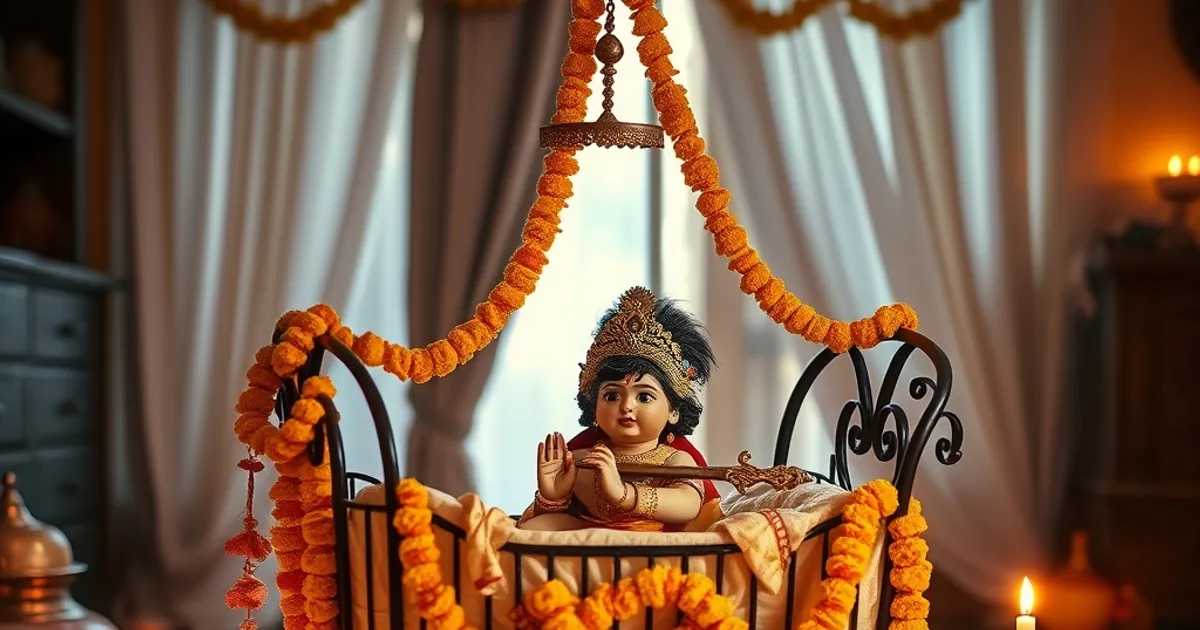
The physical centrepiece of any home Janmashtami is the jhula — a small decorated cradle for the baby Krishna murti. Set it in the cleanest, most prominent corner of your home, draped in yellow or gold cloth with fresh flowers arranged around the base. Marigolds and jasmine are traditional; they are usually available at South Bay Indian grocery stores.
Panchamrit: Prepare the ritual bathing mixture — milk, yogurt, honey, sugar, and ghee — and keep it ready for midnight. After bathing the idol in panchamrit, collect it as prasad for everyone present.
Bhog: The offerings placed before Krishna traditionally include makhan (fresh white butter), mishri (rock candy), and panjiri. Fruits and dry fruits round out the plate. For families who want something more elaborate from the kitchen, mathura peda and gopalkala — a cool mixture of beaten rice, yogurt, cucumber, coconut, and gentle spices — are both closely associated with Lord Krishna and straightforward to prepare at home.
The midnight vigil: The birth is observed precisely at midnight. Chant the Hare Krishna mantra, sing bhajans, ring the bell at 12:00 AM, and then bathe the idol and rock the jhula. Many families play recorded Janmashtami bhajans throughout the evening to build the mood.
Fasting on Janmashtami: Practical Guidelines
The Janmashtami fast is kept from sunrise until the midnight puja. During the fast, devotees avoid grains and legumes entirely. Permitted foods include fruits, dairy products, and nuts; sabudana (tapioca pearls) preparations such as sabudana khichdi or kheer; kuttu (buckwheat) flour dishes like kuttu ki puri; singhara (water chestnut) flour preparations; and rock salt used in place of regular salt.
After the midnight aarti and the ritual bath of the Krishna murti, the fast breaks with panchamrit prasad, followed by a proper meal. Many families prepare a full grain-based meal in advance so it is ready to serve right after midnight.
For those fasting for the first time, or for those with health considerations, a partial fast — fruits and dairy through the day, with a light evening meal — is widely accepted and still meaningful.
Insider Tip: Indian grocery stores in Sunnyvale, Mountain View, and Fremont tend to sell out of sabudana, kuttu flour, and singhara flour in the four to five days before Janmashtami. Plan your shopping trip at least a full week ahead of September 4. Fresh marigold garlands also go quickly — call your preferred store two or three days in advance to confirm availability. Some stores in Fremont take pre-orders for puja flowers during festival season.
Connecting with the Bay Area Desi Community
Janmashtami in the Bay Area often happens through informal community networks rather than large organized events, though that varies by year. Check Desi and Hindu community Facebook groups, temple newsletters from Sunnyvale, Milpitas, and Fremont, and South Asian cultural organizations active across the South Bay. In some years community centers in Sunnyvale and Cupertino host Janmashtami programs that welcome families from across the region.
Getting children involved in the altar setup, teaching them the story of Krishna's midnight birth, and letting them stay up for the 12:00 AM moment turns this festival into a memory that stays with them far longer than any formal event could.
FAQ
When exactly is Krishna Janmashtami 2026 in Palo Alto? September 4, 2026. The midnight celebration occurs late on the night of September 4 and into the early hours of September 5.
Are there community Janmashtami events in Palo Alto itself? Community events vary by year and are typically announced through temple newsletters and local Desi groups. Check social media pages and community forums as September 4 approaches.
What can I eat during the Janmashtami fast? Fruits, dairy, nuts, sabudana, and flours like kuttu and singhara are all permitted. Regular grains and legumes are avoided until the fast breaks at midnight.
Can children participate in the fast? Children typically observe a partial or symbolic fast — fruits and dairy through the day — and join the midnight puja if they can manage to stay awake. It is one of the most memorable ways to pass on the tradition.
Which other festivals are coming up around the same time? Nag Panchami 2026 on August 16, Raksha Bandhan 2026 on August 27, and Ganesh Chaturthi 2026 on September 14 make the late summer and early fall an especially active period for the Desi community in Palo Alto.
Where can I buy puja supplies near Palo Alto? Indian grocery stores in Sunnyvale, Fremont, and Santa Clara carry puja items, incense, flowers, and Krishna murtis. Calling ahead to confirm stock before festival season is always a smart move.
Bottom Line
Janmashtami 2026 on September 4 is your anchor date, but the entire season — from Guru Purnima 2026 on July 28 through Ganesh Chaturthi 2026 on September 14 — gives the Bay Area Desi community a rich stretch of moments to gather, reflect, fast, and celebrate. With advance planning on groceries, puja supplies, and the midnight setup, a home celebration in Palo Alto can be every bit as full-hearted as anything you would find in a larger Desi hub. Set up the jhula, prepare the panchamrit, and be ready for midnight on September 4.