
Indian Americans walk out of Plano City Council over comedian's anti-Hindu remarks
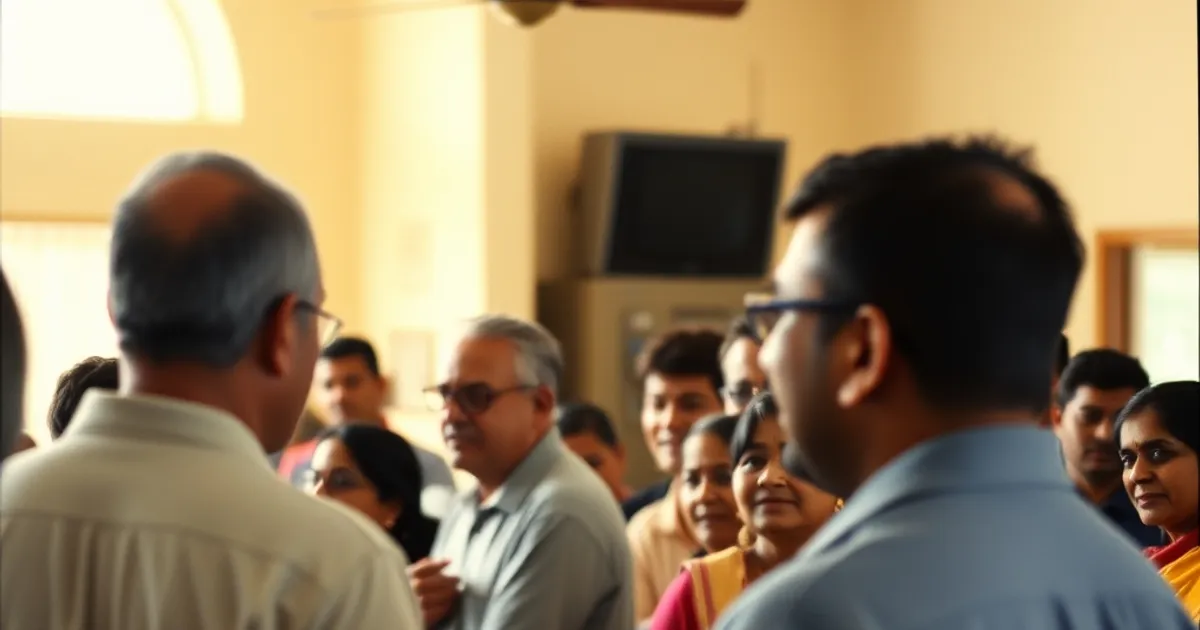
Two incidents in Plano's Indian-origin community drew attention in 2026 — and both made it into community news in ways that reflect the range of what such outlets cover. One incident unfolded in the formal setting of a City Council meeting, where derisive remarks about Hindu beliefs prompted a visible walkout by Indian American attendees who felt their religious traditions had been publicly mocked in front of local government. The other involved a restaurant employee whose conduct in public became a matter of record. Both are covered here plainly.
🤝 Indian Americans Walk Out of Plano City Council After Comedian's Anti-Hindu Mockery
Several Indian Americans walked out of a Plano City Council meeting in protest when conservative comedian Alex Stein made remarks mocking the Hindu tradition of venerating the cow as sacred, American Kahani reported in February 2026. The walkout was a direct, public response to comments that attendees found offensive enough to leave the room rather than sit through — a choice that registered as both a personal decision and a collective statement made in a civic setting.
American Kahani, which covers South Asian American community news, framed the incident under a headline describing it as part of a pattern of anti-Indian sentiment in Texas. The reference to "cow urine" in the article's headline points to a specific practice that holds spiritual significance for some Hindus — one that has in other contexts been invoked to ridicule Hindu religious traditions more broadly and to provoke community members in public settings.
City Council chambers are formal civic spaces where residents expect to engage with local government in an environment of basic mutual respect. The decision by Indian American attendees to leave rather than remain in the room was a public act of protest in a setting ordinarily governed by procedural decorum. American Kahani's reporting positioned the incident within a broader conversation about how Indian Americans in Texas navigate public life, including how they respond when their beliefs or identities are the subject of mockery in official civic settings. The episode was reported at a moment when questions of belonging, representation, and respect for religious traditions remain active ones across the state. [3]
🤝 Indian Restaurant Employee in Texas Faces Public Misconduct Report
An employee of an Indian restaurant in Texas was caught urinating on a public street, The American Bazaar reported in March 2026. The article, written by journalist Zofeen Maqsood and running to approximately four minutes of reading time, indicated that the piece included substantive reporting on the circumstances of the incident and the context in which it came to light and was documented.
The facts are reported plainly here because plain reporting is what the story calls for. A restaurant worker committed a public act of indecency. That it received coverage in a publication aimed at the South Asian American community reflects the outlet's practice of reporting the community's full news picture — including incidents that are difficult or embarrassing, not only those that reflect well on individuals or institutions connected to that community.
The American Bazaar covers a wide range of news relevant to the South Asian American audience, including business affairs, immigration, civic developments, and incidents of this kind. One person's conduct in public does not define the restaurant that employs them, the cuisine they serve, or the broader community they belong to. At the same time, basic civic standards around public conduct apply to everyone regardless of context, and accountability for failing to meet those standards is a straightforward matter of the public record. The incident was witnessed or recorded and was reported factually, without editorial embellishment. Community journalism that accounts for the full picture of what happens — including moments that are unflattering — is more credible than coverage that only tells part of the story. [4]
Sources: [3] American Kahani · [4] The American Bazaar