
Best Indian Temples & Mandirs in Port Louis (2026)
TL;DR 🛕
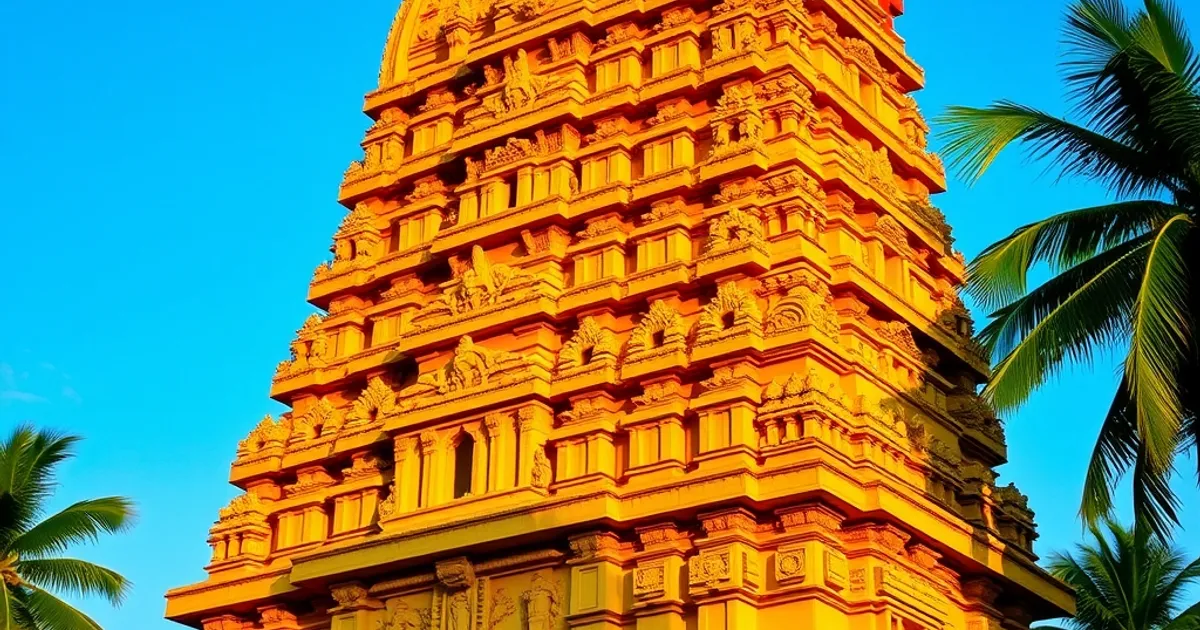
- Port Louis, the capital of Mauritius, hosts some of the most vibrant Indian Hindu temples and mandirs in the entire Indian Ocean region. 🌺
- Sacred spaces like Madurei Mariamen Temple, Shiv Shambav Mandir, and Sri Ranganath Mandir serve the island's large Hindu community with generations of accumulated tradition.
- Each mandir reflects a distinct devotional tradition — Shaiva, Vaishnava, Shakta — giving worshippers and visitors a rare breadth of spiritual architecture in one city.
- Locations span Port Louis from Caudan Square to Bois Cheri Road, covering both the waterfront district and quieter residential neighborhoods. 📍
- This 2026 guide covers ten verified Indian temples and mandirs in Port Louis with confirmed addresses.
Port Louis and Its Indian Spiritual Heritage
Port Louis carries one of the most remarkable concentrations of Indian sacred architecture for a capital city of its size. Mauritius as a whole has one of the highest proportions of people of Indian descent anywhere outside South Asia itself — an estimated sixty percent or more of the island's population traces roots to the subcontinent, with the majority being Hindu. That demographic fact shows up unmistakably in the capital's streetscape, where mandirs appear at the ends of residential lanes, along major boulevards, and inside the city's waterfront district.
The Indian community's presence in Mauritius dates to the nineteenth century, when laborers were brought from South Asia to work the island's sugar estates following the abolition of slavery in the British Empire. Over generations, those communities rebuilt their spiritual lives on Mauritian soil, constructing temples and mandirs that fused South Indian Dravidian architectural traditions, North Indian styles, and the particular character of a small island nation far from the homeland. The result is a sacred cityscape that is distinctively Mauritian while remaining unmistakably Indian in its foundations.
For travelers, for diaspora families returning to Mauritius to reconnect with heritage, and for residents seeking a place to worship, Port Louis's mandir landscape is one of the city's defining features. No visit to the capital is complete without some awareness of these spaces — their histories, their communities, and the extraordinary continuity of devotion they represent.
The Temples and Mandirs: A Guided Survey
Mariamman Devotion: Two Temples, One Goddess
Two related names appear in Port Louis's temple landscape: Madurei Mariamen Temple and Madurai Mariamen Temple, the latter located at Caudan Square. Both are dedicated to Mariamman, the South Indian goddess of rain and healing, whose shrines are among the most fervent sites of Tamil Hindu devotion anywhere in the world. The name variation — Madurei versus Madurai — reflects different transliterations of the Tamil city of Madurai, the location of Mariamman's most famous temple in India.
The Caudan Square address of Madurai Mariamen Temple places it near one of Port Louis's most recognized landmarks: the Caudan Waterfront development, a mixed commercial and cultural district along the harbor. This central location makes the temple accessible to regular worshippers and visitors alike. The kavadi festival and fire-walking ceremonies associated with Mariamman temples are among the most visually striking public religious events in Mauritius, drawing large gatherings of Tamil devotees and observers from every community on the island.
Shaivite Mandirs: The Lord of Transformation
Shiv Shambav Mandir on Forbach Road and Shiv Mandir on Boulevard Maulana Shah Ahmad Noorani Siddiqui both center on Shaivite devotion. The name Shambav — from Shambhu, one of Shiva's names — signals a mandir rooted in a tradition that understands Shiva as the ultimate auspicious reality underlying all existence. Port Louis's Shaivite mandirs draw steady daily worshippers, particularly for Monday morning prayers, which carry special significance in Shiva devotion, as well as large congregations during Mahashivratri.
Mahashivratri in Mauritius is among the most significant religious events in the entire Indian Ocean region. Hundreds of thousands of devotees make a barefoot pilgrimage to Ganga Talao, also called Grand Bassin — a volcanic crater lake in the center of the island considered sacred to Shiva. The Shiv Shambav Mandir and Shiv Mandir communities both participate in the networks that organize this extraordinary annual pilgrimage.
Kalimata Sewa Sangh Mandir: Devotion and Community Service
Kalimata Sewa Sangh Mandir on Palma Road is dedicated to Kali, the goddess of time and transformation, and takes a sewa sangh — service organization — approach that frames the mandir as a community institution as much as a place of individual worship. Kalimata mandirs in Mauritius typically organize food distributions, social support for elderly members, and youth cultural programming alongside their religious calendars, weaving devotion and community welfare together in a way that has characterized Indian temple life on the island since its earliest decades.
Rajput Mundir: Heritage and Identity on Lord Kitchener Street
Rajput Mundir on Lord Kitchener Street is one of the more distinctively named sacred spaces in Port Louis, its name reflecting the Rajput community's historical identity within Mauritius's layered Indian diaspora. Lord Kitchener Street sits in one of Port Louis's older neighborhoods, and the mundir — using the Bhojpuri-inflected spelling — maintains traditions specific to the North Indian communities that settled in this part of the island. The mandir serves as both a place of worship and an anchor of community memory for descendants of Rajput families who built their lives in Mauritius generations ago.
Vaishnavite Tradition: Sri Ranganath Mandir
Sri Ranganath Mandir on Nellatamby Street is dedicated to Ranganatha, a form of Vishnu whose primary shrine in India is Srirangam in Tamil Nadu — one of the largest and most continuously active temple complexes on Earth. The Port Louis mandir serves the Tamil Vaishnava community and observes the major festivals of the Vaishnava calendar, including Vaikunta Ekadasi. The mandir's location on Nellatamby Street places it within an older part of the city where Tamil community life has long been concentrated.
Tulsi Sham Mandir, Sarveshwarnath Mandir, and Swami Malei Tirukkovil
Tulsi Sham Mandir at A1 and Sarveshwarnath Mandir on Bois Cheri Road represent broader worship communities across Port Louis. The name Sarveshwarnath — Lord of All — signals an inclusive understanding of the divine that has characterized certain Indian temple traditions outside the subcontinent, where smaller diaspora community sizes sometimes lead mandirs to welcome worshippers from across sectarian lines.
Swami Malei Tirukkovil on Boulevard Maulana Shah Ahmad Noorani Siddiqui is a Tamil Hindu Murugan temple — a tirukkovil (sacred shrine) dedicated to Murugan, son of Shiva and a beloved deity among Tamil communities worldwide. The Swami Malei name connects this shrine to one of the six principal abodes of Murugan in Tamil Nadu, at Swamimalai near Kumbakonam. Murugan temples in Mauritius are active centers for Thaipusam and Panguni Uthiram, two of the Tamil Hindu calendar's most significant festivals.
Visiting Port Louis Mandirs: What to Know Before You Go
Dress and conduct. All mandirs listed here observe standard Hindu temple etiquette: remove footwear before entering, dress modestly with shoulders and knees covered, and avoid photography inside the inner sanctum unless temple management explicitly permits it.
Festival timing. Major festival dates shift year to year based on the Hindu lunar calendar. Mahashivratri, Diwali, Thaipusam, and Cavadee are the highest-activity periods. Plan visits outside these dates for a quieter experience, or arrange visits around them if witnessing the full ceremonial life of Port Louis's Indian temple communities is your goal.
Language. Tamil, Hindi, Bhojpuri, and Mauritian Creole are all spoken across Port Louis's temple communities. Most mandir caretakers also speak French and English, reflecting the island's multilingual character.
Insider Tip: Friday evenings see elevated activity at most Port Louis mandirs, including the Mariamman temples and Shiv Shambav Mandir. If you want to witness prayers and offerings in full community swing without joining a major festival crowd, a Friday evening visit gives you vibrant devotional ceremony at a manageable and intimate scale.
FAQ
Q: Are non-Hindu visitors welcome at these mandirs? Most Port Louis mandirs welcome respectful visitors of any background during regular darshan hours. Major festival periods may be crowded, but are generally open to observers who conduct themselves with appropriate quiet and respect.
Q: Which is the oldest Indian temple in Port Louis? Several Port Louis temples trace origins to the mid-to-late nineteenth century, though many structures have been rebuilt or significantly expanded over time. Historical specifics vary by community tradition and record-keeping.
Q: Do any of these mandirs offer organized tours or cultural programs? Some mandirs with sewa sangh frameworks offer cultural programming. Contact individual mandirs directly to ask about guided visits, educational programs, or community events.
Q: Is there an organized map or directory of all Port Louis Hindu temples? Mauritius tourism and local Hindu organizations maintain informational resources, though they vary in completeness. This guide focuses specifically on the ten verified locations drawn from current community data.
Bottom Line 🙏
Port Louis's Indian temple landscape is a living record of the diaspora's spiritual resilience across more than a century and a half. From the Mariamman devotion of Madurei Mariamen Temple and Madurai Mariamen Temple at Caudan Square, to the Shaivite communities of Shiv Shambav Mandir and Shiv Mandir, to the Vaishnava traditions of Sri Ranganath Mandir, the Shakta devotion of Kalimata Sewa Sangh Mandir, and the deep communal heritage preserved at Rajput Mundir, the city offers a spiritual itinerary that is genuinely irreplaceable. Visit with respect, engage with curiosity, and you will find communities that have maintained these traditions across six or more generations on Mauritian soil — an extraordinary continuity that no other island in the world quite replicates.