
Janmashtami 2026 in Salt Lake City: Events, Puja & Where to Celebrate
TL;DR
- 🪈 Krishna Janmashtami 2026 falls on September 4 — celebrating Krishna's birth with midnight puja and a day of fasting
- 📅 The Desi calendar in Utah builds toward it through Nag Panchami 2026, Raksha Bandhan 2026, and Ekadashi observances
- 🙏 Fasting on Ekadashi through the summer builds the devotional rhythm for the longer Janmashtami fast
- 🤝 Salt Lake City's Indian community is small but organized, centered around the University of Utah and local temples
- 🎊 Ganesh Chaturthi 2026 arrives just ten days later on September 14, keeping the season full
Salt Lake City is not a place most people associate with South Asian cultural life, but the Indian community here is real, organized, and committed to maintaining its traditions in a setting where the surrounding culture offers little ambient reinforcement. University of Utah students and faculty, tech professionals in the Salt Lake metro, and established Indian families make up a population that observes the Hindu calendar with care — partly because doing so here requires intention, not just proximity to a large community.
Krishna Janmashtami 2026 on September 4 is perhaps the festival most shaped by that intentionality. The birth of Lord Krishna, celebrated at midnight with fasting, prayer, and devotional music, demands focused effort — and Utah's Desi community brings that effort in a way that sometimes surprises people who assume smaller communities can only manage smaller celebrations.
The Story Behind Janmashtami
Krishna's birth is one of the most dramatic narratives in Hindu tradition. The deity was born at midnight in a prison cell in Mathura, to Devaki and Vasudeva, under the reign of the tyrant Kansa — Devaki's own brother — who had imprisoned the couple after a prophecy told him Devaki's eighth child would bring his end. The prison doors opened miraculously at the moment of Krishna's birth, and Vasudeva carried the infant through the flooded Yamuna river to the safety of Gokula, where Krishna was raised by the cowherd parents Yashoda and Nanda.
The story carries themes of divine protection, the overthrow of tyranny, devotion under constraint, and the relationship between deity and devotee. For Indian families in Salt Lake City, the resonance of a figure born in difficult circumstances, raised far from his original home, who becomes the source of great wisdom and joy, is not a coincidence that goes unspoken.
Observances and Rituals on September 4
The traditional Janmashtami fast begins at sunrise on September 4 and is broken after the midnight puja — or after moonrise, depending on family tradition. The fast typically excludes grains and common vegetables; fruits, milk, sabudana (tapioca), and designated vrat foods are permitted. Some families observe a full nirjala (waterless) fast until midnight; others follow a more relaxed protocol, particularly for children and elderly family members.
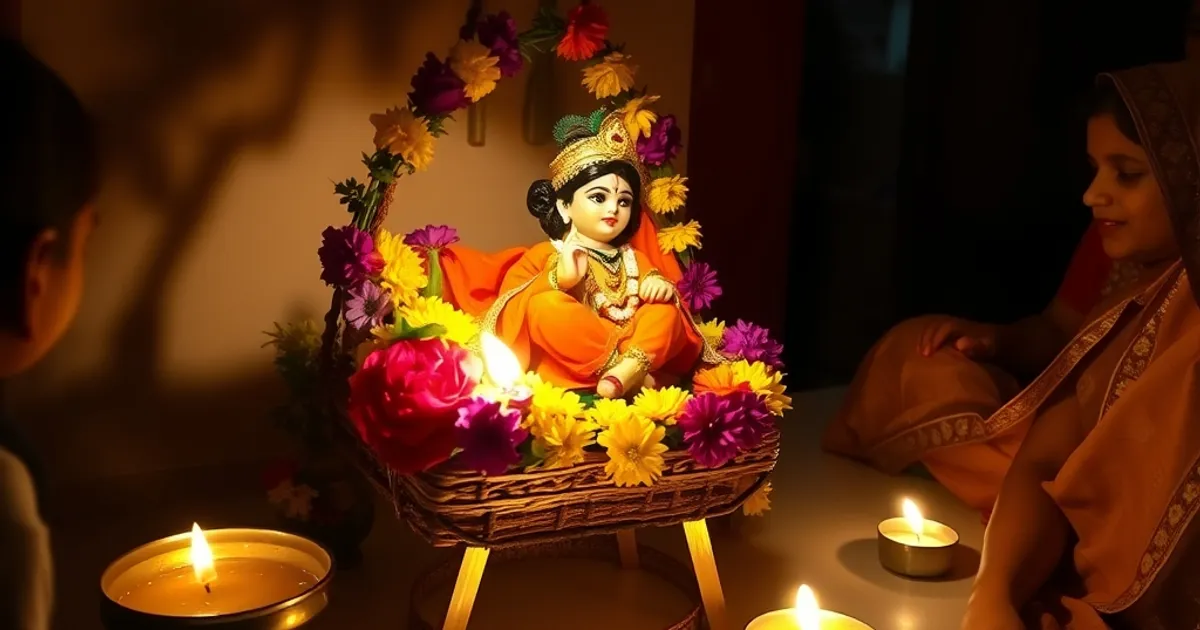
The midnight ceremony is the center of everything. A decorated cradle is prepared for the image or murti of infant Krishna. At the midnight hour, the birth moment is marked: the cradle is rocked, bells ring, and devotional songs fill the space. Sweets — particularly butter or makhan, Krishna's legendary favorite — are offered. Panchamrit abhishekam, the bathing of the deity with milk, curd, honey, ghee, and sugar, is performed in many households and at temple observances.
Dahi Handi — the community reenactment of cowherd companions forming human pyramids to reach a hanging pot of butter — is a popular Janmashtami event, though its scale depends on the number of participants available. In Salt Lake City, Dahi Handi tends to be a temple or cultural association program rather than the large outdoor spectacle seen in major Indian cities, but the energy it generates is genuine.
The Calendar That Leads Here
Ekadashi, the eleventh lunar day, falls multiple times in the weeks leading up to Janmashtami: on July 24, August 8, and August 23. Each Ekadashi fast builds what might be called devotional stamina — the practice of eating lightly, setting aside routine concerns, and spending time in prayer or reflection. Families who maintain Ekadashi through the summer often find the longer Janmashtami fast on September 4 more manageable and more meaningful because they have been practicing the rhythm.
Nag Panchami 2026 arrives on August 16, marking the fifth day of Shravana — the month considered most sacred in the Hindu calendar for these observances. Nag Panchami involves prayers and milk offerings to serpent deities; in the agricultural tradition it is associated with protection during monsoon season, though in diaspora contexts it is observed primarily as a puja of protection and propitiation, a day to honor the forces of nature.
Raksha Bandhan 2026 on August 27 then serves as a milestone between Nag Panchami and Janmashtami. For Salt Lake City's Indian families, Raksha Bandhan is often a low-key, intimate home celebration — siblings tie rakhi, exchange sweets, and connect by video call with family across the country. The festival's personal scale suits a smaller community well.
Insider Tip: Salt Lake City's Hindu community organizes Janmashtami programs through local temple and cultural associations — the exact schedule varies year to year, so reach out to the Utah Hindu Mandal or similar organizations at least three weeks before September 4. Community programs here tend to fill up faster than their size suggests, and some require advance registration.
Celebrating Without a Large Community
This is the practical heart of Janmashtami for many Utah Desi families: you may not have dozens of Indian families on your block who observe the same calendar. You may be the only Indian household in your neighborhood. This reality does not diminish the festival — it asks something more from you, and many families find that the added effort deepens the meaning.
A home Janmashtami can be complete and moving: a decorated puja space with a small cradle and a Krishna murti or framed image, a day of fasting, an evening of bhajans through a speaker, a midnight moment with the family gathered, and a prasad meal afterward. Children remember these nights. The intimacy of a home celebration, when done with care, can be more resonant than a crowded event where the details are managed by someone else.
For connection beyond the household, the University of Utah's Indian student associations sometimes organize Janmashtami events open to the wider community. Live-streamed temple pujas and bhajan sessions from major Hindu centers in Houston, Dallas, and the Bay Area are a meaningful resource for smaller diaspora communities that want the experience of a larger gathering without the geography.
What Comes Next: Ganesh Chaturthi 2026
Ganesh Chaturthi 2026 falls on September 14, just ten days after Krishna Janmashtami 2026. The festival marks Ganesha's birth and traditionally spans ten days, culminating in a procession and immersion of the murti. For Salt Lake City's Indian community, Ganesh Chaturthi is typically a single community-gathering puja organized through a temple or cultural association — more compact than in Maharashtra, but the arrival of the Ganesha murti, the offerings of modak, and the spirit of auspicious beginnings that the festival carries are all present.
The ten-day window between Janmashtami and Ganesh Chaturthi is a natural moment for families to reflect on the season, plan their observances, and reach out to the local Indian community if they have not done so already.
FAQ
Does the Janmashtami fast have to last until midnight? Traditional practice calls for breaking the fast after the midnight puja. Families with health considerations or young children often break it at moonrise or after completing the ceremony, regardless of the exact hour.
Is there a community Janmashtami event in Salt Lake City? Typically yes, organized through the local Hindu community temple or Indian cultural association. Contact the Utah Hindu Mandal or similar organizations for 2026 specifics, as schedules are confirmed closer to the date.
How does Dahi Handi work for a smaller community? At smaller scale, Dahi Handi becomes a symbolic activity rather than a competitive athletic event — a clay pot filled with sweets is broken by children or young adults as part of the evening's celebration. It does not require a large crowd to be joyful.
Are Krishna Janmashtami 2026 and Ganesh Chaturthi 2026 on the same day? No. Krishna Janmashtami 2026 is September 4 and Ganesh Chaturthi 2026 is September 14 — ten days apart, giving families time to prepare for each separately.
Bottom Line
Salt Lake City's Indian community observes Janmashtami the way smaller diaspora communities often do: with more personal investment and deliberate preparation than larger metros, and with a depth that comes from that effort. Krishna Janmashtami 2026 on September 4 arrives after a summer anchored by Ekadashi observances on July 24, August 8, and August 23, Nag Panchami 2026 on August 16, and Raksha Bandhan 2026 on August 27. What follows — Ganesh Chaturthi 2026 on September 14 — carries the calendar into autumn. For Utah's Desi families, this season is full.