
Desi Concerts & Cultural Shows Coming to Stamford
TL;DR
- Stamford's Desi community has a lively cultural calendar from late July through mid-August 2026 🎶
- Guru Purnima 2026 (July 29) opens the season with music recitals, dance tributes, and guru appreciation programs
- Krishna Janmaashtami on August 14 is the season's biggest community cultural production — bhajans, Raas-Leela, dahi handi
- Nag Panchami 2026 (August 17) brings regional folk traditions and storytelling from across the Indian subcontinent
- Connecticut's South Asian population is large and active — these programs draw families from across the region 🌟
How the Festival Calendar Becomes a Cultural Season
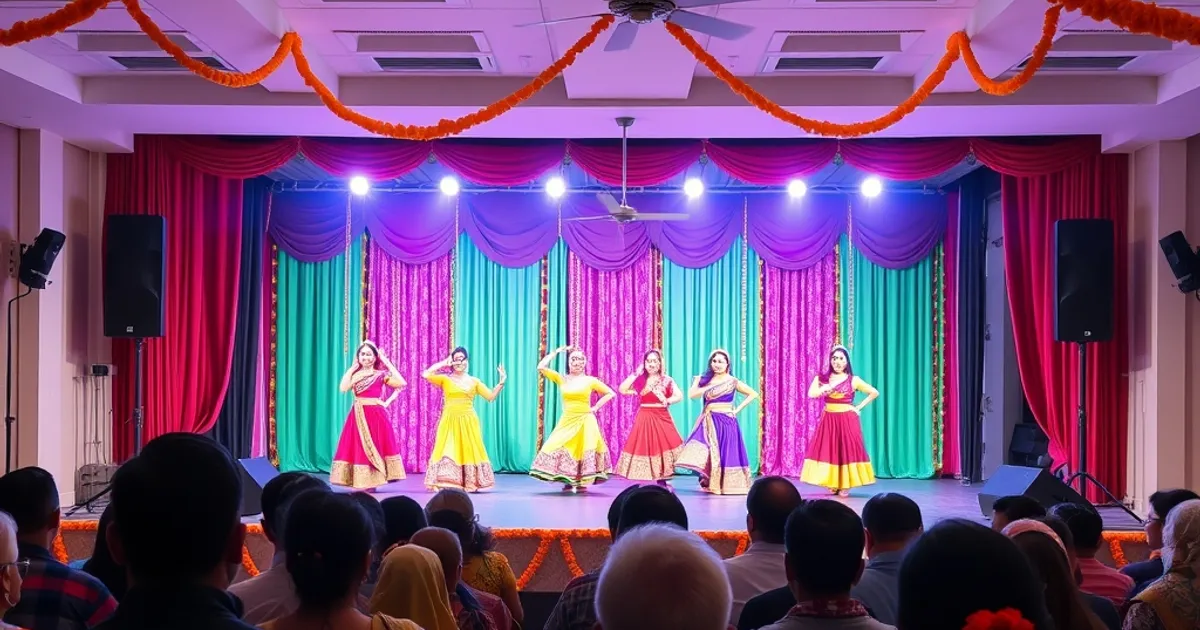
Stamford's South Asian diaspora has turned the Hindu festival calendar into something that functions like a proper cultural season. Each major observance anchors a community program: bhajan concerts for Janmashtami, student recitals for Guru Purnima, folk performances for Nag Panchami. The calendar doesn't just mark time — it generates programming.
For Desi families in Stamford who want cultural experiences for themselves and their children, this is the season to pay attention to. The six weeks from late July to mid-August 2026 pack in Guru Purnima 2026, Krishna Janmaashtami, and Nag Panchami 2026, with a supporting cast of Pradosh Vrat, Sankashti Chaturthi, Ekadashi, and Amavasya filling the intervals. Each of the smaller observances has its own quiet ritual life; the big three are the headline shows.
What makes Stamford's Desi cultural scene interesting is the density of the Connecticut South Asian population. There are multiple Hindu temples within the area, cultural associations representing Gujarati, Marathi, Bengali, Tamil, and other communities, and enough critical mass to support full-scale community productions for major festivals. Families drive in from Greenwich, Norwalk, and Bridgeport for the larger programs.
Guru Purnima 2026: The Season Opener 🎵
The full moon of July 29 carries two observances this year: Purnima itself, and Guru Purnima 2026 — the day dedicated to honoring teachers and spiritual guides. In Stamford's Desi community, this day functions as the opening night of the cultural season.
The range of programs is wide. Music schools and dance academies run student recitals and guru tributes. Yoga studios hold special morning sessions with dedications to the tradition's lineage. Spiritual centers organize satsangs and discourses. For children enrolled in Bharatanatyam, Carnatic vocal, Kathak, or tabla, their teacher's Guru Purnima program may be the year's most significant public performance — the day when students formally honor the guru-shishya relationship that underlies classical Indian arts.
Even for families not formally enrolled in a class, Guru Purnima is worth attending. These programs are typically welcoming to the broader community and offer a window into the classical traditions that form the backbone of Desi high culture.
The fortnight also opens with Pradosh Vrat on July 26 and July 27 — the bi-monthly Shiva fast that sets a devotional tone before the full moon arrives.
Insider Tip: Guru Purnima programs at Stamford-area dance and music schools rarely have public ticketing — they run on personal invitations and community word-of-mouth. If your child or a family friend studies classical Indian arts locally, reach out to the teacher 7–10 days before July 29. For temple-based programs, most are open to all and announced on temple notice boards and community WhatsApp groups a week in advance.
August: From Quiet Observances to Full Cultural Productions 🥁
August's early calendar — Sankashti Chaturthi on August 2, Ekadashi on August 8, Pradosh Vrat on August 10, and Amavasya on August 12 — forms a devotional scaffolding that practicing Hindu families observe at home or at local temples. These are not large public events, but they anchor the ritual rhythm of the month and prepare the community for the major celebrations ahead.
The first of those arrives on August 14: Krishna Janmaashtami.
Desi cultural organizations in Stamford treat Janmaashtami as a full theatrical production. Evening programs begin around 7–8 PM and run until well past midnight. The format typically includes an opening bhajan concert with community participation, dramatic presentations of Krishna's stories from the Bhagavata Purana — the butter thief, the Kaliya subduing, the Govardhan episode — and a dahi handi competition where teams form human pyramids to break a suspended clay pot. The midnight arti, marking the moment of Krishna's birth, is the emotional crescendo of the evening.
For younger children, many Stamford-area Desi organizations run an early children's segment from 6–9 PM with costume competitions, storytelling, and a child-friendly puja so families with young kids can participate fully before bringing them home to sleep. Older children and teenagers often stay through midnight, and the experience of the midnight kirtan — the community singing together in a room lit by diyas — is one that stays with them.
Nag Panchami 2026: Folk Culture at the Fore 🎭
Three days after Janmaashtami, Nag Panchami 2026 on August 17 brings an entirely different cultural register.
Where Janmaashtami is devotional theater at scale, Nag Panchami is rooted in folk tradition. The worship of serpent deities — associated with protection, rain, fertility, and the natural world — draws on traditions specific to Maharashtra, Karnataka, Goa, Andhra Pradesh, and other states. In Stamford, where the South Asian community spans this full regional diversity, Nag Panchami sometimes becomes an occasion for regional cultural showcases: folk songs, traditional dance forms that don't often appear on stage, and regional cuisine that rarely features in mainstream Desi events.
For families from these regions living in Stamford, this is often a rare opportunity to see their specific cultural heritage performed and celebrated rather than subsumed into a pan-Indian narrative. For families from other regions, it's an education in the breadth of the subcontinent's folk traditions. The stories associated with Nag Panchami — including the tale of Manasa Devi and various regional nag legends — are deeply compelling for children.
Cultural associations and regional community groups are the best sources for Nag Panchami programming. Check with Marathi Mandal, Karnataka Sangha, and Telugu association listings in the weeks before August 17.
FAQ
When is Krishna Janmaashtami in Stamford in 2026? Krishna Janmaashtami falls on August 14 in the Stamford-area events calendar. Note that the national date can vary by a day depending on regional tradition; confirm with your local temple or cultural organization.
What is Guru Purnima 2026? Guru Purnima 2026 is on July 29. It is the full moon day dedicated to honoring teachers and spiritual gurus, typically marked with music recitals, dance performances, and student tributes.
What is Nag Panchami 2026? Nag Panchami 2026 is on August 17. It is a traditional festival venerating serpent deities, rooted in folk traditions from several Indian regions including Maharashtra, Karnataka, and Andhra Pradesh.
What is Sankashti Chaturthi? Sankashti Chaturthi on August 2 is a monthly fasting day for Lord Ganesha, observed on the fourth day of the waning lunar fortnight with fasting until moonrise and special Ganesha puja.
What is Amavasya? Amavasya on August 12 is the new moon day, traditionally observed as a time for remembering and honoring ancestors through prayer offerings.
How can Desi families in Stamford find specific event listings? Local Hindu temples, Indian cultural associations, and Desi community groups on social platforms are the most reliable sources. Most programs are announced 1–3 weeks before each major festival date.
Bottom Line
Stamford's South Asian community runs a genuine cultural season in the weeks spanning late July to mid-August 2026. The programming arc moves from Guru Purnima 2026's intimate teacher tributes and recitals, through the full theatrical scale of Krishna Janmaashtami, to the regional folk richness of Nag Panchami 2026. In between, the regular observances of Pradosh Vrat, Sankashti Chaturthi, Ekadashi, and Amavasya keep the devotional rhythm steady. For Desi families in Stamford looking for meaningful cultural programming this summer, the calendar is already set — the performances are the festivals themselves.