
Janmashtami 2026 in Ahmedabad: Events, Puja & Where to Celebrate
Janmashtami 2026 in Ahmedabad: Events, Puja & Where to Celebrate
TL;DR
- 🪔 Janmashtami 2026 falls on September 4 — Krishna's midnight birthday is one of the most widely and intensely observed festivals in Ahmedabad
- BAPS Swaminarayan temples across the city host elaborate multi-hour celebrations including night-long kirtan and the midnight arti
- Hare Krishna Mandir, Bhadaj, near Science City runs some of the most devotion-intensive Janmashtami programming in Ahmedabad
- 🙏 Shree Swaminarayan Mandir Kalupur transforms on this night, drawing enormous crowds for the midnight ceremony
- Dahi handi events run parallel to temple celebrations and bring a community street-festival energy to the holiday across neighborhoods
Janmashtami marks the birthday of Lord Krishna, observed on the eighth day of the dark fortnight of Bhadrapada in the Hindu calendar. In 2026, that date falls on September 4. Ahmedabad observes this festival with a citywide intensity that reflects the depth of Vaishnava tradition here — the city has a dense temple network, a long cultural relationship with Krishna bhakti, and communities that treat the midnight hour of Janmashtami as one of the year's most significant spiritual moments. Celebrations run on two parallel tracks: the temple circuit, which anchors the devotional observation with puja, kirtan, and the midnight abhishek; and the street celebration, which centers on dahi handi programs in neighborhoods across the city. Both are worth understanding if you plan to participate in Ahmedabad's Janmashtami in 2026.
The Temple Circuit: Where to Go for the Midnight Puja
The Swaminarayan tradition has the deepest roots in Ahmedabad's Janmashtami landscape, with multiple major temples spread across the city.
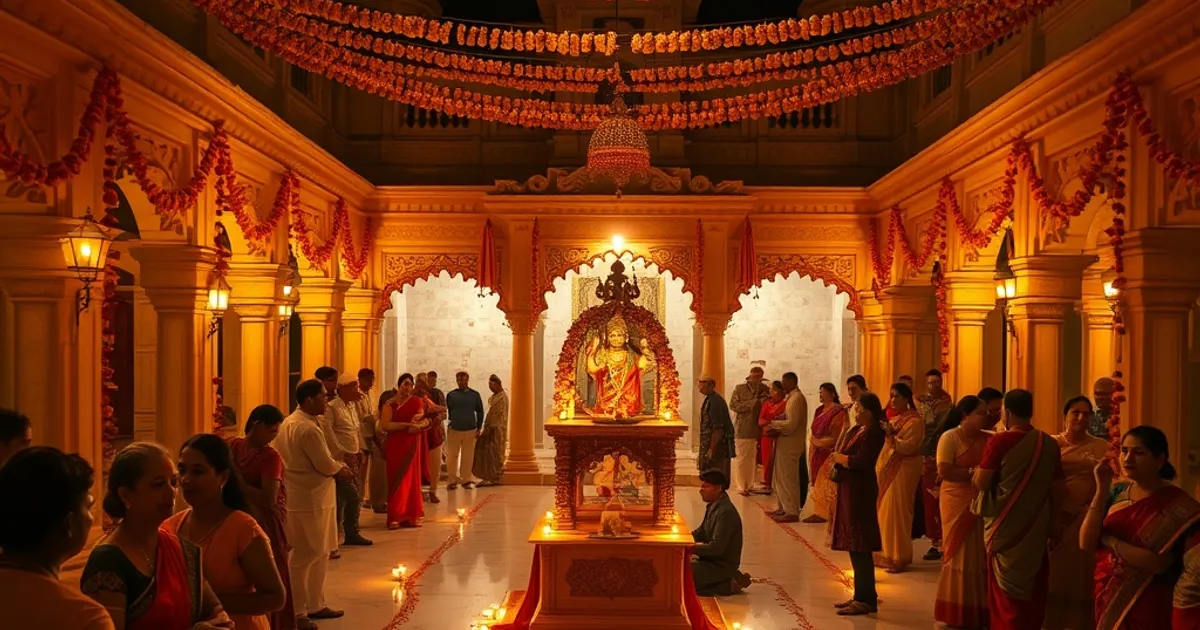
Shree Swaminarayan Mandir Kalupur, on Swaminarayan Mandir Road, is one of the oldest and most prominent sites for Janmashtami in the city. The Kalupur complex — often referenced as Kalupur Swaminarayan Mandir — is the heritage center of the Swaminarayan Sampraday in Ahmedabad, and its Janmashtami program historically draws enormous crowds for the midnight ceremony. The temple illuminates for the occasion, kirtan fills the complex from early evening, and the devotional atmosphere builds steadily before reaching its climax at the midnight moment of Krishna's birth. This is the address most associated with major Vaishnava festivals at city scale in Ahmedabad.
BAPS Swaminarayan Temple, Bopal and BAPS Swaminarayan Temple Paldi (located in Dutt Society, Bhattha) represent the BAPS Swaminarayan Sanstha's Janmashtami presence. BAPS temples are known for organized, visually elaborate celebrations — detailed floral and decorative arrangements, precisely structured arti programs, and an overnight devotional program that makes the vigil both spiritually concentrated and accessible to families. Mansi BAPS Swaminarayan Temple adds another node to this network. Together, the BAPS locations cover the western and southern zones of Ahmedabad, so devotees in Bopal and Paldi can participate at a major temple without traveling to the city center.
Hare Krishna Mandir, Bhadaj, located at Hare Krishna Mandir, Bhadaj, near Science City, Ahmedabad 380060, runs one of the most prominent and internationally recognized Janmashtami programs in the city. ISKCON temples have a distinctive Janmashtami character: preparations begin from the morning of the festival, kirtan is nearly continuous through the day and evening, and the midnight abhishek — the ceremonial bathing of the deity — is a major moment accompanied by ecstatic devotional singing and celebration. The temple tends to be particularly welcoming to first-time visitors and families, with clear programming that makes it easier to participate even without prior knowledge of the rituals.
Shree Bhagwat Vidhyapith brings a scholarly and devotional dimension to Ahmedabad's Janmashtami observance. As an institution grounded in Vaishnava scripture and learning, its programs integrate recitation and discourse alongside the kirtan and puja that are standard across the city's temples.
Visa Hanuman, located in Desai ni pol, Khadia, sits within one of Ahmedabad's most atmospherically active old-city neighborhoods for Janmashtami. The pol areas of Khadia observe the festival with the texture of heritage neighborhoods: street decorations that cover the entire mohalla, decorated jhulas (cradles) for the child Krishna set up at crossroads and community spaces, and dahi handi organized at the local level. Even without a formal large-scale temple program, the experience of walking through Khadia on Janmashtami evening carries a celebratory weight that is distinct from the organized temple circuit.
Dahi Handi: The Street Dimension
Dahi handi gives Janmashtami its outdoor, competitive, street-level energy. The ceremony involves suspending a clay pot filled with curd and butter at height — sometimes several stories above a street — and forming human pyramid formations called govinda mandals to climb up and break it. The ritual re-enacts the story of young Krishna stealing butter, and in Ahmedabad it runs as a neighborhood competition across localities on September 4 and sometimes continuing into the morning of September 5.
Housing society compounds, pol-area crossroads, commercial zones, and cultural organizations all host their own programs. The competition aspect — teams forming pyramids, the crowd watching, the eventual break — makes dahi handi an event that draws participation even from people who are not observing the religious fast. In localities like Khadia and across the western suburbs, these programs run in the afternoon and evening before the main temple midnight ceremonies.
Planning Your September 4 in Ahmedabad
September 4, 2026 falls on a Friday. The fast that observant devotees maintain through the day ends with the midnight puja. Temple programs build through the evening and peak between approximately 11:30 p.m. and 12:30 a.m. For the larger temples — Kalupur Swaminarayan Mandir, the BAPS centers, and Hare Krishna Mandir, Bhadaj — arriving by 9:30 or 10:00 p.m. is the practical approach; by the midnight hour, these spaces fill entirely.
For those who want to experience both the street festival and the devotional temple atmosphere, Khadia's pol neighborhoods offer both within walking distance of each other. The area around Visa Hanuman in Desai ni pol carries a festive street atmosphere through the evening well before formal midnight programs begin.
Insider Tip
Insider Tip: At Hare Krishna Mandir, Bhadaj, the hour immediately before midnight is when the temple fills fastest. If your primary goal is the midnight abhishek ceremony, arrive by 10:30 p.m. and take a position in the main hall. Arriving after 11:30 p.m. typically means watching from corridors or overflow screens. The prasad distribution following the midnight ceremony is substantial and open to all; staying for it is worth the extra time.
FAQ
Q: When is Janmashtami 2026? Janmashtami 2026 falls on September 4, 2026.
Q: Which temple has the biggest Janmashtami celebration in Ahmedabad? Shree Swaminarayan Mandir Kalupur and the BAPS Swaminarayan Temple network are among the largest in terms of attendance. Hare Krishna Mandir, Bhadaj, is widely recognized for its intensive devotional programming.
Q: What time does the main Janmashtami puja happen? The central puja and arti mark the midnight hour of Krishna's birth, typically between 11:30 p.m. and 12:30 a.m.
Q: Are Janmashtami programs open to all visitors? Yes. All the temples listed — BAPS centers, Kalupur Swaminarayan Mandir, and Hare Krishna Mandir, Bhadaj — are open to visitors regardless of background.
Q: What is dahi handi and when does it happen in Ahmedabad? Dahi handi is the competitive pot-breaking ceremony enacting Krishna's love of butter. In Ahmedabad it typically takes place in the afternoon and evening of September 4 across various localities and housing societies.
Q: How should I get to Kalupur Swaminarayan Mandir on Janmashtami? Kalupur is a dense old-city area, and on Janmashtami night vehicle access becomes impractical. Arriving by public transit or parking away from the mandir and walking is the standard approach for most visitors.
Bottom Line
Janmashtami 2026 on September 4 unfolds across Ahmedabad on multiple levels simultaneously. The temple circuit — Shree Swaminarayan Mandir Kalupur, BAPS Swaminarayan Temple Bopal and Paldi, Hare Krishna Mandir near Science City, and Shree Bhagwat Vidhyapith — carries the devotional weight of the night. The street dimension runs through dahi handi programs and the decorated pol neighborhoods of the old city, particularly around Visa Hanuman in Khadia. The city does not confine Janmashtami to a single venue or a single tradition; it disperses the celebration through every neighborhood, every mandir, every mohalla. Pick your anchor, arrive before the midnight rush, and the rest follows.