
Ganesh Chaturthi 2026 in Bhopal: Events, Puja & Where to Celebrate
TL;DR
- Ganesh Chaturthi 2026 falls on August 22, launching a 10-day city-wide celebration across Bhopal 🪔
- Lead-up observances begin in late July with Ekadashi, Pradosh Vrat, and Guru Purnima 2026
- Grand pandals go up across the city — Upper Lake Road, TT Nagar, and Arera Colony are key zones
- Visarjan processions reach their peak on Anant Chaturdashi (September 1) with immersion in local water bodies
- Modak, laddoo, and puranpoli are the must-try prasad offerings throughout the celebrations
Why Ganesh Chaturthi Matters in Bhopal
Bhopal, the capital of Madhya Pradesh, takes Ganesh Chaturthi seriously. What began as a largely Maharashtra-centric festival has, over decades, grown into one of the most anticipated public events on the Bhopal calendar. The ten days from August 22 to September 1 see the city transform: streets fill with processions, neighborhoods compete for the most elaborate pandal, and the air carries the scent of incense and fresh marigolds from dawn to midnight.
The festival celebrates the birth of Lord Ganesha, the elephant-headed deity revered as the remover of obstacles and the lord of new beginnings. His arrival in homes and pandals signals a time for prayers, community gatherings, and acts of generosity. For Bhopal, this is not just a religious occasion — it is a collective expression of civic identity that draws participation from every corner of the city.
The Ritual Calendar: From July Observances to the Big Day
The countdown to Ganesh Chaturthi starts well before August 22. The lunar calendar offers several auspicious observances in July that set the devotional mood for the season.
Ekadashi (July 25) opens the sequence. This eleventh lunar day is kept as a day of fasting and devotion by thousands of households across Bhopal. Temples see heightened footfall, and many families begin planning their Ganesha idol purchases around this time. The Ekadashi fast — no grains, focused prayer, a day of quiet discipline — is considered one of the best preparations for a festival season.
Two days later, Pradosh Vrat (July 27) arrives. This twilight fast dedicated to Lord Shiva is observed in the hour around sunset with special lamps, milk offerings, and chanting sessions that run into the night. Pradosh Vrat belongs to the monthly rhythm of the Hindu calendar and takes on added significance when it falls in the weeks preceding a major festival.
Guru Purnima 2026 (July 29) marks one of the holiest full-moon days of the year. Dedicated to honoring spiritual teachers, it draws crowds to temples and ashrams throughout Bhopal. The day is marked with special aartis, discourses, and the distribution of prasad. Many families use Guru Purnima 2026 as an occasion to seek blessings for the festival season ahead — visiting their pandit, their music teacher, or their family guru.
Sankashti Chaturthi (August 2) is the monthly fast specifically dedicated to Ganesha, observed on the fourth day after each full moon. The Sankashti Chaturthi falling in early August is particularly auspicious in the run-up to Ganesh Chaturthi. Devotees keep a full day's fast and break it only after sighting the moon and completing prayers to Ganesha at dusk. This observance, so close to the main festival, functions as a warm-up devotion.
By the time Ganesh Chaturthi (August 22) arrives, the mood in Bhopal is already charged. The installation of the clay idol — Ganesh sthapna — takes place in the morning with full ritual: a prana pratishtha ceremony, a welcome coconut, and the first aarti. From that moment, the deity is considered present and living in the home or pandal for the duration of the festival.
Pandals, Processions, and the Spirit of the City
Bhopal's Ganesh Chaturthi unfolds across two registers: the intimate home puja and the spectacular public pandal.
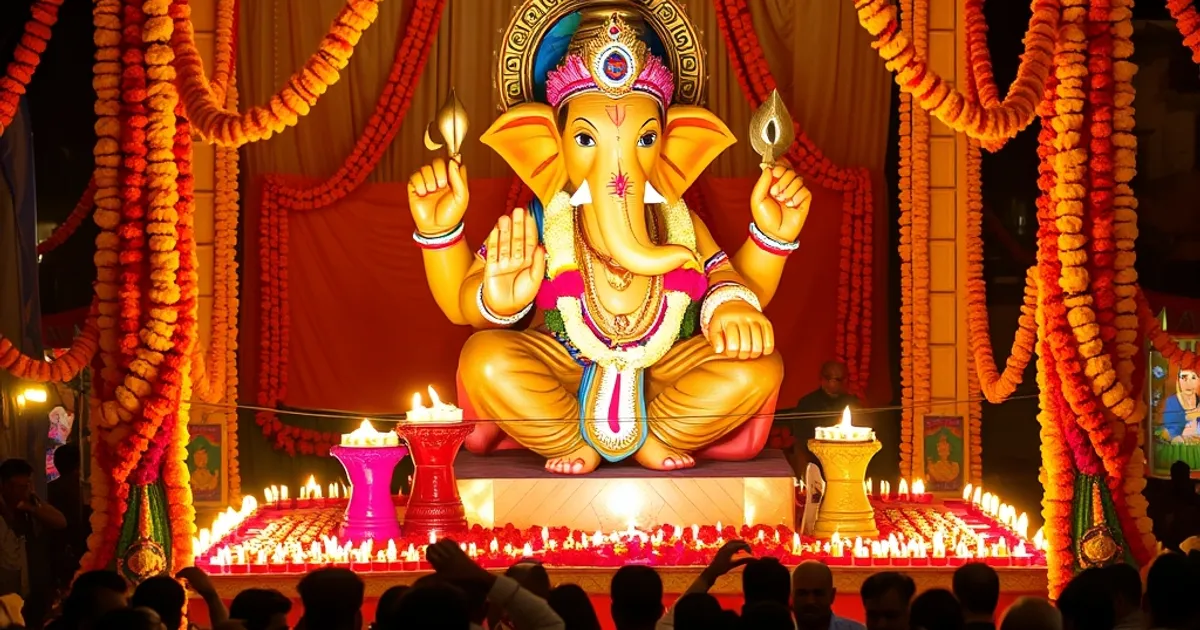
At the neighborhood level, cooperative societies and youth clubs begin constructing pandals weeks in advance. These are not simple tents — many feature elaborate themes, from recreations of famous temples to social messages rendered in plaster and paint. Upper Lake Road, New Market, Arera Colony, and Bairagarh are among the neighborhoods known for particularly well-attended installations.
The idol itself is traditionally made from Shadu clay — a practice that matters enormously for the visarjan that ends the festival. Eco-conscious mandals in Bhopal have been pushing toward natural clay idols and natural pigments to reduce the chemical load on the city's water bodies, including the iconic Upper Lake (Bada Talab). If you are choosing an idol for home worship, the clay option is both traditional and environmentally responsible.
Each day of the ten-day period has its own character. The first two days after installation are marked by morning and evening aartis, with family and friends visiting to offer coconuts and flowers. Mid-festival days are the social peak — processions of devotees move between major pandals, stopping for darshan and prasad. The sound of dhols and shehnais carries through the evenings well past midnight.
Insider Tip: Visit the larger Bhopal pandals between 7 PM and 9 PM, when the decorative lighting is fully on and the crowd energy is highest. Arriving after 10 PM means longer queues for darshan and limited prasad at most locations.
Prasad, Food, and Tradition
No Ganesh Chaturthi is complete without modak. The sweet steamed dumpling filled with jaggery and coconut is Ganesha's preferred offering, and most households prepare a batch on the first day of the festival. In Bhopal, local halwais and sweet shops produce modak in volume during the festival window — both the traditional ukadiche modak (steamed) and the fried variety.
Laddoo, particularly besan or boondi laddoo, is the other prasad staple. Families distribute boxes to neighbors and visitors as a gesture of goodwill. Puranpoli — a flatbread stuffed with sweet dal — also appears on festive platters in many households with roots in Maharashtra and beyond.
Fasting is common on the first and last days of the festival. The standard vrat thali includes sabudana khichdi, fresh fruit, and peanuts. Most temples in Bhopal offer communal prasad during the ten days, with quantities getting particularly generous as visarjan approaches.
Anant Chaturdashi and the Visarjan
The emotional climax of the festival arrives on Anant Chaturdashi — September 1, 2026. On this fourteenth lunar day, idols are carried out in procession for immersion in water. In Bhopal, the main visarjan route runs toward Upper Lake and Motia Talab. The processions begin in the evening and continue past midnight, with devotees singing bhajans and dancing through the streets.
Saying farewell to Lord Ganesha — "Ganpati Bappa Morya, Purchya Varshi Laukar Ya" (come again next year, quickly) — is a moment of joy and genuine emotion in equal measure. Children who have spent ten days performing daily aarti often find it the most affecting part of the entire festival.
FAQ
When is Ganesh Chaturthi 2026 in Bhopal? Ganesh Chaturthi falls on August 22, 2026. The festival runs for ten days, concluding with Anant Chaturdashi on September 1, 2026.
When does Sankashti Chaturthi fall before the festival? Sankashti Chaturthi falls on August 2, 2026, about three weeks before Ganesh Chaturthi. It is a Ganesha-specific fast day and a natural point of preparation.
What is the significance of Guru Purnima 2026 in the festival calendar? Guru Purnima 2026 (July 29) is a major full-moon observance honoring spiritual teachers. Many families seek blessings from pandits and gurus on this day as the festival season begins.
What type of idol should I buy for home worship? Clay idols made with natural pigments are the most traditional and environmentally preferable option. Avoid plaster-of-Paris idols if you plan to immerse them in local water bodies such as Upper Lake.
Can visitors participate in Bhopal's celebrations? Pandals are open to all. Visitors are welcome to observe aartis, receive prasad, and join processions. Modest dress is appreciated at temple premises.
Bottom Line
Ganesh Chaturthi in Bhopal is one of the city's great communal events. Whether you observe from your home puja room or join thousands at a neighborhood pandal, the ten days from August 22 to September 1 offer a complete experience of devotion, community, and tradition. Mark Ekadashi on July 25 and Pradosh Vrat on July 27 in your calendar for early preparation, honor Guru Purnima 2026 on July 29, observe Sankashti Chaturthi on August 2, and have your modak ready by Ganesh Chaturthi on August 22. Ganpati Bappa Morya! 🙏