
Janmashtami 2026 in Bhopal: Events, Puja & Where to Celebrate
TL;DR
- 🕛 Janmashtami 2026 centers on the midnight hour — the exact moment of Lord Krishna's birth, when the puja reaches its emotional peak
- 📿 Ashtami tithi and Rohini Nakshatra together create the auspicious alignment that defines authentic Janmashtami observance
- 🎨 Bhopal's temple celebrations are among Madhya Pradesh's most vibrant — expect dahi handi, jhankis, and raat bhar kirtan
- 🌙 Ekadashi on July 25 and Pradosh Vrat on July 27 set the devotional tone in the days leading up to the main celebration
- 🪷 Nag Panchami 2026 on August 17 follows shortly after, marking a busy and spiritually rich season in Bhopal
Few festivals stir Bhopal the way Janmashtami does. The city — with its blend of temple culture, lakeside ghats, and deeply observant neighborhoods — transforms in the days leading up to Krishna's birth. From Khatlapura to Arera Colony, from the lanes near Birla Mandir to the crowded bylanes of the old city, preparation begins well before the actual night.
This guide walks through everything Bhopalites need to know about Janmashtami 2026: the panchang alignment, the puja setup, the night-long experience, and the broader festival season surrounding it.
The Panchang: Ashtami, Rohini Nakshatra, and Why Timing Matters 📅
Janmashtami is not just a calendar date — it is defined by the precise confluence of two panchang elements: Ashtami tithi (the eighth day of the Krishna Paksha in the month of Bhadrapada) and Rohini Nakshatra. When both align, the celebration carries its fullest spiritual significance. Many families and temples in Bhopal check the panchang carefully each year to confirm whether Janmashtami 2026 falls with Rohini Nakshatra fully in force, or whether the two are split across days, requiring a judgment call on when to observe the main puja.
In the days before the main celebration, the Hindu calendar holds important observances that set the devotional mood. Ekadashi on July 25, 2026 is a fasting day associated with Lord Vishnu — particularly meaningful in the lead-up to a Vaishnava festival like Janmashtami. Pradosh Vrat on July 27, 2026 is dedicated to Lord Shiva and widely kept across Bhopal regardless of sectarian preference. Then Purnima on July 29, 2026 (also Guru Purnima 2026) brings the full moon, with many families performing special prayers and visiting their teachers or spiritual mentors. Sankashti Chaturthi on August 2, 2026 closes this pre-Janmashtami period with Ganesha puja.
Together, these observances make late July and early August a season of sustained devotion across the city.
How Bhopal Celebrates: Temples, Dahi Handi, and Night-Long Kirtan
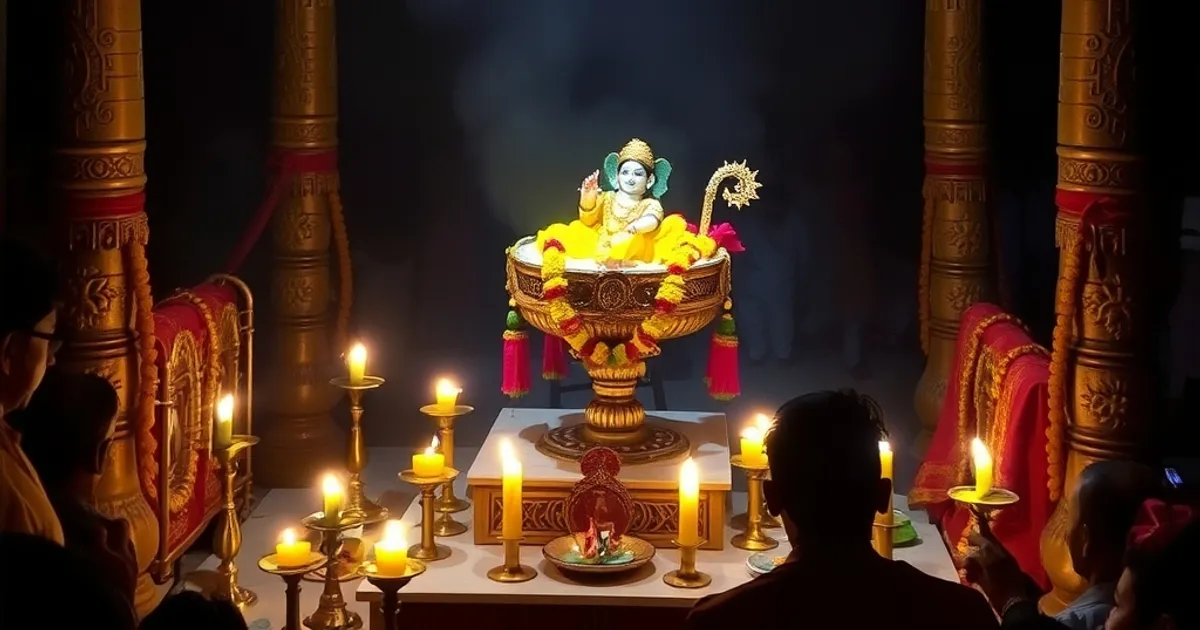
Bhopal's Janmashtami celebrations are genuinely communal. The temples across the city — Birla Mandir, ISKCON Bhopal, and many neighborhood mandirs — begin decorating days in advance. Cradles (jhulas) are set up for the infant Krishna. Jhankis — tableaux depicting scenes from Krishna's life — are arranged with care, lit dramatically, and open for darshan through the night.
The dahi handi event, in which a pot of curd is hung at height and teams form human pyramids to break it, is celebrated with particular energy in mohallas and colony-level gatherings across Bhopal. It is a tradition that pulls in teenagers and young adults who may not otherwise be drawn to temple rituals, making Janmashtami one of the few festivals with equal appeal across age groups.
In many homes, women undertake a daylong fast on Ashtami, breaking it only after midnight puja. Men and children often join partially, fasting through the day and eating after the midnight abhishek. Kirtan groups begin in the evening and continue through the night, the bhajans rising in intensity as the clock approaches midnight.
The Midnight Moment: Puja at the Hour of Krishna's Birth 🕛
The single most significant moment of Janmashtami is midnight — the hour of Krishna's birth. At this hour, temples fill to overflowing. The atmosphere is charged: conch shells blow, bells ring, and the priest bathes the Krishna idol — or the Laddu Gopal at home — with panchamrit, a mix of milk, curd, honey, ghee, and sugar, while prayers and shlokas fill the air.
In homes, families gather around a small puja setup: an idol or image of infant Krishna, a decorated cradle, flowers, tulsi leaves, panchamrit ingredients, and a lamp. The sequence of the home puja follows a traditional pattern — lamp lighting, recitation of prayers, panchamrit abhishek, offering of fruit and sweets (particularly makhan-mishri, the butter-and-sugar combination Krishna is famous for relishing), and aarti. The cradle is then rocked as the family collectively marks the birth moment.
After the midnight puja, the fast is broken. Most families in Bhopal prepare a simple sattvic meal — sabudana khichdi, fruit chaat, singhara atta dishes — though many serve a full spread once the vrat is concluded. The city does not sleep on Janmashtami night.
Insider Tip: Arrive at Temples by 11 PM
If you plan to attend the midnight puja at any major temple in Bhopal — Birla Mandir, ISKCON, or a large neighborhood mandir — arrive by 11 PM at the latest. The crowd builds dramatically in the final 30 to 40 minutes before midnight, and popular temples become genuinely difficult to navigate after 11:30 PM. Families with young children do well positioning themselves toward the sides of the temple hall for a clear sightline to the sanctum. Coming early also gives you time to sit quietly, absorb the kirtan, and settle into the devotional mood before the rush peaks at the midnight moment. The experience of the full kirtan buildup — not just the climax — is what makes Janmashtami at a Bhopal temple memorable.
Nag Panchami and the Festival Season Ahead
Janmashtami 2026 sits within a broader festival arc that extends through August. Nag Panchami 2026 falls on August 17, 2026, just days after the main celebration, and Bhopal observes it with milk offerings to snake idols, particularly at temples with Nag shrines. The two festivals together make mid-August a sustained period of temple visits and community gatherings across the city.
For families already in a devotional rhythm from the Ekadashi fasts, Pradosh Vrat, and Guru Purnima 2026 observances of late July, the transition into Janmashtami and then Nag Panchami 2026 feels natural — a continuous arc of the sacred calendar rather than a series of disconnected events. This is Bhopal's festival season at its most concentrated.
FAQ
Q: What is the significance of Rohini Nakshatra on Janmashtami? Rohini is the birth nakshatra of Lord Krishna according to the Srimad Bhagavatam. When Ashtami tithi aligns with Rohini Nakshatra, it is considered the most auspicious combination for Janmashtami. Some years the two do not fully coincide, leading to regional differences in which day the main celebration falls.
Q: What can I eat while fasting on Janmashtami? The traditional Janmashtami fast allows fruits, dairy products, sabudana (sago), singhara atta, sendha namak (rock salt), and certain root vegetables. Many Bhopalites observe a fruit-and-milk fast through the day, breaking it with a proper meal after the midnight puja.
Q: Do I need an elaborate home puja setup? Not at all. A simple idol or image of infant Krishna, a small clay lamp, some flowers, tulsi leaves, and panchamrit ingredients are sufficient. The sincerity of the devotion matters far more than the scale of the setup.
Q: What is the best way to experience Bhopal's public Janmashtami celebrations? Temple jhankis and kirtan programs are open to all and typically free. Dahi handi events are usually organized at the neighborhood or colony level — check with your local RWA or temple committee in advance. Arriving early gives the best darshan experience on what is one of the city's most crowded temple nights.
Q: Is Sankashti Chaturthi on August 2 connected to Janmashtami? Sankashti Chaturthi is a monthly Ganesha observance that falls independently of Janmashtami. For families already fasting through Ekadashi and Pradosh Vrat in late July, the Sankashti Chaturthi on August 2 fits naturally into the same devotional rhythm.
Bottom Line
Janmashtami 2026 in Bhopal will be what it always is: a city-wide night of prayer, music, community, and joy that peaks at the stroke of midnight. Mark Ashtami and Rohini Nakshatra on your panchang, check with your temple about program timing, arrive early, and let the night take you from the first kirtan note to the moment the cradle is rocked at 12 AM.