
Visiting Dhaka? A Local Food & Culture Guide
TL;DR
- 🍛 Dhaka's biryani culture is one of the most distinctive in the world, built on centuries of its own tradition
- 🏛️ Old Dhaka holds the legendary institutions — including one that has operated continuously since 1939
- 🍢 Kebabs, contemporary fusion dining, and neighborhood biryani houses complete the city's food picture
- 🌆 Gulshan offers an upscale dining scene with serious ambition and polished execution
- 🗺️ Plan your Dhaka food and culture visit at desi.net/dhaka
Why Dhaka's Food Scene Rewards Every Visitor
Dhaka is a city of over twenty million people and it eats with the energy that number implies. The food culture here is layered, intensely local, and shaped by centuries of Bengali culinary tradition meeting Mughal influence, river trade, and the particular vitality of dense urban street life.
Visitors expecting generic South Asian food will be surprised at every turn. Dhaka has its own flavor profiles, its own iconic dishes, and its own legendary institutions. The biryani served here is distinct from Hyderabadi or Lucknowi preparations. The kebabs draw on Mughal roots but have developed their own local character. The fish preparations follow the river and the delta. This is a city that knows exactly what it eats and why.
Understanding Dhaka's food scene means understanding its geography: Old Dhaka and its historic neighborhoods hold the most storied institutions, while Gulshan, Banani, and Baridhara carry the modern and upscale end of the spectrum. Both have essential stops.
Old Dhaka: The Institutions That Built the Food Map
Any serious food visit to Dhaka includes time in Old Dhaka — the dense historic core around Sadarghat, Chawkbazar, and Nazira Bazar. The streets are narrow, the traffic moves slowly, and the food is extraordinary by any standard.
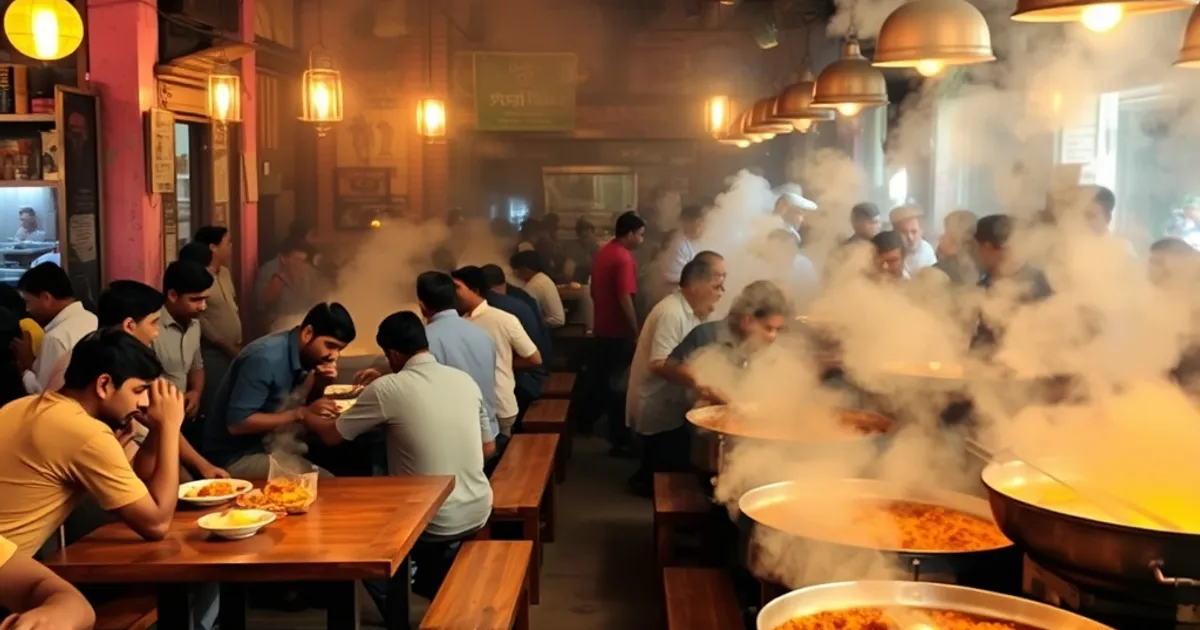
Hajibiriyani – Since 1939 at 70 Kazi Alauddin Road, Nazira Bazar, Dhaka 1000, is the most storied name in Dhaka biryani. Operating continuously since 1939, this restaurant carries nearly nine decades of unbroken production. The breakfast service runs from 7am to 10am and the main service runs from midday through midnight, seven days a week. Arriving early for the morning hours is standard practice among locals — the first service draws a crowd that knows precisely what it came for.
The biryani at Hajibiriyani – Since 1939 is cooked in the Old Dhaka style: generous ghee, specific rice variety, and proportioning that prioritizes flavor over volume. Regulars will tell you the cooking has not changed across the decades. For first-time visitors to Dhaka, this is the single most important stop on the food itinerary.
Al-Razzaque Restaurant at 29/1 North South Road, Bangshal, represents the honest Bangladeshi kitchen tradition. The menu focuses on rice, dal, fish curry, and meat preparations that reflect how generations of Dhaka families have eaten. Bangshal is a working neighborhood and Al-Razzaque's atmosphere matches it — functional, reliable, without pretension. The cooking here does not need to announce itself.
ANJUM kabab ghor anchors the Old Dhaka kebab tradition for those who want to explore that register of the city's food culture. Kebab cooking in the old city draws on the same Mughal culinary lineage that shaped biryanis across the subcontinent, but Dhaka's versions have distinct local character. Seekh kebabs, boti preparations, and shami kebabs appear both at street level and in established spots, and ANJUM kabab ghor represents the more permanent end of that tradition.
Gulshan and Modern Dhaka: Contemporary Dining
Dhaka's newer commercial and diplomatic neighborhoods — Gulshan, Banani, Baridhara — have developed a dining scene that has real ambition behind it.
Farzi Cafe Dhaka at 54 Gulshan Avenue is the reference point for contemporary dining in the city. The menu combines regional preparations with international presentation — familiar flavors approached from unexpected angles, kebabs reimagined for a global palate, and carefully designed plates that hold together visually and on the tongue. The restaurant has become a benchmark for Dhaka's upscale dining crowd and a default destination for visitors staying in Gulshan. The setting, the service quality, and the food execution set a standard that other restaurants in the neighborhood measure themselves against.
Fakhruddin er Biriyani at 37 South Gulshan Circle-1 bridges the old tradition and the modern commercial district. The Fakhruddin name carries weight among serious biryani followers in Dhaka, and this Gulshan location brings that tradition into the city's contemporary business and residential heart. It draws business lunch crowds and families who cross the city specifically for the biryani — both are reliable signals of a restaurant that has earned its following.
Biryani Houses and the Neighborhood Middle Ground
Between the Old Dhaka legends and the Gulshan fine dining establishments lies a large and essential middle tier that feeds most of Dhaka most of the time.
Alkaderia Restaurant at 2/3 D.I.T. Road, Rampura covers the regional cooking ground with chicken preparations, rice dishes, and familiar Bangladeshi menu offerings. It is a reliable choice for visitors staying in or passing through the Rampura area.
Hazina Nna Biryani at 356 Mannan Plaza, 4th Floor, Khilkhet, and Nanna Biryani represent the neighborhood biryani house category that exists across virtually every district in Dhaka — specialist spots where the rice dish is the entire reason for the visit, portions are generous, and the regulars are intensely loyal. These places are not trying to compete with Hajibiriyani – Since 1939 in historical terms; they are simply feeding their neighborhoods well, day after day.
Tandooriwala at the Bashundhara branch focuses on chicken and mutton preparations. Tandoor cooking maintains broad appeal across Dhaka's restaurant landscape, and Tandooriwala has built a consistent following at its locations.
Marwa Kebab and Restaurant adds a dedicated kebab option for visitors who want to explore that tradition beyond the street food level. The kebab category in Dhaka deserves more attention than it typically gets from first-time visitors focused on biryani, and Marwa Kebab and Restaurant is a reliable entry point.
Navigating Dhaka's Food Scene: Practical Notes
Dhaka's traffic is a genuine logistical factor and should inform every restaurant plan. Old Dhaka spots like Hajibiriyani – Since 1939 and Al-Razzaque Restaurant are best approached outside peak commuting hours. Friday mornings, when the city moves at a more measured pace, are an ideal window for Old Dhaka food exploration.
The city does not enforce a sharp boundary between street food and sit-down dining. Many of Dhaka's best meals happen at modest storefronts — twenty seats, a short menu — and the informal setting says nothing about the quality of the cooking. Do not filter by decor.
Cash remains the primary payment method at most traditional and mid-tier restaurants, though Gulshan venues increasingly accept cards. Plan accordingly before heading into Old Dhaka.
Insider Tip: If you have one day to understand Dhaka's food culture from end to end, build the itinerary around two restaurants. Start at Hajibiriyani – Since 1939 — arrive by 8am for the breakfast service or by noon for the main biryani. Then make your way to Farzi Cafe Dhaka in Gulshan for dinner. The distance between those two restaurants is not just geographic. It is the full arc of how Dhaka eats — from a near-century-old institution in the old city to a contemporary venue in the new one — and both are genuine expressions of what the city's food culture has become.
FAQ
What makes Dhaka biryani different from other biryanis? Dhaka biryani uses a specific local rice variety, is cooked with significant ghee, and typically includes a boiled egg alongside the meat. The flavor profile and texture are distinct from Hyderabadi, Kolkata, or Lucknowi preparations.
What are the hours for Hajibiriyani – Since 1939? The restaurant is open Monday through Sunday. Breakfast service runs from 7am to 10am, and the main lunch and dinner service runs from 12pm through midnight.
Is Old Dhaka accessible for visitors? Old Dhaka is busy and congested. It is safe and absolutely worth visiting, though navigating by rickshaw or on foot within the neighborhood is often more practical than by car during daytime hours.
What area of Dhaka is best for upscale dining? Gulshan, Banani, and Baridhara have the most concentrated upscale and modern restaurant options. Farzi Cafe Dhaka on Gulshan Avenue is a reliable first stop.
Where can I find food guides and cultural information for Dhaka? desi.net/dhaka maintains local food guides, restaurant listings, cultural content, and community resources for visitors and residents of Dhaka and Bangladesh.
Bottom Line
Dhaka's food scene rewards the visitor who approaches it on its own terms. The biryani tradition alone — anchored by Hajibiriyani – Since 1939 in Nazira Bazar, extended through Fakhruddin er Biriyani in Gulshan, and distributed across neighborhood houses including Hazina Nna Biryani and Nanna Biryani — is unlike anything available elsewhere. Add Farzi Cafe Dhaka's contemporary energy in Gulshan, Al-Razzaque Restaurant's honest Bangladeshi kitchen in Bangshal, ANJUM kabab ghor and Marwa Kebab and Restaurant carrying the kebab tradition, and reliable neighborhood options like Alkaderia Restaurant and Tandooriwala, and you have a city that treats every meal as consequential.
Begin planning your Dhaka food visit at desi.net/dhaka.