
Anti-Indian Sentiment Rises in Frisco, Texas: How a Welcoming City Became Ground Zero for Hostility
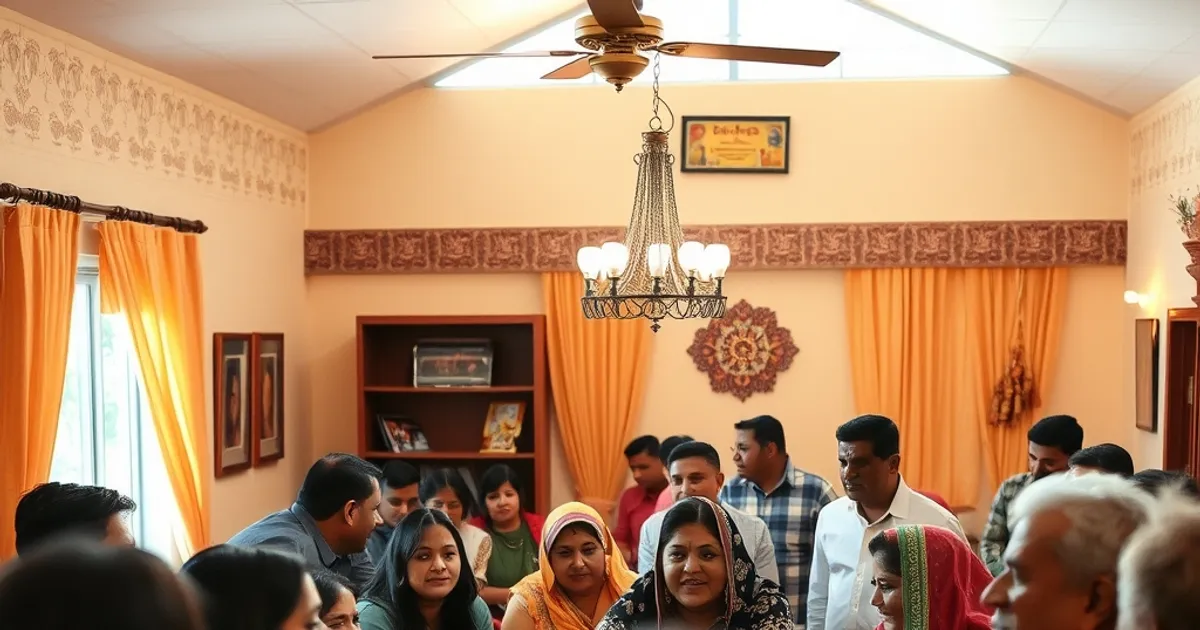
Frisco, Texas, once celebrated as one of the most welcoming cities in the United States for Indian immigrants and their families, has become the centre of a troubling national conversation about anti-Indian sentiment, white nationalist rhetoric, and the targeting of a minority community by online influencers and far-right actors. Multiple major outlets — including the Texas Standard, KERA News, Texas Monthly, and the Dallas Morning News — have documented the rise in hostility directed at the city's large and established Indian American population. Indian American members of Congress have publicly condemned demonstrations accompanying the backlash, while Frisco's city leaders have addressed the controversy though without taking prohibitive action. The situation illustrates how rapidly a community's sense of safety and belonging can be destabilised by coordinated online campaigns and the offline harm they generate.
🤝 Anti-Indian Sentiment on the Rise in Frisco, Right-Wing Media Cited
The Texas Standard has documented a marked increase in anti-Indian sentiment in Frisco, Texas, with community members and observers pointing to the role of right-wing media figures and online influencers in amplifying hostility toward the city's large Indian American population. Frisco has seen one of the fastest-growing South Asian communities in the United States over the past two decades, driven by the concentration of technology and corporate employment in the Dallas-Fort Worth metroplex and the strength of the city's public school districts. As the community has grown in size and visibility, it has become a target for nativist rhetoric that frames demographic change as a threat rather than an asset to the broader city. The Texas Standard's reporting describes how online ecosystems can translate into real-world tension and anxiety, with community members reporting a heightened sense of unease about their safety and an erosion of the belonging they once took for granted. Influencers and media personalities with large audiences have amplified negative stereotypes about Indian Americans, contributing to an environment that many long-time residents describe as significantly less welcoming than it was just a few years ago. The pattern in Frisco mirrors broader national trends in which minority communities with high educational and economic attainment have become targets for resentment-driven online campaigns. Community organisations have responded by documenting incidents, connecting affected residents to support resources, and pushing for clearer public condemnation from civic and political leaders. [1]
🪔 Anti-Indian Hostility Spills into the North Texas Dance Community
KERA News has reported on a particularly striking dimension of the rising anti-Indian sentiment in North Texas: its effects have reached into the South Asian dance community, a cultural space that has historically served as a refuge, a site of celebration, and a cornerstone of identity for Indian Americans in the Dallas-Fort Worth region. Dance forms including classical Indian dance and Bollywood-style performance are deeply embedded in the cultural life of many South Asian families in North Texas, and studios, schools, and performance groups have provided a sense of continuity and connection for decades. The intrusion of anti-Indian hostility into these spaces represents an escalation that has distressed community members who view the arts as a domain that should remain separate from political conflict. Reports indicate that dancers, instructors, and event organisers have encountered a hostile climate connected to the broader atmosphere of anti-Indian sentiment, disrupting activities that are central to community wellbeing and cultural continuity. The dance community's experience illustrates the broader impact that sustained hostile rhetoric has when it moves from online spaces into physical venues and everyday cultural activities. Cultural practitioners have described the difficulty of continuing their work under conditions of heightened tension and uncertainty. The situation has prompted conversations within the community about how to protect cultural spaces while navigating a changed and more hostile public environment. [2]
🗳️ Indian American Members of Congress Condemn Anti-India Demonstrations
Indian American members of the United States Congress, including Representative Raja Krishnamoorthi, have issued a formal condemnation of anti-India demonstrations that have accompanied the broader wave of hostility directed at Indian Americans in Frisco and elsewhere, according to a statement published on House.gov. The congressional statement represents a significant escalation in the political response to the situation, bringing the voices of federal lawmakers into a debate that had previously centred on local and state actors. Indian American members of Congress occupy a distinctive position in responding to such incidents, combining their roles as elected officials with their personal identities as members of the community being targeted. The condemnation signals that events in Frisco have risen to a level of national concern warranting a response from federal legislators. Anti-India demonstrations within a domestic American city raise questions about the intersection of foreign policy rhetoric, domestic minority rights, and the limits of acceptable political expression. Members of Congress who have spoken out have framed the issue as one of fundamental civil rights and the protection of a minority community from organised harassment and intimidation. The statement also reflects a degree of coordination among Indian American legislators that suggests an emerging consensus about the need for a unified federal response to incidents targeting their community. Advocates have welcomed the congressional attention while noting that condemnation alone will need to be followed by concrete action. [3]
🤝 Texas Monthly Documents the Shift From Welcome to Backlash in Frisco
Texas Monthly has documented in detail the transformation of Frisco from a city celebrated for its openness to Indian immigrants into one that has become nationally associated with anti-Indian hostility, tracing the forces that have driven this shift. The reporting describes how Frisco built a reputation as an ideal destination for Indian American professionals and families drawn by strong school districts, proximity to major employers, and relative affordability compared to coastal metropolitan areas. For years, the city's growing diversity was widely viewed by residents and civic leaders as a driver of economic vitality and cultural richness that set Frisco apart from comparable suburban communities. The shift documented by Texas Monthly reflects how quickly an established community narrative can be disrupted by sustained hostile rhetoric, particularly when amplified through social media platforms with large and engaged audiences. Indian American residents who built their lives in Frisco describe a meaningfully changed atmosphere, with some reporting that they have begun to question their long-term future in a city they once considered home without reservation. Texas Monthly situates Frisco's experience within a wider national pattern in which communities that have experienced rapid demographic change have been targeted by actors seeking to generate conflict and resentment. The reporting constitutes a significant act of journalistic documentation, creating a lasting record of the forces that have destabilised one of the most prominent Indian American communities in the American South. [4]
🤝 Frisco Identified as Ground Zero for White Nationalist Anti-Indian Rhetoric
The Dallas Morning News, as documented by the Center for the Study of Hate and Extremism, has described Frisco as ground zero for white nationalist anti-Indian rhetoric, a characterisation that underscores the severity and organised nature of the hostility facing the city's Indian American community. The framing of Frisco as a deliberate focal point rather than an incidental location suggests that the targeting of its Indian American population reflects strategic choices by actors who intend to use the city as a symbol in a broader political and ideological campaign. White nationalist movements in the United States have a documented history of identifying communities of colour that have achieved educational and economic success and targeting them with rhetoric designed to generate resentment among other groups. The Dallas Morning News coverage represents mainstream regional journalism taking seriously a phenomenon that might previously have been dismissed as a fringe concern without broad public relevance. The involvement of the Center for the Study of Hate and Extremism in tracking and analysing the situation indicates that researchers who monitor hate movements have identified Frisco as a significant and illustrative case worthy of sustained attention. For Indian American residents, the national media focus has brought their concerns to a wider audience while reinforcing the gravity and organised character of the hostility they face in their daily lives. [5]
🗳️ Frisco City Leaders Address Anti-Indian Rhetoric, Stop Short of Prohibition
The Dallas Observer has reported that Frisco city leaders have publicly addressed the controversy surrounding anti-Indian demonstrations and what has been described as Indian takeover rhetoric, but have stopped short of taking prohibitive action against the events or speech generating alarm within the Indian American community. The reporting reflects a genuine tension between the community's desire for a strong and decisive official response and the legal and political constraints governing how local governments may respond to public expression, even when that expression is harmful and divisive. Officials who have addressed the matter have condemned the hostile rhetoric and expressed solidarity with Frisco's Indian American residents while acknowledging the constitutional limitations that constrain what local government can do to restrict demonstrations or public speech. Many community members have found the official response inadequate given the scale and intensity of the hostility directed at them and the tangible effects it has had on daily life and their sense of security. The situation in Frisco illustrates a broader challenge confronting communities across the country when organised hostility targets minority groups within democratic systems that protect even deeply harmful expression. Community advocates continue to press for a more substantive and visible response from city leadership, arguing that condemnation without accompanying action leaves residents feeling unsupported and exposed. [6]
Sources: [1] Texas Standard · [2] KERA News · [3] House.gov · [4] Texas Monthly · [5] Center for the Study of Organized Hate (CSOH) · [6] Dallas Observer