
Frisco Indian Americans at Center of Organized Anti-Indian Campaign as Congress and City Council Respond
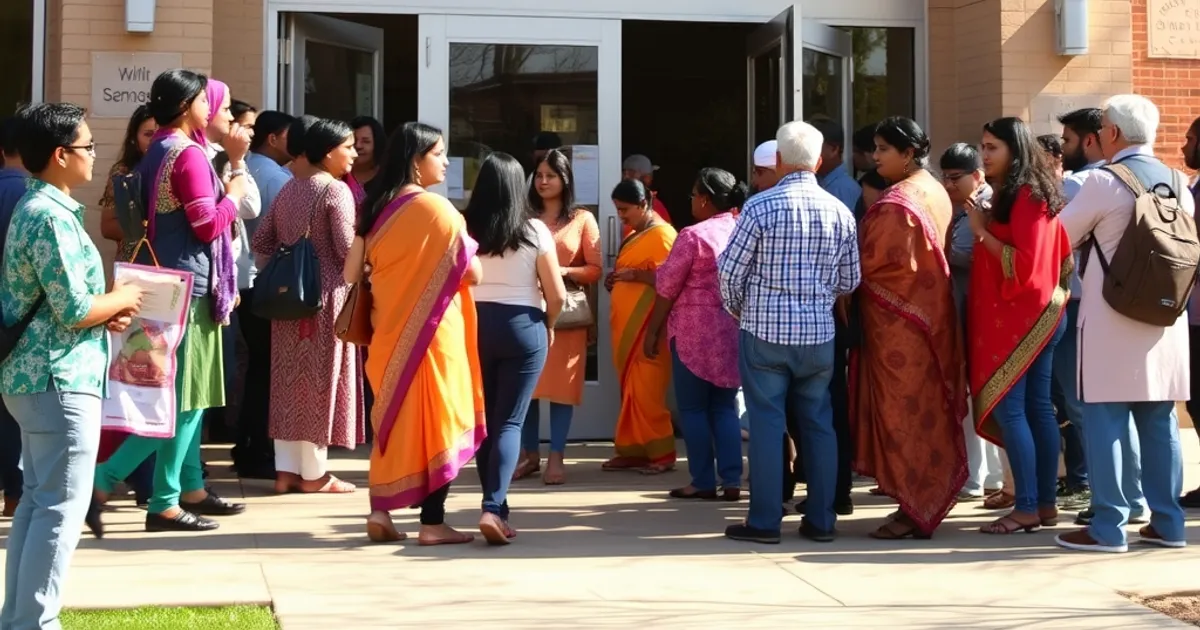
Frisco, Texas — home to one of the fastest-growing Indian American communities in the country — has emerged as the focal point for a troubling wave of organized anti-Indian sentiment. Right-wing influencers and self-described outside agitators have stoked rhetoric about an "Indian takeover" of the city, drawing condemnation from Indian American members of Congress and forcing the Frisco City Council to respond. Through it all, the community has continued to celebrate its cultural traditions, including the Bonalu festival and India Independence Day.
🗳️ Right-Wing Influencers Blamed for Rising Anti-Indian Sentiment in Frisco
Texas Standard has reported that anti-Indian sentiment is on the rise in Frisco, with observers pointing to right-wing influencers as a key factor driving the escalation. The Collin County suburb north of Dallas, which has seen rapid growth in its Indian American and Indian immigrant population driven in large part by H-1B visa holders in the Dallas-Fort Worth technology sector, has attracted attention from national conservative commentators who have used social media platforms to amplify narratives about demographic and cultural change. These influencers have characterized Frisco's Indian American community in broad and hostile terms, framing immigration and settlement patterns as a threat to the existing social order. The resulting rhetoric has filtered into local public discourse, showing up at community meetings, in neighborhood social media groups, and in protests near local schools. Texas Standard's reporting places blame for the escalating climate of hostility partly on content creators and online personalities who have amplified fears about immigration and demographic change. The coverage drew attention to how national right-wing media ecosystems are increasingly influencing hyperlocal politics in suburban Texas communities with large South Asian populations, with Frisco now serving as the most prominent example of this pattern in the current news cycle. [1]
🤝 Outside Agitators Identified as Key Force Behind Frisco's Anti-Indian Rhetoric
KERA News, North Texas's NPR affiliate, reported on July 13, 2026 that outside agitators — organized groups from outside Frisco and even outside Texas — have played a central role in stoking anti-Indian rhetoric in the city. Reporters Miranda Suarez and Ron Corning investigated how these groups have traveled to Frisco specifically to protest and amplify hostility directed at the Indian American community. The framing of outside agitation points to a pattern distinct from purely local grievances: coordinated actors with broader ideological agendas have identified Frisco as a target, making the situation harder for local leaders and community members to address through ordinary civic channels. KERA's reporting highlights how Frisco has been drawn into a larger national discourse about immigration, H-1B visas, and demographic change, driven not only by residents with local concerns but by activists who have arrived from elsewhere with the specific aim of inflaming tensions. This outside interference has added an organized dimension to what might otherwise have been scattered local discontent. The report reflected growing concern among community members and civic leaders that Frisco's large and established Indian American population is being scapegoated as part of a wider political movement with reach well beyond the city. [2]
🗳️ Indian American Congress Members Condemn Anti-India Demonstration at Frisco City Hall
Indian American members of the United States Congress issued a formal condemnation of an anti-India demonstration held outside Frisco City Hall, according to a press release from the office of Representative Raja Krishnamoorthi. The statement expressed solidarity with the Indian American community in Frisco and called out what the lawmakers described as a troubling demonstration targeting residents and a public civic building. The involvement of elected federal officials underscores the seriousness with which the Indian American congressional caucus is treating the situation in Frisco. By speaking out publicly from their official platforms, these representatives sought to lend weight and visibility to the community's concerns about targeted harassment. The press release from Krishnamoorthi's office — one of the most prominent Indian American voices in Congress — linked the Frisco demonstration to a broader pattern of hostility directed at Indian Americans nationally. The condemnation signals that what is happening in Frisco is not being treated as merely a local matter but as a symptom of wider anti-immigrant sentiment requiring a federal response. Community advocates welcomed the statement as a sign that elected officials at the national level are paying close attention and are prepared to speak on behalf of the Indian American community. [3]
Bonalu Festival and India Independence Day Affirm Frisco's Indian American Cultural Presence
Even as controversy surrounded Frisco's political scene, the Dallas Express reported that the Indian American community found meaningful occasions for celebration, spotlighting the Bonalu festival and India Independence Day events as demonstrations of the community's cultural depth and its commitment to public life in the city. Bonalu is a traditional Telugu Hindu festival honoring the goddess Mahakali, observed widely among Telugu-speaking communities from Telangana and Andhra Pradesh, and it brings together families for processions, offerings, and music. The India Independence Day observances, marking August 15, have long been a fixture of the Indian American calendar in Frisco, drawing community members for flag-hoisting ceremonies, cultural performances, and gatherings. The Dallas Express framed these events in the context of Frisco's growing H-1B visa worker population, noting how the community's cultural presence has expanded alongside its numbers. These festivals represent not just religious and national observance but a statement of belonging — a public affirmation by a community that has built deep roots in Frisco even as hostile voices attempt to question its place in the city. In this charged climate, the celebrations carried particular significance as expressions of pride and cultural resilience. [4]
Frisco City Council Confronts 'Indian Takeover' Rhetoric While Balking at Speaker Rule Changes
The Dallas Observer reported that Frisco City Council members have been grappling with the so-called 'Indian Takeover' rhetoric that has entered the city's public discourse, while simultaneously facing questions about proposed changes to the public comment process at council meetings. The 'Indian Takeover' framing — a phrase deployed by critics of the city's Indian American demographic growth — has appeared in public comments at meetings and in protest signage, creating a charged atmosphere for elected officials and residents alike. The council's response has been cautious: while leaders have acknowledged the rhetoric, the Observer reported that council members have balked at proposed changes to how members of the public are permitted to speak, raising questions about whether procedural reforms were under consideration as a means of managing disruption from hostile speakers. The situation has placed Frisco's leaders in a difficult position, facing pressure from the Indian American community to take firmer stances against discrimination while also navigating concerns about free speech and open public participation in civic proceedings. The Dallas Observer's reporting captured the tension between maintaining an accessible civic process and addressing an escalating climate of hostility at council meetings. [5]
🤝 How Frisco Became the Nation's Ground Zero for Anti-Indian American Hate
The Dallas Morning News, as highlighted by the Center for the Study of Organized Hate, examined how Frisco came to occupy a singular position as the focal point for anti-Indian American hostility in the United States. The city's combination of a large, visible, and economically successful Indian American community — built substantially through H-1B skilled worker immigration — and its location in a politically conservative suburban Texas county created conditions that made it a target for organized hate campaigns. The analysis placed Frisco in a broader national context, connecting local events to patterns of organized hostility documented by researchers who study hate movements. The rapid demographic transformation of certain Frisco neighborhoods and schools, where Indian Americans have become a significant and growing share of the population, has made the city a symbol for those who frame immigration and demographic change in zero-sum terms. The reporting drew the attention of advocacy organizations and civil rights groups, who have cited Frisco as a case study in how organized online hate can translate into real-world harassment against immigrant communities. The story has since attracted national attention well beyond Texas, establishing Frisco as a significant marker in the current public discourse around anti-immigrant hostility in the United States. [6]
Sources: [1] Texas Standard · [2] KERA News · [3] House.gov · [4] Dallas Express · [5] Dallas Observer · [6] Center for the Study of Organized Hate (CSOH)