
Frisco's Indian American Community Confronts a Wave of Hostility
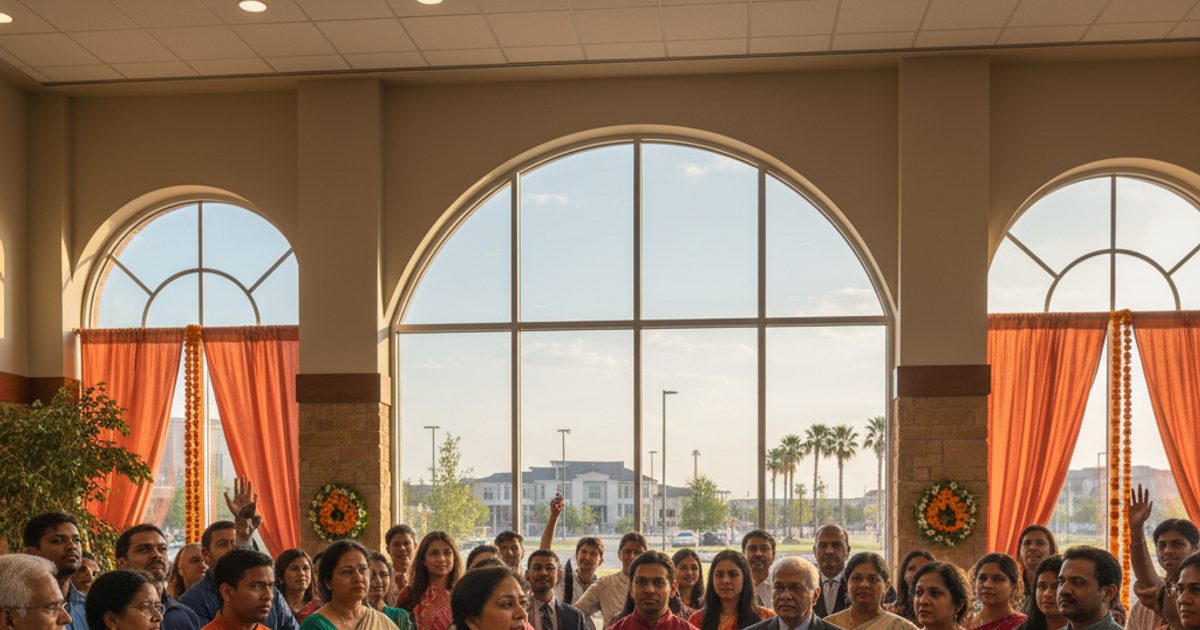
Frisco, Texas — once celebrated as a model of immigrant integration and suburban prosperity — has become the center of intense national scrutiny over a troubling rise in organized hostility toward its large Indian American population. Multiple news outlets and academic publications have documented how right-wing social media influencers have amplified anti-Indian rhetoric, how that rhetoric has moved from online spaces into public demonstrations outside city hall, and how Indian American members of Congress have responded with solidarity. Through it all, the community has continued to celebrate its cultural heritage, with Bonalu and India Independence Day events offering a vivid and determined counterpoint to the hostility circulating in public discourse.
🗳️ Right-Wing Influencers Fuel Anti-Indian Sentiment in Frisco
Texas Standard reports that anti-Indian sentiment in Frisco has risen sharply, with community advocates and observers pointing to right-wing social media influencers as a significant driver of public hostility. Frisco — one of the fastest-growing cities in the United States — has seen its South Asian population expand substantially over the past decade, fueled by the concentration of H-1B visa workers in the Dallas-Fort Worth technology and corporate corridor. That demographic shift has attracted coordinated online content framing the Indian community's growth as a threat to existing residents' culture and economic standing. Community leaders say the rhetoric has moved from fringe online spaces into everyday public settings, with residents reporting increased incidents of harassment and intimidation. Local advocates emphasize that Indian Americans have been integral to Frisco's economic rise, contributing to its schools, businesses, and civic institutions. They are calling on city and state leaders to push back firmly and clearly on inflammatory narratives, and on social media platforms to take greater responsibility for the content they amplify. [1]
🎉 Bonalu and Independence Day Celebrations Assert Community Pride
Even as tensions over immigration and demographic change have intensified in public discourse, Frisco's Indian American community marked its cultural calendar with pride and visibility. The Dallas Express reports that Frisco hosted Bonalu — a traditional Telugu Hindu festival honoring Goddess Mahakali — alongside India Independence Day celebrations this summer. Bonalu, characterized by vibrant processions, ritual offerings, and communal feasting, drew participants from families across the Dallas-Fort Worth metroplex and served as a vivid expression of Telangana heritage. The Independence Day events drew additional attention because they unfolded directly against the backdrop of a wider public debate about Indian immigration and the H-1B program, with some online critics seizing on images of the festivities to push assimilation narratives. Community organizers, however, framed the events as a straightforward and joyful assertion of identity and belonging. Participants said they were celebrating the dual pride of their Indian cultural roots and their status as Americans — and that cultural expression is not a provocation but a right. For many families in attendance, the celebrations served as both a communal affirmation and a powerful, peaceful response to the hostility circulating around them. [2]
🤝 From Welcome Mat to Backlash: How Frisco Changed
A Texas Monthly investigation carried by CBS News traces the arc of Frisco's relationship with its Indian immigrant population — from the open arms of a fast-growing suburb eager for skilled workers and economic dynamism to a community now grappling with organized public backlash. Frisco was long considered a standout example of successful immigrant integration. Indian families arrived in significant numbers, founded temples and cultural associations, built businesses, and enrolled their children in high-performing local schools. For many years, that growth was welcomed. Then came a wave of influencer-driven content online, framing the community's visibility and prosperity as evidence of cultural displacement. Interviews with long-term Indian American residents describe a gradual shift in public tone — from occasional friction to what some characterize as coordinated campaigns of hostility. City officials have in some cases been slow to respond publicly and substantively. Community members are calling for clear and firm leadership from local government, an unambiguous affirmation that all residents are welcome, and concrete action to address incidents that have moved beyond social media rhetoric into the experiences of everyday life. [3]
🗳️ Indian American Lawmakers Condemn Frisco City Hall Demonstration
Indian American members of the U.S. House of Representatives issued a joint statement condemning an anti-India demonstration held outside Frisco City Hall, expressing solidarity with the city's Indian American community. Led by Representative Raja Krishnamoorthi of Illinois and joined by fellow Indian American colleagues in Congress, the statement described the demonstration as an attempt to intimidate and marginalize a community that has made enormous contributions to American civic and economic life. The lawmakers called on local and federal authorities to monitor hate-motivated activities targeting Indian Americans and urged the broader public to reject inflammatory narratives being pushed by bad-faith actors in both online and offline spaces. The press release, published on Krishnamoorthi's official congressional website, underscored the political stakes of the moment: Indian Americans are a growing and increasingly politically engaged constituency, and their elected representatives are signaling clearly that intimidation campaigns will not pass without consequence. Community organizations in Frisco welcomed the statement and called for sustained political attention — not only symbolic condemnations but also policy measures that address the conditions enabling such demonstrations to occur in the first place. [4]
🤝 How Frisco Became Ground Zero for Anti-Indian Hate
The Dallas Morning News published one of the most detailed accounts of how Frisco became the focal point of a national wave of hostility directed at Indian Americans. The reporting examines the intersection of factors that made Frisco particularly visible: an extraordinary concentration of Indian American residents — driven by proximity to major technology employers and a large H-1B workforce — combined with the city's prominence as a fast-growing, high-profile suburb with outsized media attention. The article traces the arc from community growth to politicization, documenting how online rhetoric about an alleged Indian takeover moved from social media channels into organized real-world activity. Residents describe encountering hostility in public spaces, at schools, and in neighborhoods where relations had previously been cordial. City officials face growing pressure to respond more forcefully and publicly. Advocacy groups say Frisco represents a warning for other cities with large South Asian populations, and that the dynamics at play require urgent attention from civic leaders, law enforcement, and the platform companies that have allowed inflammatory content to flourish and spread. [5]
🗳️ Model Minority to Political Target: A National Reckoning
Brown Political Review offers a broader analytical frame for understanding what is happening in Frisco, situating the local story within a national reconsideration of how Indian Americans are perceived and treated politically. For decades, Indian Americans were cast as the archetype of the model minority — high-earning, highly educated, and socially uncontroversial. That framing, while always contested and often deployed to dismiss the legitimate concerns of other communities, at least afforded Indian Americans a degree of social protection and cultural goodwill. The review argues that the current wave of political targeting represents a meaningful shift. Indian Americans are now caught between competing pressures: segments of the political right have turned immigration skepticism toward the H-1B program specifically, framing Indian professionals as competitors displacing American workers. At the same time, Indian Americans lack a clear partisan home that actively and consistently defends their interests. The piece calls for Indian American communities to build more robust civic and political infrastructure to navigate the new landscape, and for broader coalitions across immigrant communities to push back collectively against the scapegoating dynamics taking hold in cities like Frisco. [6]
Sources: [1] Texas Standard · [2] Dallas Express · [3] CBS News · [4] House.gov · [5] Dallas News · [6] Brown Political Review