
Frisco, Texas Becomes Flashpoint for Anti-Indian Hate as Congress Members and City Leaders Respond
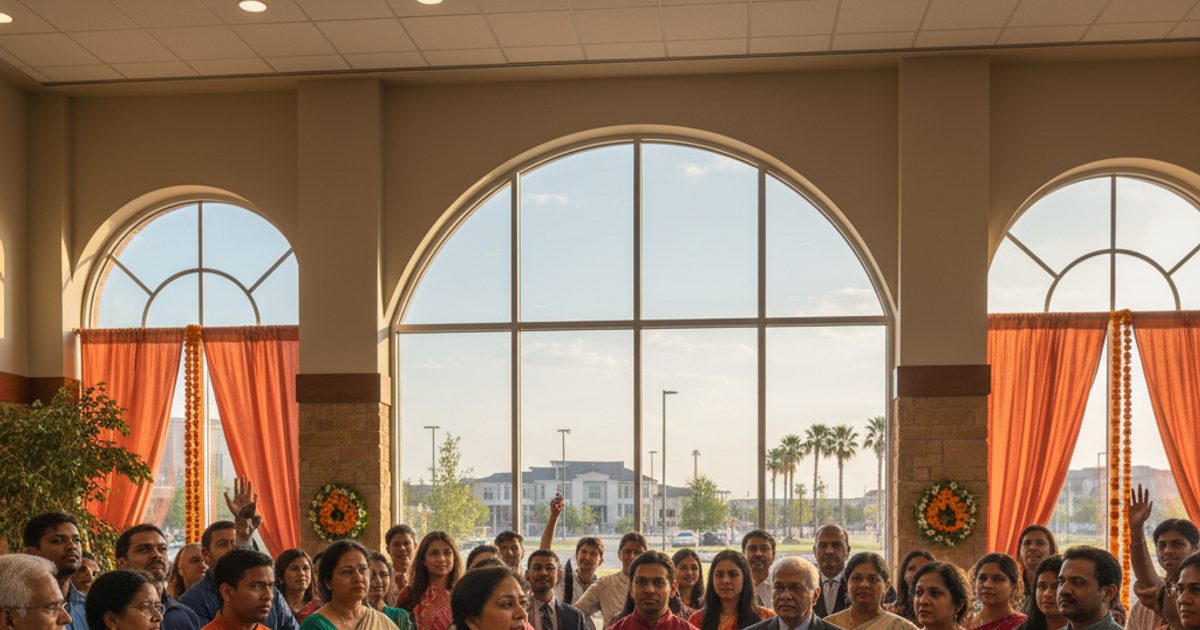
Frisco, Texas — a rapidly growing Dallas suburb that is home to one of the largest Indian American populations in the state — has drawn sustained national attention as a flashpoint for anti-Indian sentiment and organised hostility toward its South Asian residents. Multiple outlets and elected officials have documented a troubling pattern of demonstrations, inflammatory rhetoric, and online harassment campaigns targeting the community, raising urgent questions about safety, civic responsibility, and the boundaries of political speech.
🤝 Right-Wing Influencers Linked to Rising Anti-Indian Sentiment in Frisco
Texas Standard reported that anti-Indian sentiment has been rising in Frisco, with community members and observers pointing to right-wing social media influencers as a key contributing factor in amplifying hostility toward South Asian residents. Frisco has seen significant growth in its Indian American population over recent years, driven by the expansion of the technology sector across the Dallas-Fort Worth metroplex and the suburb's highly regarded public school system, which attracts families seeking strong educational environments. This demographic growth has increasingly been met with organised opposition from certain political quarters, manifesting in online harassment campaigns and, at times, in-person incidents. Texas Standard's report examined how inflammatory content spread across social media platforms has helped create and sustain a climate of hostility directed at Indian American residents of Frisco. The targeting of an established and economically integrated community by online influencers reflects a broader national pattern in which minority and immigrant groups become subjects of politically motivated scapegoating, and Frisco has found itself at the front lines of that dynamic within Texas. [1]
🤝 Frisco Labelled 'Ground Zero' for Wave of Hate Against Indian Americans
The Dallas Morning News characterised Frisco as ground zero of a broader wave of hate targeting Indian Americans in an investigative report republished through the Center for the Study of Organized Hate. The same story was reported independently by Dallas News (src 6), both outlets documenting a sustained and organised pattern of hostility directed at the city's South Asian community. Reporting described how residents have faced demonstrations, harassment, and rhetoric that framed the community's demographic growth as an illegitimate 'Indian takeover' of Frisco. Civil rights researchers have identified the 'takeover' framing as a recurring element in nativist and extremist rhetoric, one that historically precedes escalation in hostility toward the targeted group. Frisco's situation reflects a national challenge in which Indian Americans — despite being one of the most educationally and economically integrated immigrant communities in the United States — have increasingly become targets of organised political hostility in cities and suburbs where their numbers have grown substantially, particularly in the tech-industry corridor of North Texas. [3]
🗳️ Indian American Members of Congress Condemn Anti-India Demonstration at Frisco City Hall
Indian American members of the United States Congress issued a joint statement condemning an anti-India demonstration that took place outside Frisco City Hall, according to a press release from Representative Raja Krishnamoorthi's office. The congressional representatives expressed solidarity with Frisco's Indian American community, which has been subjected to persistent harassment and inflammatory rhetoric. The demonstration outside City Hall represented a public and highly visible act of hostility in the civic centre of a city where Indian Americans form a substantial share of the population. By issuing a formal condemnation, the Indian American members of Congress sought to make clear that the targeting of South Asian residents constitutes a serious matter warranting attention at the federal level, not merely a local dispute. The statement called on community members, civic leaders, and elected officials at all levels to reject discrimination and stand in defence of the rights and dignity of Indian American residents in Frisco and across the country. [2]
🗳️ Frisco City Council Addresses 'Indian Takeover' Claims but Stops Short of Changing Speaker Rules
Frisco's city council took up the subject of 'Indian takeover' rhetoric directed at South Asian residents, though council members ultimately declined to make changes to public speaker rules at city meetings, according to the Dallas Observer. The council's discussion reflected the difficult position local elected officials face when trying to address hate speech and organised harassment through civic mechanisms while respecting constitutional protections for public comment. Reports indicated that public comment periods at council meetings had been used as a platform by individuals expressing hostile and inflammatory views about the Indian American community. Advocates for the affected community pushed for modifications to speaker policies that might limit the use of official civic forums for delivering anti-minority rhetoric, but the council stopped short of making those changes. The outcome left community members without a direct remedy through the city's meeting procedures and illustrated the structural limitations of local government in responding to organised anti-minority campaigns conducted through technically legitimate civic channels. [5]
🗳️ Indian Americans Shift from 'Model Minority' to Political Target, Analysis Finds
The Brown Political Review published an analysis examining how Indian Americans have transitioned from being broadly characterised as a 'model minority' to becoming explicit political targets in communities such as Frisco, according to the academic publication. The piece explored the dynamics driving this shift, including the political mobilisation of nativist sentiment and the deliberate targeting of visibly successful immigrant communities as sources of economic or cultural threat. The model minority framing — itself long critiqued as a reductive and harmful stereotype — has historically provided Indian Americans with a degree of insulation from overt discrimination; however, that dynamic appears to be breaking down in specific political environments. The analysis situated the Frisco situation within a wider national conversation about how Indian Americans are perceived and treated during an era of intensified identity politics and heightened anti-immigration rhetoric. The piece offered context for understanding why a community with deep economic and civic roots in places like Frisco is nonetheless finding itself singled out for organised hostility. [4]
Sources: [1] Texas Standard · [3] Center for the Study of Organized Hate (CSOH) · [2] House.gov · [5] Dallas Observer · [4] Brown Political Review