
Desi Things to Do in Kuala Lumpur (July 2026)
TL;DR 🗓️
- Guru Purnima 2026 falls on July 29 and coincides with Purnima — a double observance for KL's temple communities
- Ekadashi on July 25 and August 9 anchors the Vaishnava fasting cycle for KL's North and South Indian communities
- Pradosh Vrat on July 27 and August 11 is the key Shaivite observance of the fortnight, marking twilight worship of Shiva
- Sankashti Chaturthi on August 2 completes the Ganesh cycle for Maharashtrian and North Indian families in KL
- Amavasya on August 12 closes the window as the primary ancestor-remembrance day in the Tamil tradition
Kuala Lumpur's Indian Calendar: Late July and August 2026
For the South Asian diaspora in Kuala Lumpur, the stretch from late July through mid-August is among the most spiritually active of the year. The Hindu lunar calendar — followed by a large portion of KL's Indian community — packs in a tight sequence of observances: fasting days, full-moon celebrations, twilight pujas, and a moment dedicated to remembering ancestors. What ties them together is not just the calendar; it is the shared infrastructure of temples, bhajan groups, and community organizations that have made KL one of Southeast Asia's most vibrant centres of Indian religious life outside the subcontinent.
Malaysia's Indian diaspora is predominantly Tamil in origin, with roots in the plantation and urban labour migration of the colonial era. Over generations, this community built temples, maintained festivals, and adapted the Hindu calendar to Malaysian life. Today, KL also draws Gujarati business families, Punjabi professionals, Telugu IT workers, and South Asian students who bring their own ritual calendars into the same city. The result is a layered observance landscape where Ekadashi, Pradosh Vrat, Guru Purnima, and Sankashti Chaturthi mean different things to different communities — but are observed in the same city on the same dates.
Desi.Net's Kuala Lumpur events calendar aggregates these dates so that the diaspora — including newly arrived professionals, long-settled Tamil families, and university students — can stay connected to the calendar without piecing together information from scattered sources.
Ekadashi: The Fasting Cycle, Twice Monthly
Ekadashi appears twice in this window: July 25 and August 9. The eleventh day (ekadashi) of each lunar fortnight is observed by Vaishnava communities as a day of fasting and prayer dedicated to Vishnu. For Tamil families in KL who follow Iyengar or broader Vaishnava traditions, this is a day when rice is replaced with fruits, milk, and tapioca-based preparations. Strict observers restrict even water consumption until sunset.
The significance of Ekadashi in the KL Indian community runs beyond individual practice. Many Tamil families in KL trace their origins to South Indian villages where Ekadashi was marked by all-night bhajan sessions, temple processions, and communal meals the following morning — Dwadashi, the day of breaking the fast. That collective dimension can be harder to maintain in a diaspora setting. Knowing the date is the practical first step to finding others in KL who observe it and to planning around the day whether or not you fast strictly.
North Indian families in KL, particularly those with Vaishnava or ISKCON affiliations, also observe Ekadashi. The ISKCON presence in KL means that Ekadashi is celebrated in a recognizable form for devotees from any part of India.
Pradosh Vrat: The Shaivite Fortnight Marker
Pradosh Vrat on July 27 and August 11 follows Ekadashi by two days in each fortnight. Pradosh is a Shiva observance — specifically the worship of Shiva during the twilight hour (pradosh kaal) on the thirteenth day of the lunar fortnight. For Shaivite communities, who make up the majority of KL's Tamil Hindu population, this is one of the most regular and important monthly observances.
Shiva temples across KL typically see heightened activity on Pradosh evenings. Abhishekam — the ritual bathing of the Shivalinga with milk, honey, and water — is central to Pradosh observance. So is circumambulation of the Shiva shrine, performed during the specific window that falls roughly ninety minutes before and after sunset.
For Tamil families who came to Malaysia from regions in Tamil Nadu where Murugan and Shiva temples dominated the religious landscape, Pradosh Vrat is a continuity with home. In KL, the density of Shaivite temples — particularly in areas like Brickfields and Sentul — means that Pradosh observance is practically accessible. The Desi.Net calendar marks both July 27 and August 11 so you can plan around either or both.
Guru Purnima 2026: The Centrepiece
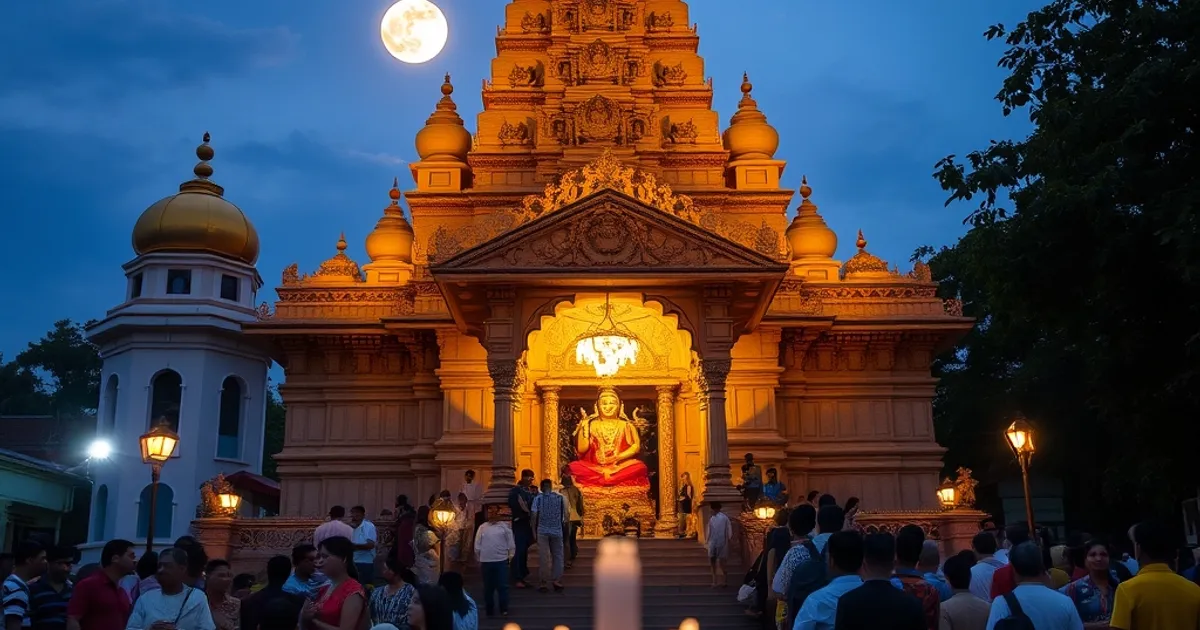
July 29 carries double weight on the KL Desi calendar. It is both Purnima — the full moon of the month — and Guru Purnima 2026, the festival dedicated to honouring the guru-shishya relationship that runs through Hindu, Buddhist, and Sikh traditions alike.
Guru Purnima is traditionally associated with Sage Vyasa, compiler of the Vedas, and falls on the full moon of the Ashadha month. In the diaspora context, the day has taken on additional layers. For Malaysian Indians of all origins, Guru Purnima has become an occasion to gather at cultural organizations, bhajan groups, and temple halls to honour teachers broadly — spiritual teachers, yes, but also schoolteachers, parents, and mentors who shaped the lives of their students far from home.
For the Sikh component of KL's South Asian community, Guru Purnima carries its own significance in Gurmat practice, where every Purnima is an auspicious day for kirtan and sangat. The full moon on July 29 thus unites observance across different South Asian traditions in the same city.
Guru Purnima 2026 falls on a Wednesday. Expect that many KL temple communities and cultural organizations will mark the occasion across the weekend of July 25-26 as well as on the day itself. Community groups often schedule events well in advance for this observance — the Desi.Net KL calendar is the place to check for updates as July approaches.
Sankashti Chaturthi: The Ganesh Cycle
August 2 brings Sankashti Chaturthi, the fourth day of the dark lunar fortnight (Krishna Chaturthi) dedicated to Ganesha. Observers fast until moonrise, then break the fast after sighting the moon and offering modak or coconut.
Sankashti is observed monthly and is most closely associated with Maharashtrian communities, though Tamil and North Indian families with Ganesha devotion also observe it. KL's Maharashtrian community is smaller than its Tamil population, but active — and Ganesh temples across the city are attended by devotees of all South Indian backgrounds.
For families observing Sankashti in KL, the challenge is the same as for any lunar observance: moonrise times vary by location, and the Gregorian calendar does not reliably predict them. The Hindu lunar calendar apps used by most diaspora families are the practical tool here, and Desi.Net's calendar entry for August 2 serves as the prompt to open them.
Amavasya: Remembering Ancestors
August 12 is Amavasya — the new moon day. In the Tamil tradition, Amavasya is the primary day for pitru tarpanam, the ritual remembrance of ancestors through offerings of sesame seeds, water, and cooked rice. The new moon, when the sky is at its darkest, is considered the time when the boundary between the living and the departed is thinnest.
For first-generation KL migrants who left family graves and ancestral observances behind in Tamil Nadu or elsewhere in South India, Amavasya carries particular emotional weight. Performing tarpanam in KL — at a river, at a temple, or at home — is one of the ways diaspora families maintain their connection to lineage across distance.
Insider Tip: KL's Hindu temples typically post their Ekadashi, Pradosh Vrat, and Guru Purnima schedules on physical notice boards weeks in advance, but rarely update these online. If you are newer to KL or new to a neighbourhood, visiting the nearest Shiva or Vishnu temple about a week before any major observance — rather than searching online — is the most reliable way to learn the local timing, format, and gathering point for that community's celebration.
FAQ
What is Ekadashi and which Indian communities in KL observe it? Ekadashi is a Vaishnava fasting observance on the eleventh day of each lunar fortnight. It is most strictly followed by Tamil Iyengar, broader Vaishnava, and North Indian communities in KL. Tamil Shaivite families may also observe it, but Pradosh Vrat tends to be the more central fortnightly observance for them.
What makes Guru Purnima different from an ordinary Purnima? Guru Purnima is the Purnima of the Ashadha month, specifically dedicated to the veneration of teachers and spiritual lineage. Ordinary Purnima is the full moon of any given month. When the two coincide — as they do on July 29, 2026 — the observance carries the weight of both: full-moon auspiciousness and the explicit dedication to the guru relationship.
Is Pradosh Vrat the same as Maha Shivaratri? No. Pradosh Vrat occurs twice monthly, during the twilight of the thirteenth day of each lunar fortnight. Maha Shivaratri is an annual festival. Both centre on Shiva, but their character, timing, and ritual form are different.
What is Amavasya and why does it matter for KL families? Amavasya is the new moon day, observed as an auspicious time for ancestor remembrance. For Malaysian Tamil families who maintain pitru tarpanam practice, this is one of the most significant monthly observances — a ritual way of remaining connected to lineage despite geographic distance.
How does Desi.Net compile the KL events calendar? Desi.Net aggregates the Hindu lunar calendar against the Gregorian calendar and publishes a rolling events feed for each city in its directory, including Kuala Lumpur. The feed covers observances from Hindu, Sikh, and broader South Asian traditions.
Bottom Line
Late July through mid-August 2026 is a spiritually full window for Kuala Lumpur's Indian diaspora. Guru Purnima 2026 on July 29 is the centrepiece, made more significant by its coincidence with Purnima. The fortnightly rhythm of Ekadashi and Pradosh Vrat structures devotional life around it. Sankashti Chaturthi on August 2 marks the Ganesh cycle, and Amavasya on August 12 closes the window with ancestor remembrance. For the KL Desi community — spanning Tamil, Gujarati, Punjabi, and other South Asian backgrounds — Desi.Net's calendar is the single aggregated source for staying connected to all of it.