
Janmashtami 2026 in Kuala Lumpur: Events, Puja & Where to Celebrate
TL;DR 🪔
- 📅 Krishna Janmashtami 2026 falls on September 4 in Kuala Lumpur — the anchor date for the Indian diaspora season
- 🛕 Sri Kandaswamy Kovil and Sri Maha Mariamman Temple are among the city's most active temple destinations
- 🌙 Midnight puja (Nishita Puja) is the ritual centerpiece — arrive fasting and expect large crowds
- 📿 The festive corridor runs from Guru Purnima 2026 in late July through Ganesh Chaturthi 2026 on September 14
- 🏙️ Brickfields is the neighborhood to base yourself in for temple access, food, and community atmosphere
Janmashtami 2026 in Kuala Lumpur: Setting the Scene
Krishna Janmashtami 2026 is observed on September 4 in Kuala Lumpur. For the city's sizeable Indian diaspora — rooted largely in Tamil Nadu and South Indian heritage, with significant North Indian and Sri Lankan Tamil communities alongside — Janmashtami sits at the center of a dense festive stretch running from late July through mid-September.
The occasion marks the birth of Lord Krishna, and in KL as in many diaspora cities, its observance brings together multiple strands of Hindu tradition. South Indian temples join Vaishnavite communities and ISKCON-affiliated centers in marking the date, each with distinct ritual forms but a shared festive energy. Understanding where to go and what to expect requires knowing the panchang — the Hindu lunar calendar — and the sequence of preparatory observances that precede September 4.
The Panchang Calendar: July Through September
The festive period opens with Guru Purnima 2026 on July 29. Guru Purnima — the full moon day dedicated to teachers and spiritual lineage — is widely observed in KL's Indian community and functions as the starting point of the festive season for many devotees. It is a day to reach out to teachers, perform guru puja, and set an intention for the weeks ahead.
Through August, the calendar fills quickly:
Nag Panchami 2026 falls on August 17. The serpent deity is propitiated with milk offerings and prayer, particularly at temples with naaga shrines. It is widely observed across South Indian communities.
Raksha Bandhan 2026 is observed on August 28. Among Indian diaspora families in KL, this sibling festival is typically marked at home — rakhi threads exchanged between relatives across Malaysia and India — rather than through organized public events.
Recurring fortnightly through this entire window are several key observances:
Ekadashi — the eleventh lunar day, dedicated to Vishnu fasting and prayer — falls on July 25, August 9, August 23, and September 7. Given that Krishna is a Vishnu avatar, Ekadashi carries particular relevance for devotees in the Janmashtami season.
Pradosh Vrat — Shiva-focused fasting on the thirteenth lunar day — falls on July 27, August 11, August 26, and September 9. It is observed broadly across South Indian Hindu denominations.
Sankashti Chaturthi, the monthly Ganesh observance on the fourth day of the dark lunar fortnight, falls on August 2 and September 1.
Amavasya (new moon) arrives on August 12 and September 11, traditional days for ancestral prayers and quieter home observances.
Then the focal point: Krishna Janmashtami 2026 on September 4. Just ten days later, Ganesh Chaturthi 2026 begins on September 14 — the festive energy does not let up. The window from late July through mid-September is, in effect, one sustained corridor of Hindu calendar activity.
Temples Active During This Season
KL's Hindu temples are overwhelmingly South Indian in orientation, and several are directly active across the Janmashtami season.
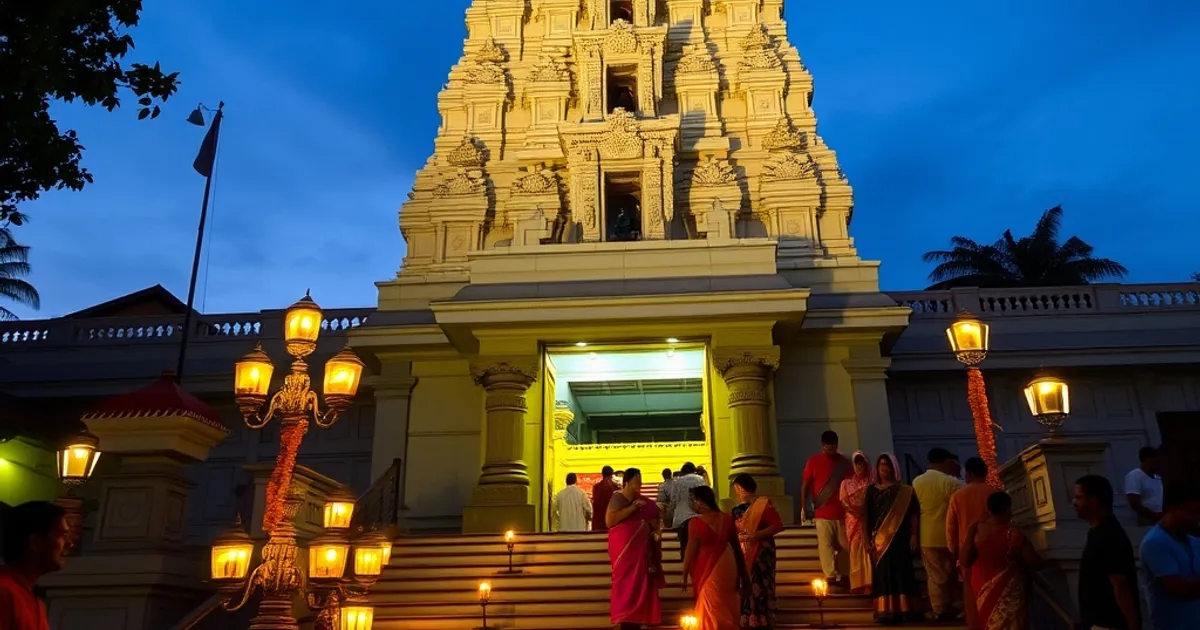
Sri Maha Mariamman Temple at 163 Jalan Tun H.S. Lee is one of the most recognized and visited Hindu temples in the city. Dedicated to Goddess Mariamman, it has served the Tamil community for generations and maintains a full calendar across major festival periods. Its location in the city's commercial district makes it easily accessible.
Sri Kandaswamy Kovil at 3 Lorong Scott is dedicated to Lord Murugan (Kartikeya) and serves as a central institution for South Indian Hindu worship in KL. The temple participates actively across Ekadashi, Pradosh Vrat, and major festival days, and it functions as a community gathering point for the Tamil diaspora year-round.
Sri Siva Muneeswarar Alayam is a Shaivite temple running regular services including Pradosh Vrat observances and other panchang-aligned programming. It is part of the broader temple network that activates during this festive window.
For Krishnashtami-specific programming — Nishita Puja at midnight, full-day bhajan sessions, and Dahi Handi events — ISKCON Kuala Lumpur and North Indian community organizations in the Klang Valley take the primary role. Their events are typically announced through community WhatsApp networks and social media in the two to three weeks before September 4.
Insider Tip: South Indian temples in KL sometimes follow a slightly different panchang calculation than North Indian organizations, which can result in Janmashtami being observed on different days within the same city. Confirm which date your target temple is using before making fasting or travel plans — a one-day difference matters when you are planning a full fast.
What Happens on Janmashtami Day
The ritual structure of Janmashtami in a diaspora setting has two distinct rhythms.
The formal, temple-based observance centers on the Nishita Puja — the midnight abhishekam (ritual bathing) of the Krishna idol performed at the astronomically calculated moment of his birth. Devotees who fast from sunrise hold their fast until after this puja. The idol is bathed in panchamrit (a five-nectar mixture of milk, curd, honey, ghee, and sugar), dressed in new clothes, and placed in a decorated cradle. A cradle-rocking ceremony typically follows.
The communal and cultural dimension is less formal: bhajan singing, cultural programs, and in North Indian community centers, the Dahi Handi event — young men forming human pyramids to break a suspended pot of curd, reenacting Krishna's childhood butter thefts. This is typically a daytime, outdoor event, held separately from the temple puja and geared toward families and children.
Brickfields: The Practical Base
Brickfields — KL's designated Little India — is the practical center for Indian diaspora life in the city. The concentration of South Indian restaurants, temple streets, garment stores, music shops, and community halls means the area builds its own festive atmosphere in the weeks surrounding major occasions.
For visitors, Brickfields offers proximity to multiple temples, familiar vegetarian and non-vegetarian Indian food options, and easy transit access via KL Sentral, one of the city's main rail hubs. The streets fill on festival evenings — expect crowds and allow extra time if you are visiting temples after sunset.
FAQ
When exactly is Janmashtami 2026 in Kuala Lumpur? September 4, 2026.
Which temple hosts the midnight puja? ISKCON centers and North Indian community organizations in the Klang Valley typically host the Nishita Puja at midnight. Check social media for specific event listings closer to the date.
What is the dress code at KL temples? Traditional attire is expected — saree, salwar kameez, dhoti, or formal Indian wear. Shorts and sleeveless tops are generally not permitted inside temple premises.
What comes right after Janmashtami? Ganesh Chaturthi 2026 begins on September 14, just ten days after Janmashtami.
Is Guru Purnima 2026 connected to Janmashtami? They are separate observances. Guru Purnima on July 29 is dedicated to spiritual teachers, but many devotees treat it as the beginning of the festive season that culminates in Janmashtami.
Bottom Line
Janmashtami 2026 on September 4 arrives mid-season in Kuala Lumpur, surrounded by weeks of Hindu calendar activity that starts with Guru Purnima 2026 in late July and continues through Ganesh Chaturthi 2026 in mid-September. The Indian diaspora in KL marks this stretch through temples including Sri Kandaswamy Kovil, Sri Maha Mariamman Temple, and Sri Siva Muneeswarar Alayam, as well as through North Indian community organizations that host the midnight pujas and Dahi Handi events that define the day itself. If you are planning to observe or attend, the entire August through mid-September window rewards attention.