
Janmashtami 2026 in Mombasa: Events, Puja & Where to Celebrate
TL;DR 🎊
- Krishna Janmashtami 2026 falls on September 4 — Mombasa's South Asian community marks the occasion with temple pujas and family gatherings
- Shree Cutch Satsang Swaminarayan Temple is the focal point for Swaminarayan devotees observing the festival 🪔
- The weeks before Janmashtami include Raksha Bandhan 2026 (Aug 28) and Nag Panchami 2026 (Aug 17)
- Midnight ceremonies are the emotional heart of the festival — plan to be at the temple well before 11 pm
- Ganesh Chaturthi 2026 on September 14 follows closely, extending the festive season through mid-September
Janmashtami Among Mombasa's Indian-Origin Community
Mombasa has one of the oldest and most established South Asian communities in East Africa. The Indian-origin population — drawn from Gujarat, the Punjab, and coastal regions of the subcontinent — has maintained its religious practices with remarkable continuity across multiple generations. Janmashtami, the celebration of Lord Krishna's birth, is among the most widely observed South Asian festivals, anchored by the city's temples and community organizations.
The scale of celebration here reflects a diaspora community that treats religious festivals as a form of cultural continuity. Families who arrived in Kenya two or three generations ago often observe the same ritual patterns their grandparents brought from India. Krishna Janmashtami 2026 on September 4 will be no different — fasts, midnight pujas, and the emotional high of the birth ceremony carry meaning beyond the strictly religious.
The Festive Calendar Leading to Janmashtami
August and September in Mombasa bring a steady progression of observances for the South Asian community.
Guru Purnima 2026 on July 29 opens the season. It is a day of reflection and gratitude, when families visit temples and community centers to honor spiritual teachers. The Swaminarayan sampraday places particular emphasis on this day, given the tradition's reverence for the guru-shishya relationship.
Nag Panchami 2026 on August 17 is observed in Indian households with prayers and offerings. In a coastal city like Mombasa, the day sometimes takes on particular resonance given the proximity to water and the serpent's role in many regional Hindu traditions.
Raksha Bandhan 2026 on August 28 is both a religious and cultural marker. Sisters tie rakhis on their brothers' wrists; the ceremony reinforces family bonds. Indian community organizations in Mombasa sometimes hold joint celebrations that bring together families from different regional backgrounds.
Then comes the main event: Krishna Janmashtami 2026 on September 4. The midnight hour — when Krishna is believed to have been born — is the ceremonial peak. Temples hold elaborate pujas, distribute prasad, and often stay open through the night for devotees who arrive in waves.
The season closes with Ganesh Chaturthi 2026 on September 14, giving the community ten additional days of festivity following Janmashtami.
Where the South Asian Community Gathers 🛕
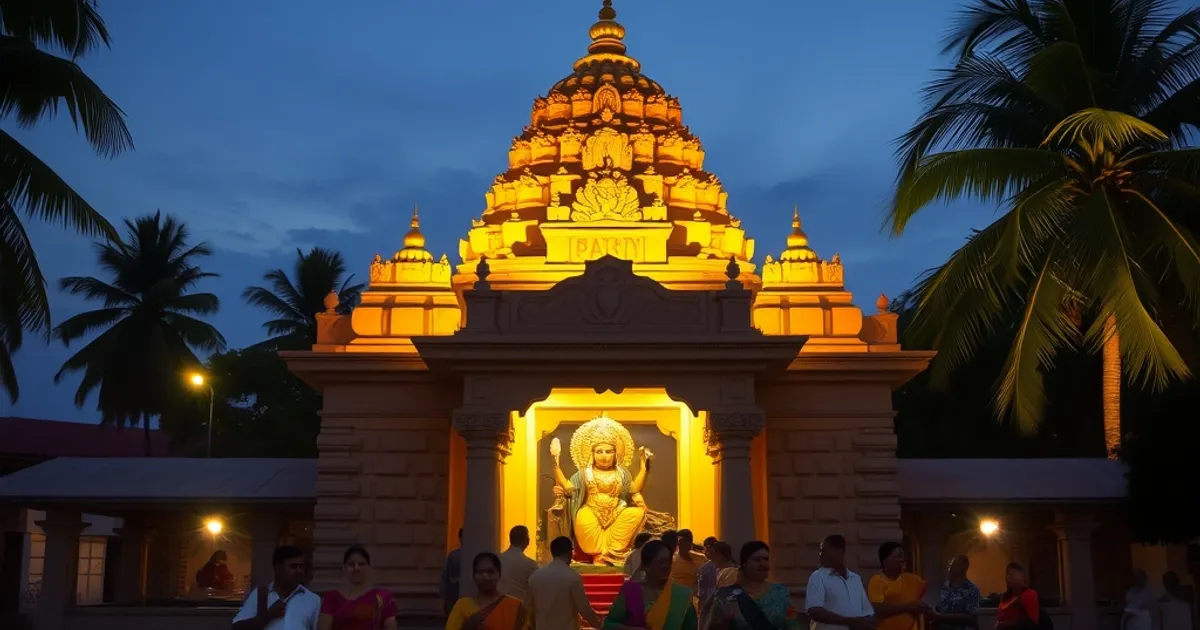
Shree Cutch Satsang Swaminarayan Temple is one of the most prominent venues for Janmashtami in Mombasa. The Swaminarayan tradition has deep roots in the Gujarati community that settled in East Africa, and this temple is a gathering point not just for worship but for community events throughout the year. On Janmashtami, the temple typically organizes a full day of programs — bhajans, katha sessions, and the midnight birth ceremony. Attendance spans generations: elderly community members for whom these observances carry a lifetime of memory, and younger South Asians for whom the temple is a cultural anchor.
Shri Cutch Satsang Swaminarayan, a related institution within the same community, similarly serves the Kutchi-Gujarati population of Mombasa. These two venues together represent the organizational core of Janmashtami for many Indian-origin families in the city.
How the Festival Shapes the Day
For observant households, Janmashtami begins with a fast at sunrise. The stricter forms of the fast exclude even water; many families keep a fruit-based fast instead. Evenings are spent preparing for temple visits — children are dressed in Krishna costumes, small jhulan cradles are set up in homes, and the kitchen fills with preparations for the post-midnight meal.
The midnight ceremony is emotionally central. The moment the conch shell sounds and the image of baby Krishna is revealed, temples erupt in song and celebration. For many in Mombasa's Indian-origin community, this moment — replicated each year — connects them to a practice that stretches back through their family history to the subcontinent.
Food after the fast is an important ritual in itself. Panchamrit, fruits, milk-based sweets, and specific regional preparations are offered as bhog and then shared as prasad. Gujarati households may also prepare specific dishes tied to the region of their ancestry.
Insider Tip 💡
If you want to experience Janmashtami in Mombasa with the full community atmosphere rather than just a temple visit, plan around Shree Cutch Satsang Swaminarayan Temple. The Kutchi-Gujarati community here tends to organize programs that go well beyond standard puja — expect bhajan sessions, cultural presentations, and community meals. Arriving early in the evening gives you a sense of the buildup before the midnight ceremony. The period between Pradosh Vrat (September 9) and Amavasya (September 11) following Janmashtami is also active, particularly for Shaiva observances, and worth marking on your calendar.
FAQ
When is Krishna Janmashtami 2026 in Mombasa? September 4, 2026. The central ceremony takes place at midnight.
Which temples hold Janmashtami celebrations in Mombasa? Shree Cutch Satsang Swaminarayan Temple and Shri Cutch Satsang Swaminarayan are the main venues serving the Indian-origin Gujarati community.
Is fasting required to attend temple on Janmashtami? No. Temples welcome all visitors regardless of whether they are observing a fast.
What other South Asian festivals happen around Janmashtami in Mombasa? Nag Panchami 2026 (August 17), Raksha Bandhan 2026 (August 28), and Ganesh Chaturthi 2026 (September 14) are all in the same festive window.
How significant is Janmashtami for Mombasa's Indian community? Very. The festival is one of the most widely observed events in the South Asian calendar here, bringing together families of all ages and regional backgrounds.
Does Mombasa have a large South Asian community? Yes. The Indian-origin community in Mombasa has been present for over a century, originating primarily from Gujarat and other parts of the subcontinent, and has maintained strong cultural and religious institutions.
Bottom Line
For Mombasa's South Asian community, Krishna Janmashtami 2026 on September 4 is a milestone in the devotional calendar. Shree Cutch Satsang Swaminarayan Temple and Shri Cutch Satsang Swaminarayan are the primary gathering points for the Indian-origin Gujarati community. The festival sits within a dense six-week period that begins with Guru Purnima 2026 and ends with Ganesh Chaturthi 2026 — more than enough reason to mark the whole stretch on your calendar.