
Janmashtami 2026 in Nairobi: Events, Puja & Where to Celebrate
TL;DR
- 🙏 Nairobi's Desi community has celebrated Janmashtami for generations, rooted in Gujarati and Punjabi family traditions brought from the subcontinent over a century ago
- 🌙 The midnight vigil — the janam utsav moment — is the centrepiece, observed at temples, community halls, and family homes across the city
- 🏛️ Hare Krishna Temple, Shree Kutch Satsang Swaminarayan Mandir - Nairobi, and Shree Lohana Mahajan Mandal all run active Janmashtami programs
- 📅 Mark the calendar: Ekadashi (Jul 25, 2026) and Guru Purnima 2026 (Jul 29, 2026) arrive in the weeks before the festival and set the devotional tone
- 🎊 Fasting, bhajan singing, children dressed as Krishna, and post-midnight prasad are the consistent threads across all communities
A Century of Janmashtami in Nairobi
Nairobi's Desi community is not a recent phenomenon. The families who form its core trace their East African roots back to the early 1900s, when Gujarati and Punjabi migrants arrived during the British colonial period — some drawn by the construction of the Uganda Railway, many more as merchants and traders who built lasting lives in a new land. Their descendants are now four and five generations deep in Kenya, and the festivals they carried with them have been observed every year since.
Janmashtami is one of the most consistently celebrated of those festivals. The birthday of Lord Krishna holds particular emotional weight for Gujarati families — the mythology of Krishna in Vrindavan, the Raas Lila, the butter-stealing tales — these stories are woven into the cultural fabric of communities from Saurashtra and Kutch, which form a significant part of Nairobi's Desi population. For Punjabi families, many of whom practice Hinduism with its own regional inflections, Krishna's birthday carries equal significance.
What makes Nairobi's Janmashtami notable is that it has maintained its vitality across generations while adapting to a Kenyan context. Celebrations happen in English, Gujarati, and Hindi within the same evening. Young people born and raised in Nairobi participate in rituals their great-grandparents brought from Gujarat and Punjab, and they do so in community spaces built and maintained by those same families over the decades. The festival is, in this sense, a living record of Desi identity in East Africa.
Where to Celebrate: Temples and Community Organizations
The good news for anyone planning Janmashtami 2026 in Nairobi is that there is no shortage of venues. The city's Desi community has built a substantial institutional infrastructure over more than a century, and most of the major temples and organizations run dedicated Janmashtami programming.
Hare Krishna Temple is one of the most visible destinations in Nairobi for Janmashtami. The ISKCON tradition places Krishna worship at its absolute centre, and the birthday celebration here is full and deliberate — devotional music through the evening, abhishek of the deity, and the midnight moment when the joyful announcement of Krishna's birth rings out, followed by prasad distributed to all present. The temple attracts both committed ISKCON devotees and community members who come specifically for the energy of Janmashtami night.
Shree Kutch Satsang Swaminarayan Mandir - Nairobi represents the Kutchi Gujarati contingent that forms a significant portion of the city's Desi population. This mandir is embedded in a community that has maintained its Kutch identity across generations in Kenya, and Janmashtami programming here is organized by families who have been doing it for decades. The bhajan sessions, the fasting and its ritual breaking, and the overall atmosphere of the evening reflect a Gujarati devotional culture that is genuine and deeply held rather than performed for an audience.
Shree Lohana Mahajan Mandal is not solely a religious body but a full community organization representing the Lohana community — a Gujarati merchant community with roots running deep in East Africa. The Mandal runs social, cultural, and religious programming across the year, and Janmashtami is one of its anchoring events. If you are connected to the Lohana community, this is likely where you will spend at least part of the festival night. The Mandal's events also function as community reunions — a chance to see families that share a migration history going back four or five generations.
Other active venues include Oshwal Religious Centre, which serves the large Jain community and participates in broader Desi community observances during major Hindu festivals. Shree Swaminarayan Sidhant Sajivan Mandal runs its own Swaminarayan-tradition programming for Janmashtami. Shree Hanuman Temple, while primarily a Hanuman temple, observes Krishna's birthday with the broader Vaishnav spirit that animates much of Nairobi's Hindu religious life. And for the Punjabi community, Baba Isher Singh Ji Community Centre provides a gathering space that serves the Sikh and broader Punjabi diaspora.
Insider Tip: If you want to experience Janmashtami across multiple traditions in a single evening, plan your night in two segments. Arrive at one of the community mandals by 9 PM for the cultural programs and bhajan singing, then move to Hare Krishna Temple before 11 PM to catch the midnight abhishek and the janam utsav announcement. The two experiences are complementary and together give you a fuller picture of how Nairobi's Desi community marks this night.
The Midnight Vigil and What It Means for Diaspora Families
In most Hindu traditions, Janmashtami is observed all the way through to midnight — the birth of Krishna is held to have occurred at the ashtami midnight, and the observance mirrors that timing. Families fast through the day, gather in the evening for bhajan singing and cultural programs, and break the fast at or after midnight when the birth is announced and the deity is bathed.
For Desi families in Nairobi, this structure has remained largely intact through the generations. The practical context is different: the surrounding city is Nairobi, not Mathura or Vrindavan, which means the festival takes place within a broader society that is not observing it. That context, paradoxically, can make the community gathering feel more meaningful. Coming together to mark this specific night in a city where it is not a public holiday — where the streets outside carry no sign of the festival — is an act of deliberate cultural continuity.
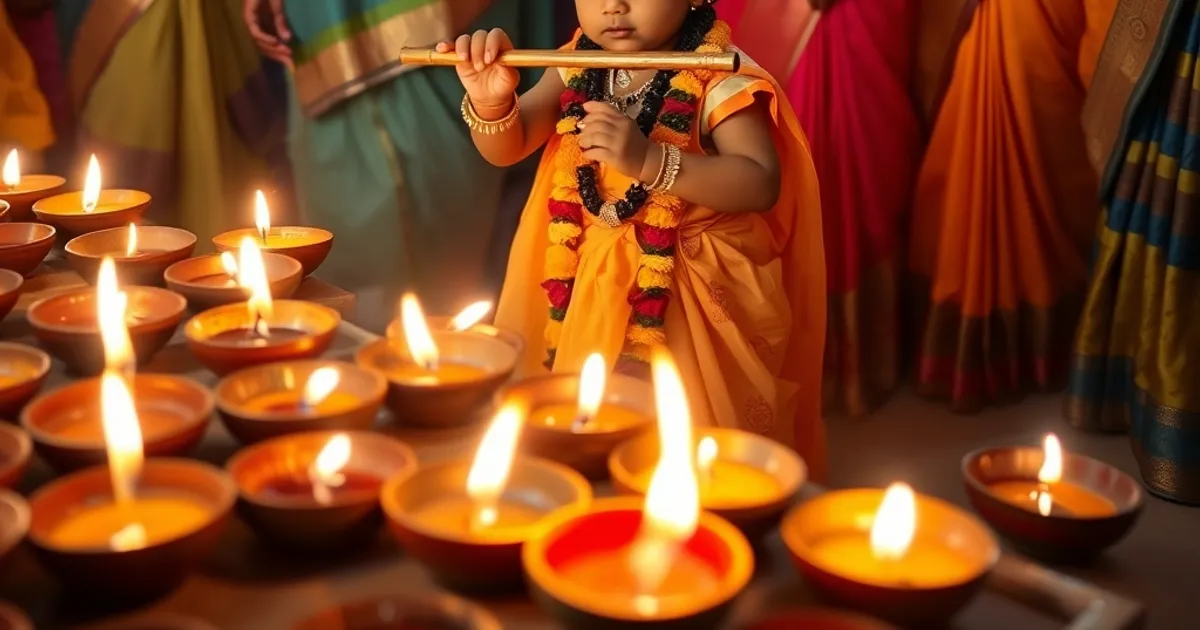
Children in these families grow up attending Janmashtami events and absorbing what the festival means over years of participation. The dress-up tradition is alive here as it is in Gujarat: children dressed as the infant Krishna with a peacock feather, a small flute, and a dhoti is a consistent sight at every Nairobi Desi Janmashtami. The post-midnight prasad of panchamrit and sweets carries the same devotional weight here as anywhere on the subcontinent.
The weeks before Janmashtami also shape the season. Ekadashi (Jul 25, 2026) arrives in the run-up to the festival, and many families observe the Ekadashi fast as both a spiritual warm-up and a practical rehearsal for the longer Janmashtami upavasam. Guru Purnima 2026 (Jul 29, 2026) falls between Ekadashi and Janmashtami, creating a concentrated period of observance that keeps the community devotionally attuned and builds toward the main night.
FAQ
Q: Do you need to be Hindu to attend Janmashtami events at Nairobi's temples? A: Most temples and community organizations in Nairobi welcome respectful visitors from any background for religious and cultural festivals. Hare Krishna Temple in particular has a strong tradition of open-door observance. It is worth confirming with specific venues about any guidelines for the 2026 program.
Q: Is there one central Janmashtami event in Nairobi or do communities celebrate separately? A: There is no single central event — different communities run their own programs. Most Desi families in Nairobi have a primary temple or mandal affiliation and celebrate there, but attending events at more than one venue in the same evening is common and encouraged.
Q: Are Raas Garba or other cultural performances part of Janmashtami in Nairobi? A: Yes — particularly in Gujarati community spaces such as Shree Kutch Satsang Swaminarayan Mandir - Nairobi and Shree Lohana Mahajan Mandal, cultural programs including bhajan singing and group devotional performances are part of the evening.
Q: What should families bring if attending a temple on Janmashtami night? A: Modest, traditional dress, flowers or fruit as an offering if you wish, and patience for the crowds around midnight. Children dressed as Lord Krishna are warmly welcomed at most venues.
Bottom Line
Janmashtami 2026 in Nairobi offers the Desi community a celebration that is both deeply rooted and distinctly local. The rituals trace back to Gujarat and Punjab, carried to East Africa over a century ago. The temples and community organizations — from Hare Krishna Temple to Shree Lohana Mahajan Mandal to Shree Kutch Satsang Swaminarayan Mandir - Nairobi — have been the keepers of that tradition through every generation since. Start the devotional season with Ekadashi (Jul 25, 2026) and Guru Purnima 2026 (Jul 29, 2026), and carry that momentum into the midnight celebration. In Nairobi, this festival belongs to the community — go join it.